Earthquake, commonly called moving. It is a common natural phenomenon, like the usual wind and rain, and is a manifestation of crustal motion, the vibration of the earth's surface caused by the sudden release of energy accumulated slowly within the earth。
According to statistics, approximately 5 million earthquakes occur worldwide each year. The vast majority of these earthquakes were small and could not be detected without sensitive instruments, accounting for 99 per cent of the total, while the remaining 1 per cent, or about 50,000, were felt. In general, earthquakes above level 5 can cause damage, customarily referred to as destructive earthquakes, averaging about 1,000 per year; severe earthquakes above level 7 average 18 per year; and large earthquakes above level 8 occur 1-2 per year。
The earth is constantly in motion, and the dynamics of the earth produce many forces, most notably those of crust. During the hull movement, subsurface layers are subject to varying degrees of pressure, stretching and twisting, and when the force is greater to a certain extent, sudden and rapid ruptures occur in areas where the formation is fragile or where the original faults occur, where the faults are the source of the shock and the vibrations generated by the fractures are earthquakes。
Ninety per cent of earthquakes on earth are caused by the fracture of the earth's crust, known as tectonic earthquakes. In addition, volcanic eruptions can result in volcanic earthquakes; cave collapses can result in collapsed earthquakes; reservoir reservoirs can result in reservoir earthquakes; and artificial blasts can also result in artificial blast earthquakes, which, because of their small number and energy and the low level of damage they cause, are primarily structural earthquakes that we are trying to prevent。
Basics for earthquake mitigation
I. The principle of individual risk avoidance in the event of an earthquake
(1) stay calm
(2) in-situ avoidance
(3) cut off the source of the fire
(4) rapid withdrawal。
In general, there is no need to be alarmed by small earthquakes that have only minor feelings. In the event of a devastating earthquake, phenomena such as the earth's light, the earth's sound and initial vibrations, which are known as early warning phenomena, usually take about 12 seconds from the onset of early warning to the collapse of a house; as individuals, it is important to remain calm and make the right decision to hide within 12 seconds。
In the classroom: quickly take refuge under the desk, waiting for the shock to pass before being evacuated to safety。
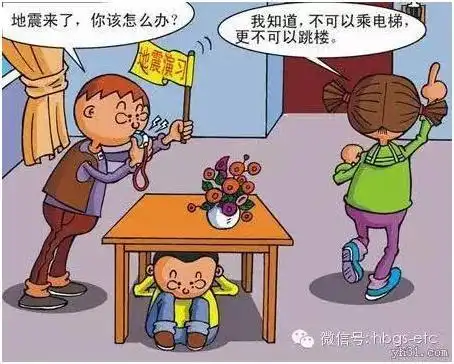
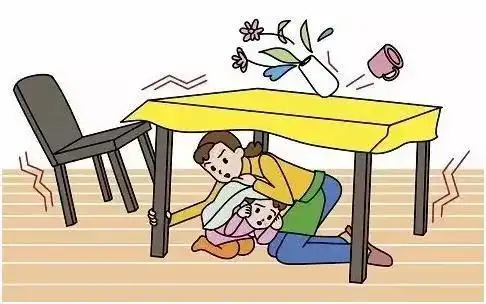
(b) in flats: the maximum time available is 12 seconds to get out of the room, to hide quickly under a solid table, under a bed, next to furniture and close to the roots of the wall, to lie under the ground, to close your eyes, to breathe through your nose, to use mattresses, to be protected from the head, etc., and to cover the mouth and nose with towels or clothing in order to prevent the dust from entering. The person who is using the fire should immediately put out the fire, turn off the gas or power switch with his hand, and then escape quickly。
In the building: to stay awake and move quickly away from the outer walls and doors and windows, the kitchen, the bathroom, the toilet, the stairwell, etc., can be used to avoid a small, unfailing space, and never flee or jump from upstairs, nor can the elevator be used。
Outside: avoid high buildings, as far as possible, from high-pressure lines and toxic plants or facilities such as petrochemical, chemical, gas, etc.; hold the bridge rails tight when crossing the bridge and move to the bridge immediately after the main earthquake; vehicles in transit should stop immediately。
In working space: power and gas gates, switches should be shut down quickly, and then close to hiding under machines, equipment and furniture to prevent secondary disasters。
In public places: personnel in stations, theatres, classrooms, shops, metros, etc., are reluctant to flee, remain calm, hide in place (seats, cabinets, tables, benches, etc.), wait to be determined, then follow command and withdraw in an orderly manner。
Knowledge of self-help and mutual help
The rapid and timely access to treatment of those under pressure following the devastating earthquake is of great importance in reducing the number of earthquake deaths. According to statistics, about 570,000 people were buried during the tangshan earthquake, and around 450,000 were rescued through self-help. Generally, the survival rate of persons rescued within half an hour of a major earthquake can reach 99 per cent. Self-help is thus one of the main measures to reduce casualties。
Self-help: people use their own conditions to remove danger and preserve life. After the earthquake, aftershocks will continue and your environment may deteriorate further. You need to improve your environment as much as possible, expand your space, stabilize, try to escape, stay awake when you are unable to save yourself, not cry out for help, prolong your life, maintain your physical strength, call for help with banging, and wait for help。
Mutual rescue: a person who has survived in a disaster area and who has been subjected to torture。
The principle of saving lives: saving lives before saving lives; saving lives after saving lives; saving young adults and medical personnel to increase help。
Rescue methods: excavating the person under pressure should maintain the support to prevent further collapse; first expose the victim to the head, remove the alien from his or her mouth, nose and nose, and keep his or her breath open and, if he or she is asphyxiated, provide immediate artificial respiration; when the person under pressure is unable to climb out of his or her own body, he or she must not be forced in order to cause further injury, vertebrate injury, removal, application of a doorboard or a hard stretcher; and when a surviving person who cannot be rescued is found, he or she should be marked up for rescue。
Iii. How can macro-abnormal initiatives be used to avoid risks
Macro anomaly occurs before an earthquake, which requires us to do everything we can to capture pre-earthquake information and protect ourselves。
In the case of animal anomalies, the crowd summarized the rumours that pre-earthquake animals had signs and that community measurements were important; that cattle, mules and horses were not in the loop, and rats moved away; that chickens were flying on pigs' knees and ducks were biting; that hibernation snakes were coming out early and pigeons could not fly back to their nests; that rabbits were jumping and banging, and fish were panicking and jumping; and that family members were careful to analyse and identify。
In the case of groundwater abnormalities, the crowd has also concluded: the well water is a treasure with early warning; the springs are full of rain and dry wells are running out; the water levels rise and fall; the bubbles rise and fall; the colours change; the smell changes; the rain changes; the water changes; the water changes; and the observation networks are being established and are being reported very quickly。
In addition to the above, there are plant anomalies, such as the effects of time-defunct trees; weather anomalies, such as cold and cold summers, floods and droughts; electromagnetic anomalies, such as the self-lighting of sunlights, mutation of electromagnetic units and severe drying of radio communications equipment; and surface variations, such as ground drums, cracks, collapses, etc., may be associated with earthquakes. In the event of such anomalies, both local governments and the authorities concerned must be informed in a timely manner and take timely and decisive measures to avoid shocks。
How can good hygiene practices be maintained after the earthquake
Every citizen in the earthquake-affected areas should seek to maintain optimism and health. In the light of climate change, care should be taken to prevent respiratory infections such as cold, bronchitis and influenza, especially among the elderly and children. Some pickles are to be eaten to supplement the salt and moisture lost in the body as a result of sweating。
V. Which water is drinking
Water that is bottled, boiled or disinfected. Do not use contaminated water to wash dishes, brush teeth, wash vegetables, wash fruit, etc. If the bottled water is used, it must be disinfected or burned, and the majority of the microbes can be killed in a minute. If there are no conditions for burning water, it is possible to drink with disinfectant tablets or chlorine-containing formulations provided by professionals。
Vi. How to prevent intestinal infections after earthquakes
Protect water sources, especially drinking water, from pollution. Drinking water is disinfected with bleach or bleached powder (purified water tablets). Watch your diet. Without drinking raw water, washing hands before eating food, without corrupt or stale foods, without eating dead animals, without a dirty water wash or a guacamole vegetable, with dishes boiled or disinfected with disinfectant, with knives, plasters and rags strictly disinfected, with raw food stored separately, with water products and seafood cooked and then cooked. Pay attention to environmental sanitation, eradication of mosquito flies. Infested with excrement, maggots in the faeces, animal bodies buried deep, sterilized with plaster, with the conditions to do so, and the earth floor solid. You have to clean up the garbage, clean up the waste, clean up the environment, manage the waste。
What kind of first aid should families prepare
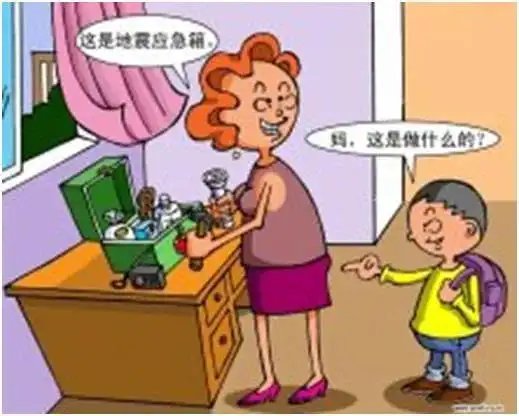
Before an earthquake, families should prepare first aid items such as axes, shovels, brooms, screwdrivers, pliers, hammers, wrenches, ropes, plastic sheeting, plastic belts, thick soles, gloves, candles, lighters, fruit knives, rubber tubes, tents, blankets or sleeping bags, flashlights, batteries, basic first aid drugs, protective glasses, multi-purpose fire extinguishers, washing gears, which are packed in tool or gear boxes for carrying and waterproofing. Other first aid items include: first aid manuals, scissors, shrubs, thermometers, soap, paper towels, sunscreen, one-off paper cups, fruit knives, small plastic bags, safety pins, needles, medical ice bags, sheeting, etc。
Fire in daily life
I. What tests should be done before bedtime and out
Check whether electrical, gas and pyrotechnics are off。
Ii. What should be done with the home escape programme
First, they should be familiar with the escape routes on the floors in which they live and ready for rapid evacuation。
2. In civil days, a pre-simulation of the path to escape from a fire with the family should occur, as well as an agreed meeting place. 3. Be familiar with fire-fighting equipment and its use in the floors in which they live。
Iii. The fire safety in the kitchen
1. Cooking should be accompanied by short or suitable long sleeves to avoid pyrotechnic burns。
2. When cooking food, do not leave at will and the fireworks must be shut down before leaving。
Don't let kids into the kitchen。
Iv. Which public places do not, to the extent possible, go to consumption
1. Only a single point of entry or exit。
2. Location in the basement。
3. Sites renovated with flammable materials。
4. Areas where fire safety equipment is inadequate。
5. Sites damaged in fire-fighting areas。
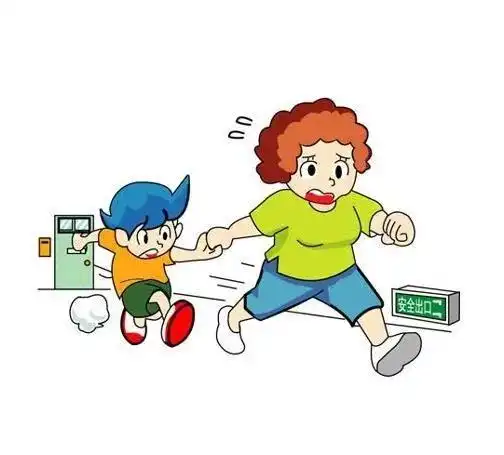
5. The following are important reasons that often affect escape and must not go to this public place for consumption。
1. Security doors are locked。
2. The security door, which should normally be kept closed, is always open。
3. The security door to the roof platform is locked。
Barriers to security, access (e. G. Corridors), stairs, etc。
Vi. What should we know first, for our own safety, about entering a strange place
1. Asylum flight directions。
2. The security door, the position of the ladder and whether it is closed or locked。
3. Check all fire extinguishers and shelters, such as fire bolts, slow-down machines and rescue kits。
How should disasters be reported
1. Calm down, dial 119。
Identify the location of the disaster or its immediate target。
3. Brief description of the situation。
4. Leave a telephone number and address for further contact。
8. What should you take care of in case of fire
1. Disturb from panic, determine the origin of the fire and escape in the opposite direction。
2. Do not use lifts or lifts to escape。
3. Do not return to the house to retrieve valuables。
4. In the event of a fire at night, wake up those who have fallen asleep, and do not just run away, and shout as loud as possible to warn others of their escape。
Ix. What should be done with the boiler fires during cooking
1. Water may not be used to extinguish fires。
2. Fire extinguishers may be used。
3. Covered with wet towels to stop the air to extinguish the fire。
4. Close the gas source switch quickly。
How to use a fire bolt
1. Open fire embolisms。
2. Extended water belts。
3. Turning water valves。
11. Methods used for dry powder extinguishers
1. Pull off the security stakes。
2. Point the piping towards the fire。
3. Press the handle hard, select an upper wind position close to the fire, and shoot dry powder into the flame base。
4. The smoke will be removed by cooling with water。
How can fire and smoke be avoided during flight
1. Respire with wet towels and lower position to reduce smoke inhalation。
2. Where there is no smoke, transparent plastic bags are filled with air to avoid inhalation of toxic fumes or gases。
3. In case of flight through the flame zone, get wet clothing or be covered with wet cotton, blankets, and pass quickly to avoid fire。
4. In the thick of the smoke, there is usually a residual air remaining 30 cm from the ground, which can be used to escape in low positions, and when climbing, the hand, elbow, knee close to the ground and escape along the edge of the wall in order not to miss the direction。
Five, as the fire escapes, closes all the doors behind you, and it reduces the speed of fire and smoke。
How can fire be prevented from coming through the door
Sealed doors with glue or wet towels, sheets, clothes, etc。
Xiv. How are clothes handled when they are on fire
It is best to take off or lie down, cover the face with your hands and roll out the fire, or jump into a nearby pool and extinguish the fire。
What if you're stuck inside during the fire
1 to the point of safety (e. G. Close to a window on the main road or a room close to the entrance)。
2. Seek to inform outsiders (by telephone, mobile phone, to notify where you are trapped, or directly by clothing, lights in the window)。
3. Prevent smoke from coming in。