


Overview
Aromatic hydrocarbons, known as aromatic aromatic hydrocarbons, are the sum of benzene and its derivatives and are the hydrocarbons that contain one or more benzene rings in the molecular structure. As a result of the early development of organic chemistry, this type of compound is almost all found in volatile and fragrance substances, such as the extraction of sabbatical acid from sabbatical gum and the acquisition of phenaldehyde from bitter almond oil. However, many of the later properties should be aromatic compounds, but they do not have aroma, so today aromatic hydrocarbons mean only those compounds containing benzene rings. The simplest and most important of these aromatic hydrocarbons are benzene and its congeners, toluene, diphenylene, ethylbenzene, etc. In the aromatic community, some aromatic rings are not entirely benzene-based, but atoms of carbon, which are replaced by nitrogen, oxygen, sulphur, etc., which we call hybrids, such as furans in five rings, including an oxygen atom, a nitrogen atom in a herb, a sulphur atom, etc。
Aromatic hydrocarbons can be classified as monocyclic aromatic hydrocarbons and dense ring aromatic hydrocarbons. The chained aromatic hydrocarbons are generally referred to as lipid aromatic hydrocarbons (arenes) and common aromatic hydrocarbons are toluene, ethylene, styrene, etc。
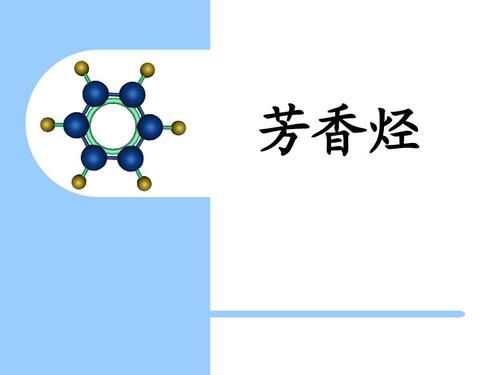
Aromatic hydrocarbons are the total benzene ring model for benzene and its derivatives
Benzene, the simplest aromatic aromatic aromatic compounds are all derived from them. First, in 1865, friedrich kekul introduced the structure of the benzene ring, double-key interlocking, unlimited co-location, now known as the “kekule”. It was also suggested that the double keys in benzene were not fixed, but rather that they could be used for resonance to produce the length of the key between a single key and a double key, with the symbol of a circle, representing the undefined localization of the electron in benzene. The benzene structure is a square hexagonal molecule, with carbon atoms bound by the sp2 orbit domain, so the second key is 120°。
Structural properties of structural benzene expressed in structural benzene
Aromatic hydrocarbons have the following characteristics, commonly referred to as aromaticity:
It is particularly stable, usually 28-30 gallons per double-key hydrogenation heat, with an estimate of 85. 8 gallon hydrogenation heat for cyclohexatrile, but in practice only 49. 8 gallons for this compound (i. E. Benzene) and a low estimate of 36 gallons, a value called benzene resonance (reso)Nance energy), stabilizes the whole compound。
The presence of benzene in the mri spectra (nmr) at 7. 3 ppm is more low-magnetic (down field) than the normal hydrogen atoms of the alkyl, because the electron ring of benzene can produce the induction magnetic field {induced magnetic field”, which makes the sensor field for protons weaker, and this characteristic of moving in the direction of the lower magnetic field can be used to test the aromatic properties of a compound。
The molecular c6h6 form of benzene appears to be unsaturated hydrocarbons, but a comparison of its properties with that of cyclohexachlorocyclohexane reveals that the benzene appears to have double-keys and to have a high degree of unsaturated hydrocarbon activity, but because of the resonance of the electron combination, it is extremely stable and is generally less reactive than the olene。
The german chemist hückel, based on quantum mechanics, must have 4n+2 (n=0,1,2,...), ex: the benzene ring has six resonant electrons, which meet the hückel rule and are therefore aromatic; the cycloheptatrienyl ion (cycloptatrienyl ion) has six aromatic electrons, which is stable; and the cycloheptatrienyl anion has eight acetrones, which is more unstable。
Preparation hazard
Benzene is an organic solvent with extensive applications and is a solvent with adhesives, oil coatings, inks, etc. Inhalation of large quantities of benzene vapour at short notice can cause acute poisoning。
Response
Replace response
This is the most common reaction in the organic reaction of aromatic hydrocarbons, which can be divided into aerobics instead of reaction and aeronuclears instead of response, usually where hydrogen atoms are replaced by other substances。
The aromatic aroma instead of the reaction
Acoustic aroma replacement response (eectrophilic aromatic substitution), a substitution response for acoustic reagents and aromatic rings, which can be divided into nitroglytics, halogens, sulfurization and fugrams. There is an intermediate in the response facility, which is resonated with a special name, commonly referred to as the sigma compound or the arrhenium ion, and the whole reaction is a pro-electric reagent for a nuclear-based attack, producing the sigma compound, then holding it with alkalis and removing the proton and completing the replacement reaction。
Pro-nuclear instead of reaction
Pyrotechnic aromatics replace reactions, which can be divided into two types of accumulative reaction for pronuclear agents and aromatic rings. The addition - elimination is based primarily on snar response agencies, rather than on previously common sn1 and sn2 response agencies, which also produce intermediates of resonance, but this intermediate carries a negative charge, so we call him meisenheimer instead of sigma. Disappear-acceleration is the process of forming an intermediate known as benzo-pylene, which is replaced by a pro-nuclear attack beryllium. It is the use of isotope labelling to determine its response agency and the capture techniques of the deels-alder reaction to confirm the existence of this highly reactive intermediate。
Colour reaction
Aromatic hydrocarbons and some reagents can produce characteristic colours to identify different types of aromatic hydrocarbons:
Response mechanism:
Benzene and its derivatives



