In recent days, the ceo of clutch, canada's largest used car retail site, has publicly spoken in an interview
Welcome our new energy car to the canadian market。
In his view, a cheaper, higher-value electric car from china was not a threat, but a “lock key” — it was able to pull down canada's chronically high entry prices and turn more families from “want to buy” to “affordable”。
In short, clutch does not see who wins, but who can cut the price。
And what is most lacking today in canadian electric cars is precisely that — affordability。
Clutch network
Who's clutch? Why does it care about the price of chinese cars when they arrive
Clutch is canada's biggest online used car supermarket: the most troublesome links in traditional used car transactions — source screening, pricing, finance, delivery, after sale — are platformed and processed as much as possible。
It does not eat “brand premium”, but rather turnover and trade: the better the car sells, the faster the deal, the better the financial and value-added services, the better it earns。
This determines its natural position in one direction: it welcomes the “combination resulting from falling prices” and, above all, the fact that “new cars are too expensive to afford to contract”。
When new car prices are high, many families delay a change of car; when interest rates rise and monthly pressure increases, consumers turn “want to buy a tram” into “just wait”。
What's the result? The slowness of the second-hand car trade, the length of the inventory, and the weighting of the platform's funds — which is not friendly to clutch — is a major factor in the slowness of the transaction。
So we find out: when clutch's ceo says, "china's electric car is a unlocked key," he actually says, "as long as the market has cheaper and more competitive supplies, the whole price system moves:
New car promotions will be more intense, used cars will more quickly create a predictable residual curve, trade volumes will be larger, and the platform will be better off。
For a platform that relies on “trading dynamism”, “price reduction” is not a threat, but an opportunity for “flow and turnover”。
Why is the canadian electric car expensive
Canadian motor vehicle discussions are often caught in the wrong spot: “slow spread” is simply attributed to consumer non-acceptance, unsuitability in winter and inconvenient charging。
But the more solid reality is that many people do not want to buy, but rather that prices and months keep them out of the door。
The “price” of electric cars is at least three layers of structural causes in canada。
The first tier is one of supply structure. The electric cars available to the canadian market are often not sufficiently compact, entry-level vehicles that can be used by most households as “first trams”, or are configured to raise prices as soon as possible。
As a result, it was thought that canada's trams were slow to spread, but that they were “unaffordable”。
The second level is cost and scale. The most expensive parts of electric cars are in batteries and electric systems, while the cost curve is the most “sizing” and “supply chain bargaining”. When a market is not sufficiently marketed, industrial chains are inadequately localized, and key links in the supply chain are in the hands of a small number of giants, it is difficult to see a real “downside” of prices。
In many cases, consumers see that “price” is not the price of a car, but that the entire chain is not competitive enough。

Third floor, a financial magnifier. In periods of high interest rates or tight financing, consumers' purchasing power is often not broken by “prices”, but by “monthlys”: the same car price, the cost of financing up, the monthly supply rises significantly; the residual value is expected to change and the lease and loan terms become more stringent
Total ownership costs (tco) are more hesitant when insurance, maintenance and charging costs are added。
If we fold these three layers together, we'll understand the nature of canada's slow spread of new energy cars:
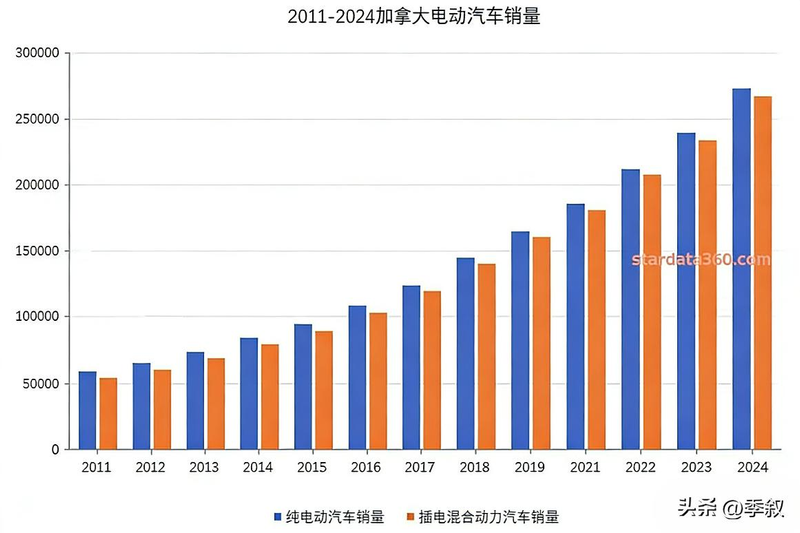
What is missing in canadian electric vehicles is not a slogan, but a market mechanism that can keep entry prices down, give months down and stabilize residual values。
Anyone who can mainstream “affordable trams” can rewrite the speed of penetration。
"the internet"
Why is the chinese electric car a key
In this equation, the significance of a chinese electric car is not “how good a car is”, but the three capabilities behind it are to pull down the price anchor of a global electric vehicle, thus creating a “deflationary pressure”。
First, the scale is thin. When the annual sales of an industry are large enough to swallow up the supply chain, the purchase of raw materials, the negotiation of spare parts, the production of rhythms, and the increase in the positive rates quickly push down the cost of a bicycle. It's not propaganda. It's industry. Once size is formed, there will be a “bottom line” for prices, and it will become increasingly difficult for competitors to maintain high premiums。
Secondly, vertical integration and engineering speed. Many chinese manufacturers are not simply “assembly cars”, but rather make a replicable system of batteries, electric chargers, heat management, electronic and electrical structures, and software ecology. The strength of the system is that it allows for faster standardization of new functions, faster cost-sharing and faster synergy in the supply chain. We see a higher or lower price under the same price — this is “more for each dollar”。

Third, the cost of batteries is reduced to the bottom of the industry. Cost optimization, represented by routes such as lfp, would drag down the line “what price should be sold to an entry-level tram”. Even if china’s brand cannot enter canada on a large scale immediately for policy or channel reasons, as long as the cost curve is established globally, existing producers in the canadian market feel pressure to either lower prices or deploy them, or cut down months through financial subsidies, otherwise it will become increasingly difficult to explain the value for money。
That's why a platform like clutch would say, “china electric cars are unlocked keys”。
What it sees is that when there is a lower price anchor in the market, the price reduction does not have to occur immediately, but the “oldly high price narrative” will expire first. Once narratives fail, promotions, configurations and financial schemes begin to loosen and the price system will sooner or later be recalculated。
The real switch is affordable
The key to this discussion is never “canadians like china’s new energy car”, but rather to deny a reality:
When a more low-cost, well-configured global supply system exists, it will be difficult for canada's high-priced motor vehicle narratives to stand in the long term。
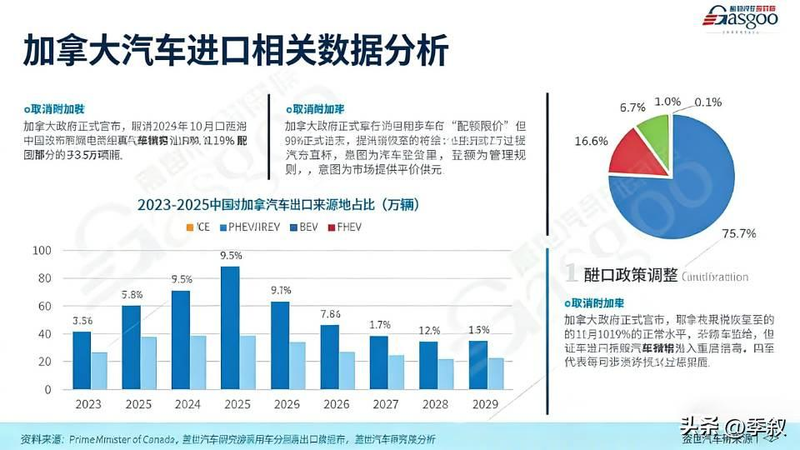
While china's electric cars may not be going off tomorrow in canada, and may even be moving slowly at the policy and channel levels, the price anchors and “competition expectations” they bring are enough to change the market mentality: car companies will be more aggressive in promoting sales, platforms will be more eager to trade and consumers will be better equipped to deliver a “more rational monthly supply”。
In the final analysis, the real switch for electric vehicle penetration is not a slogan, but affordable。
When affordability is opened, the speed of penetration accelerates; when affordability is delayed, any ambitious goal is delayed。
The clutch ceo's phrase “welcome competition” seemed simple, but it made the most painful point in the canadian motor vehicle market:
Lower prices are not a result of charity, but of competition。
To be honest, it's only fair for people to buy cars: they can afford to spend money。
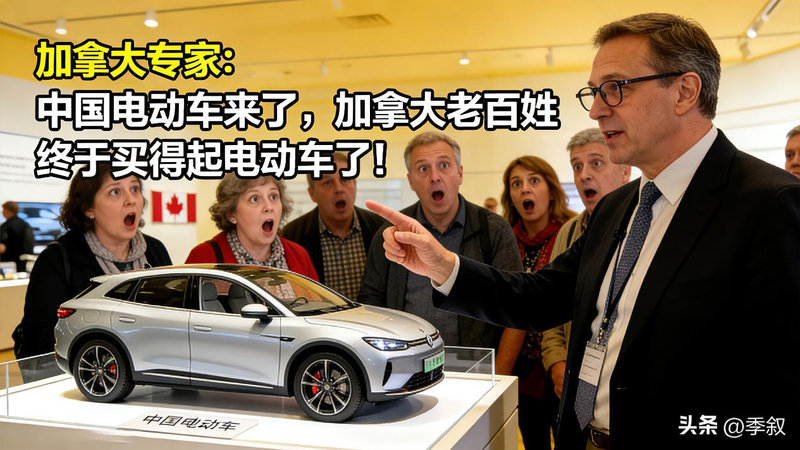
In the past, electric cars were like “unique toys for rich people” and now chinese companies are setting prices down and setting them up so that technology and general painting, such as environmental protection and convenience, should not belong to just a few。
One day an ordinary family can easily drive a reliable electric car, which is truly “universal”。
If it's not for dignity, if it's not for shame, it's for real。