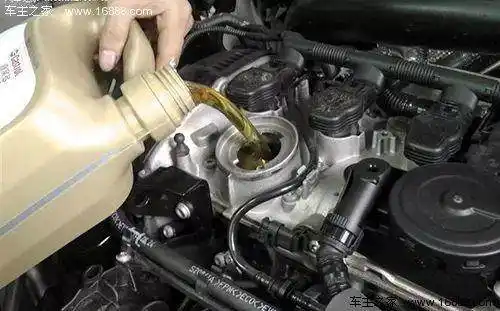
The oil has always been a well-known term for many car users. What do those signs mean? What's the best car for oil? A detailed presentation is given to you today: (this paper will focus only on oil for petrol engines)
Effects of oil:
The engine is the heart of the car, and there are many metal surfaces that interact with each other, and these components are fast and poorly operated at working temperatures of up to 400°c to 600°c. Under such harsh conditions, only qualified lubricants can reduce wear and tear of engine parts and extend their useful life. What are the requirements for qualified lubricants? So what's the six main effects of lubricant

L. Lubrication wear: between the pistons and cylinders there is a rapid relative slide between the main axle and the axle, and in order to prevent excessive wear and tear of the parts, a oil membrane is required between two sliding surfaces. The oil membrane, which is sufficiently thick, separates the surface of the relatively smooth parts, thereby reducing wear and tear。
Refrigeration cooling: the oil can bring the heat back to the tank and then release it into the air to help cool the engine。
Cleaning: good oils can bring carbide, oil sludge, worn metal particles on engine parts to the tank, and through the flow of lubricating oils wash the dirty material generated on the surface of the parts。
Sealed leaks: the oil can form a seal between the piston ring and the piston, reduce gas leakage and prevent the entry of external pollutants。
V. Corrosion resistance: lubricating oils prevent exposure to parts by water, air, acid and harmful gases on the surface of parts。
6. Seismic mitigation buffer: when the pressure of the engine's gas tank vent rises sharply and suddenly increases the load on the pistons, pistons, poles and curve bearings, this load is smoothed through the bearings, which cushions the load of the shock。
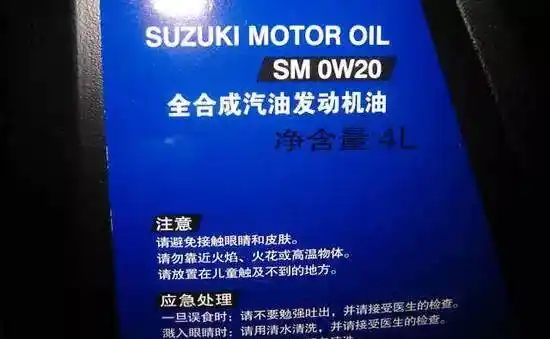
The oils currently on the market can be divided into mineral oils and synthetic oils because of their different base oils (the vegetable oils are accounted for because of their scarce production). Synthetic oils are divided into complete and semi-synthetic. Full synthetic oil is of the highest grade。
The greatest difference between the two is that synthetic oil is used at a much larger temperature, for a longer duration and at a higher cost; the same membrane requirements require that synthetic oils be able to achieve lower viscosity and mineral oils need to have more viscosity than synthetic oils to meet this requirement. In the same working environment, synthetic oil is more costly because it is used for a much longer period than mineral oil, but is not much higher than mineral oil after the number of oil exchanges。
Mark the oil:
The viscosity of lubricating oils is often marked with levels such as sae, which is the acronym of the american association of automotive engineers. For example: sae15w-40, sae5w-40, “w” means winter (winter), the smaller the number before it, the better the temperature flow of the oil, the lower the temperature of the environment at which it is available, the better the protection of the engine at the time of cold activation; the figure behind “w” is an indicator of the high temperature tolerance of the oil, and the larger the value, the better the protection of the oil at high temperatures。
(sae) applicable ambient temperature (°c)
5 w/external cooling -30°c
10 w/eternal cooling -25°c
15 w/d low external temperature 20°c
20 w/s/s/s/s/s
30°c external temperature
40°c for external heat
50's no more than 50's
Thus, the applicable external temperature range for 5w-40 oils is from -30°c to 40°c; the applicable external temperature range for 10°w-30 oils is -25°c to 30°c。
Rating of oil:
The initial series of "s" represents petrol engine oil, with specifications: sa, sb, sc, sd, se, sf, sg, sh, sj, sl, sm. The initial series of "c" represents diesel engine oil, with specifications: ca, cb, cc, cd, ce, cf, cf-2, cf-4, cg-4, ch-4, ci-4. When the letters "s" and "c" exist simultaneously, this means that the oil is of a gas/wood general type。

From “sa” to “sl”, oil will perform better than the former each letter, with more additives to protect engines. The higher the quality grade, the higher the letters, the higher the oil grade in the international brand。
After reading the basics of oil, you must have a lot of questions, and we will begin to answer them:
Question 1: are all vehicles subject to top-level synthetic oil?
As we have just said, all synthetic oil does have excellent performance and mobility, both in winter and in summer, both in terms of heat tolerance, and in terms of fuel cycles, the engine can be protected to the greatest extent possible. But all synthetic oil is not suitable for tens of thousands of dollars in micro, small cars...
Tens of thousands of economic vehicles, because of the relatively low accuracy of engine processing and the fact that the gap sealing between the cylinder and the piston ring is not the best, often appear on the lower-cost model, with more visceral oil to serve as a seal between the cylinder and the piston ring。
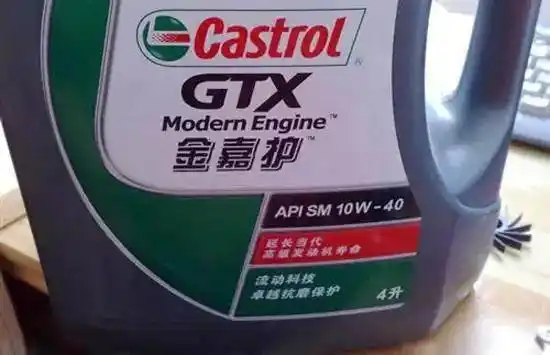
If scarcely oil is used for the complete synthesis machine, there are minor problems with the sealing of the engine, which always feels powerless. After the stop, most of the whole flow returned to the oil casing and the lubrication and sealing of the engine was damaged, so that the opportunity to start started in the early morning after getting up and starting. This problem does not arise in the case of more viscous medium-grade oil in such engines。
So, fully synthesized oil is good oil, but it is not suitable for low-cost economic motors。
Question 2: how does a pressurized engine pick oil -- if a computer is painted, a full synthetic oil is recommended
If it's a regular turbo booster, it's enough to use the original machine, but if you brush the computer, please finish this:
The turbine booster is not connected to the roller bearing and the turbo body because of the high rate of working rotation and the inability of any ball bearing to bear the strength of 100,000 turns per minute, so the main rotor is not connected to the ball bearing, but is designed to float, with the main rotor being floating in the oil, with fluid oil in the extremely narrow space between the turbotype and the main rotor, acting both as lubricating, and taking impurities between the main rotor and the turbine local and dispersing。

This is the problem, still citing the example of poignant 1. 8t, which is fully supported by the original plant oil, which normally turns at 0. 38 bar at between 100,000 and 150,000 turn/minutes. But when the computer is scrubbed, the increase in the voltage will go up to 200,000 to 300,000, and the first thing that can't be carried is the oil from the plant。
When the main rotor rotates at a very high rate, the oil does not provide the required lubrication and dissipation, even when some friends are outside, and the oil is not even of the same grade as the oil in the original plant, and the problem arises with the burning of the oil, as described above, the turbine damage。
The relative scarcity of total synthetic oil, the improved lubrication and dissipation, and the increased turbo velocity of this thinner oil can flow 100 per cent to the part of the lubricant, so that there are no problems as described above。
Question 3: why is it usually 7500-10000 kilometres for oil, while the solar system is 5,000 kilometres for oil?
That's the relationship between mineral oil and synthetic oil, as stated earlier. The oil from the original plant, usually of a car-type (with a price of less than 300,000 cars), is usually mineral oil and cannot be replaced for too long, usually by more than 5,000 kilometres, and semi-synthetic oil is generally used in high- and medium-sized day-cycle vehicles (with a cost of more than 300,000 vehicles), which may be in the range of 75-10,000 kilometres。
With a cost of around 150,000 german cars, the oil from the original plant is basically semi-synthetic, so natural oil exchange cycles are 2,500 kilometres longer than the solar system in the same class. And many of the original oils that cost more than 200,000 cars are fully synthesized, and the oil-cycle theory can exceed 10,000 kilometres。
Question 4: why do high-end cars have a bit of engine oil?
High-end vehicles typically use full-synthetic oil, and even many superrunners use highly mobile 0w-50-series super-car racing oil. When oil is liquid, it means that it is much less viscous, as has been said earlier, and because it is scarce, there is a greater proportion of oil flowing into the combustion chamber from the cylinder to the piston ring, so the consumption of oil is naturally much higher than that of domestic cars。
It's inevitable that high-end cars have a little bit of engine oil unless you don't use high-end oil. However, consumption of more than half-litre oil per 2000 km is problematic and not normal。
Question 5: can we change the oil?
Not only is oil lubricating, but it also plays an important role in taking the dirty stuff inside the engine, which is filtered out by machine filters. If the oil is changed, the dirty stuff is not completely removed, so it makes no sense to change the oil. It's a dead rule。
Question 6: is the oil all black?
The oils are mainly lubricated in the engine's main parts, especially the pistons and cylinder walls, where the burning products are dark-coloured glue, so the oils have changed colour since the first day of their use inside the engine. However, the oil normally used should be dark brown, and if it was pure ink, it would be problematic and probably too long in the oil exchange cycle。

Question 7: can different brand oil mix?
The oil additives in each brand are different, and mixing may cause deterioration between chemical components and seriously discourage mixing。
Question 8: what is the use of oil by car owners across the country?
In the northeast, xinjiang and tibet regions, it is proposed to use relatively thin oils that are resistant to the low temperatures of the 5w series, in areas of extreme cold, such as the southern arctic, and even in the 0w series。
North, east and south china, with normal 5w-30/40 or 10w-30/40 oil recommended;
High temperature tolerance is necessary in a highly hot area such as hainan where 40 or 50 oils are recommended;
Concluding remarks:
The use of oil is very interesting, but let's not be too complicated and unsettled, so just step on the original oil provided by the practical 4s or brand-built plant, and make sure your engine is okay。

If you need special protection of the engine or a modification of the engine, it is suggested that you should change the oil to a higher level immediately。