Many masters of electrical and cooking appliances are absolutely one of the highest-maintenance cooking appliances in their daily maintenance work. It was in constant contact with the soot, and the smoke-smoking machine was operating in poor working conditions, and problems with minor malfunctions were inevitable. Today, the author has systematically combed the most common types of failures of the oil smokers, analysed their causes in depth and shared effective maintenance methods. It is hoped that you will be able to add to your toolbox an “experience monument”。
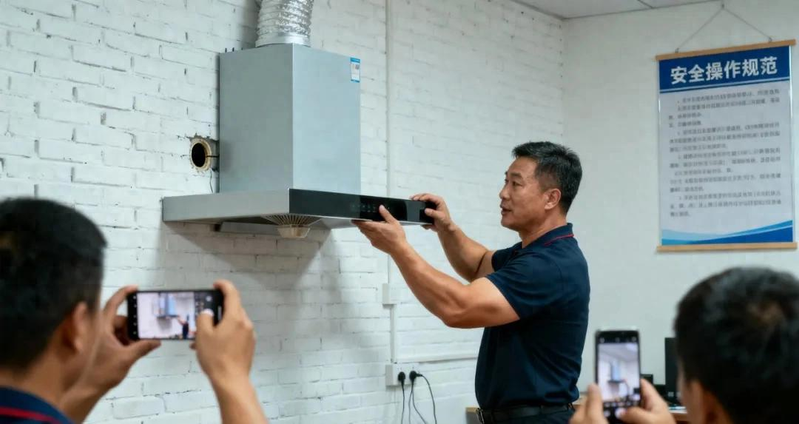
Security risk tips: this is a professional reference for gas stove maintenance engineers, who are not professionals, who are not self-maintenancers and are at great risk of safety hazards。
Fault one: a smoke-suction signal is not on, but the power is working
Fault: keys react, fans turn, but lights are not on。
The depth of the failure:
1. Damage to the light bulb itself: this is the most common and simple cause. Led light beads are severely decayed or burned, and normal energy-saving lamps or incandescent light fuses are burned。
Lamps: long-term heat, resulting in oxidation, deformation and poor exposure。
3. Lighting lines or switches fail: light-to-touch switches or mechanical switches to control lights are damaged, or internal plugs to connect lights are loosed or removed。
Professional maintenance programmes:
First, identify the light bulb: remove the light mask, observe whether the light bulb is dark or measure the wiring with a single wiring. For led lamps, direct current steady voltage power can be used to test whether or not it is lit under safe voltage。
2. Check lamps: if the light bulbs are normal, check if the lightspots are resilient and oxidized and dark. If available, sandpaper may be used to grind or to replace the entire lamp。
3. Discretion switches and circuits: disconnect the power supply! Use a single-use meter to break the gap and measure whether the switch is capable of being activated when pressing the light switch. If not, replace the switch. At the same time, the swaggers check the connection between the switch and the lighthouse for any break。
It's a bad smoke
Fault: the electric power is sounding normal, but the smoke is clearly insinuated and the smoke is scattered in the kitchen。
The depth of the failure:
1. The problem of public pipe congestion or stop valves: this is the most easily overlooked cause. Public pyrotechnics are blocked by miscellaneous items, or their own fire-proof valves (smoke-proof) are attached to oil and cannot be opened。
Wind tanker oil is over-contaminated: it is uncleaned for a long period of time, and it is covered with thick oil, which leads to foliage, discomfort, and severe effects on ventilation efficiency。
3. Pipeline problems: pipeline pressure, distortion, excessive length or excessive bending leads to a significant increase in vent resistance. The pipe and the smoker, the pipe interface, are removed or not sealed。
4. Inadequate installation: the bottom of the smoker is too far away from the table (usually more than 70 cm) of the stove, which is beyond optimal smoke intake。
Professional maintenance programmes:
1 in the first place, the public pipe is inspected, and an attempt is made to observe other smokes during the cooking peak. It then focuses on the stop valves, moving the blades with hands or tools to ensure that they are flexible。
Clean windmills: this is our “first play”. Dismantling of wind turbines, leaching with specialized heavy oil detergent detergents, and complete cleaning with wire brushes and shovels. Pay attention to the protection of electrical axes and to preventing the flow of washing agents into electric machines。
3. Examination of the pipe: ensuring that the pipe is intact and smooth and that the installation path is “as short as possible”. Reconnect and seal all interfaces。
4. Review installation height: explain to the user the standard installation height (generally 35-45 cm side insulation and 65-75 cm top insulation) and, if not, suggest that the user adjust or re-install the cabinet。
Fragmentation iii: anomalous noise while the power is working
Fault: the electric power functions with a “mud”, “sing” or sharp friction。
The depth of the failure:
Wind wheel problem: wind wheel deformation, loose or dynamic balance disruption, shaking and noise at turn. The top of the wind wheel is tight and the nut is loose。
2. Oil shortage or damage to bearings: this is the core cause of the noise. The electrical bearings produce “beeping” or “throwing” as a result of the prolonged high temperature and load, drying up of lubricating oil or the wear of bearings。
3. Alien intrusion: small objects, such as wires, screws, fall into the windway and, as the fan moves, produce a “polymer” impact。
Professional maintenance programmes:
1. Interrupted inspection: when power is out, the wind wheel is manually turned and there is a feeling of tardy or friction. Observe any significant transformation of wind wheels。
2. Tightening and cleaning: tightening wind wheel fixed nuts. Check and clear the windways。
3. Axle maintenance and replacement: in case of a bearing problem, the electrical end cap may be removed, the old grease cleaned, the same type bearing replaced and the high temperature lubricant added. For plastic shut-down or highly integrated electrical units, it is usually recommended that the entire electrical unit be replaced directly and that it be more efficient and reliable。
Fault four: the body is vibrating
Fault: when the machine works, the whole body is accompanied by strong shaking。
The depth of the failure:
1. Wind cycle imbalance: idem, the main reason. Severe oil accumulation or deformation resulting in uneven distribution of rotation mass。
2. Insistence of installation: a fixed smoker's swelling screws are loose, or the machine is not installed horizontally, resulting in a resonance。
Professional maintenance programmes:
1. Core steps: cleaning and correcting wind turbines: they must be thoroughly cleaned. For minor deformations, correction may be attempted; if the deformation is serious, it must be replaced by a new wind wheel。
2. Reinforcement installation: check and re-heavy all installed screws to ensure that the machine is mounted robustly and undisturbed. A horizontal ruler is used to ensure that the machine is installed at a level。
Broken v: oil spill
Fault: the cups are normally collected and oil is dripped from the panel gap, bottom, etc。
The depth of the failure:
1. Oil road congestion: oil grids, collector cups, solid oil pollution from internal guiding tanks have been blocked, resulting in a lack of smooth flow of oil into the cups and spills from other cracks。
Sealed ageing: sealed ducts inside the fuselage, oil seals that fail due to high temperature aging, loss of sealability。
Professional maintenance programmes:
1. Oil pipelines: full dismantling and cleaning of oil grids and collection of oil cups. Use washing agents and tools to purge the fuel tanks inside the machine to ensure that the “oil roads” are open。
2. Replacement of seals: find oil spills and check the corresponding seals or seals, and replace them immediately if they are hardened or fractured。
Fault vi: no reaction from the gas smoker (no power)
Fault: press any button, machine without light, sound or motion。
The depth of the failure:
Power supply issues: plugs are powerless, power lines are broken, internal safety pipes are burned。
2. Main control plate failure: power module damage, chip damage, flimsy welding or burning of the plate. That is the most complex cause。
3. Switch damage: mechanical switches, although rare, cannot be completely excluded。
Professional maintenance programmes:
1. Following the principles of simplicity to complexity:
First step: to confirm the electrical presence of the plugin with a phase detector or a universal form。
Step 2: check the power lines, see if there is a visible break and measure the break。
Step 3: open the shell, find the internal safety tube (usually in the vicinity of the power input) and measure whether it is transient。
Step 4: observe whether there are visible burning, drums, welding components on the master control plate. Where available, attempts may be made to weld or replace damaged components。
Main control plate maintenance and replacement: in the case of complex circuit board failure, the most secure and efficient way to replace the same plate is to replace it directly if conditions are not available for chip-level maintenance. This ensures maximum quality and efficiency of maintenance。
In conclusion, the maintenance needs to be noted not only by replacing spare parts, but also by the process of logical reasoning and systematic screening. In the face of each failed cigarette machine, we can do more than that from the outside to the inside, from simple to complex screening habits. It is hoped that this article will provide some clear ideas and references. Work is fundamental in the maintenance of household appliances and cooking appliances, and experience is a source of wealth for continuous learning。