With effect from 1 july 2019, the vehicle acquisition tax law of the people's republic of china (hereinafter referred to as the “new acquisition tax law”) will replace the 18-year-old interim purchase tax regulations. From regulation to tax law, what changes would this bring to the automobile market? Is it expensive or cheap for the general public? What is the impact of this on boosting the car market, particularly on the sale of new energy vehicles
Consumer purchasing costs are decreasing
According to the annual chinese motor vehicle environmental management report (2018), published by the ministry of ecology, for nine consecutive years our country has become the world's largest motor vehicle producer and distributor. In 2017, the national motor vehicle holdings reached 310 million vehicles, an increase of 5. 1 per cent over the same period; of that total, 217 million vehicles, an increase of 11. 8 per cent over the same period, and 1. 53 million new energy vehicles, an increase of 50. 9 per cent over the same period。
In the face of such a huge automobile market, from regulation to tax law, we have become more regulated and mature in our country. Is it expensive or cheap for ordinary consumers to buy a new car
Under the new acquisition tax law, the full price actually paid to the seller by the taxpayer for the purchase of his own taxable vehicle is determined on the basis of the price stated in the relevant certificate at the time the taxpayer purchased the taxable vehicle, excluding vat tax. Prior to that, the temporary regulation on vehicle acquisition tax, which had been in force since 1 january 2001, required taxpayers to purchase their own taxable vehicle at a tax price, and to pay the seller for the full price and non-price of the taxable vehicle, excluding vat。
In response, choi dong-soo, secretary-general of the national motor federation, counted a sum of money: the former tax price, such as the company's introduction of a new car with a guide price of $100,000, was the price at which the company declared tax. Owing to the competitive nature of the automobile market, the actual purchase price by consumers could be $80,000, with a discount of $20,000. However, when 10 per cent of the acquisition tax is paid, it is paid at $100,000 and there are extra-value charges, which will exceed $10,000. The tax is now paid on the basis of the actual amount of $80,000 and the tax fee is $8,000, which is a reduction in costs for consumers, “a good thing”。
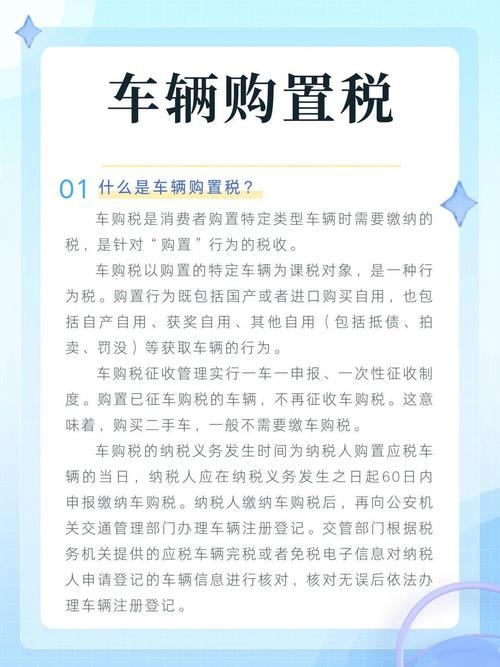
In other words, most of the vehicles in the current car market are traded at a real price below the price of guidance from the manufacturer, but tax is paid at the price of guidance, which undoubtedly cost consumers more。
In order to effectively boost vehicle consumption, expand domestic demand and make it more environmentally friendly, the ministry of finance and the national tax administration announced twice in 2009 and 2015 that 1. 6 litres of passenger cars up to the limit of 5 per cent would be temporarily reduced by a vehicle purchase tax. Ceo liu shiyu, founder of the buying network, said that, under the new acquisition tax law, there is no small-volume acquisition tax credit, and does that mean that the cost of buying a car may increase? “i think that this understanding is slightly different. Although it had previously implemented a small-volume acquisition tax preference, it had not been fully implemented from the point of view of the manufacturer and distributor.”
Why not? Liu shiyu analyses that manufacturers and dealers follow market patterns. “that is to say, when the market was depressed, the price of the car fell significantly. Car prices have been going down in recent years. As a result, in the context of the implementation of the small-volume acquisition tax preference, this preference has been absorbed at the dealer level and has in fact had little impact on the purchase of cars by consumers.”
With the implementation of the new acquisition tax, the tax deduction on the purchase of vehicles by consumers will depend on the amount actually paid, effectively improving the problem of high tax rates in the past. Choi dong-soo said that this would help protect consumer interests and further reduce the cost of purchasing cars。
Is it possible that temporary acquisition tax preferences will not exist? Choi dong-sook said, “i think this is a policy that regulates the management of preferences, such as those that may have been achieved with the approval of the national people's congress, but may have been more complex than the way they were managed, thus reducing the flexibility of some policies. The introduction of new acquisition tax schemes has led to a model of regulatory regulation and how some preferential policies can be implemented, both to guarantee reasonable stability in national taxes and to safeguard consumer interests. Therefore, i think tax policy has a very binding effect.”
Exemption from public utility vehicle acquisition tax
The new acquisition tax law makes it clear that urban orbital vehicles, such as subways, light rails, loaders, land levelers, excavators, bulldozers, wheeled machinery, cranes, forklifts, etc., do not belong to taxable vehicles and are exempt from taxes on the purchase of public vehicles in urban public transport enterprises。
Indeed, in 2016, the proclamation of the general tax administration of the ministry of finance on specific policies related to vehicle acquisition taxes provided for the exemption from the vehicle acquisition tax on public motor vehicles purchased by urban public transport enterprises from 1 january 2016 until 31 december 2020. Wang zhi gao, director of the low carbon cities project of the energy foundation, told the daily reporter of technology that the “legalization” this time of the exemption from taxes on the purchase of public motor vehicles in urban public transport companies would show the state's attitude towards prioritizing public transport and promoting green mobility。
Currently, the high cost of vehicle acquisition is an important obstacle to the promotion of new energy buses. For example, in 2018, the price of a biadi electric bus was 1 million to 1. 3 million yuan, which, although it had fallen by half compared to the price of a few years ago, was still expensive compared to fuel buses, which were difficult for ordinary bus companies to bear. Thus, the expansion of new energy buses in other cities, except for the relatively high share of new energy buses in developed cities such as shenzhen, beijing and shanghai, has been less than desirable。
“to some extent, the legalization and further clarification of the procedures and conditions for the acquisition of public vehicles free of charge in urban public transport enterprises will help to speed up the spread of new energy buses in cities.” wang zhikou。
New energy vehicles are not subject to vehicle acquisition tax
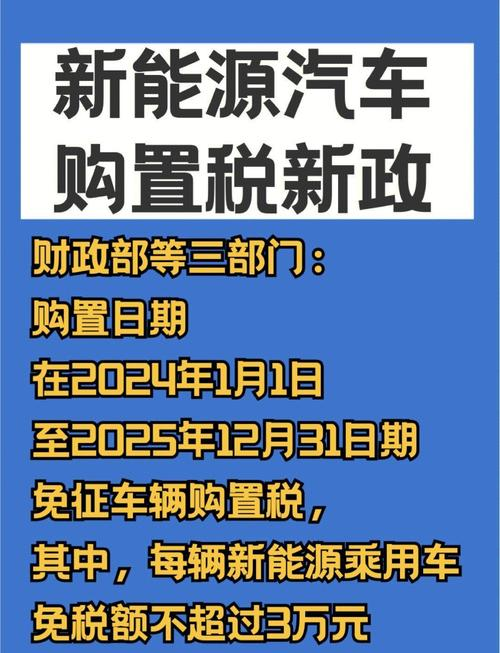
In december 2017, four departments, namely the ministry of finance, the ministry of industry and communications, the ministry of science and technology and the national tax administration, issued a joint bulletin on the exemption of new energy vehicles from the vehicle acquisition tax, which exempts new energy vehicles from the vehicle acquisition tax and specifies the period for which the exemption will be granted from 1 january 2018 to 31 december 2020. However, since individuals buy electric vehicles, hybrid new energy vehicles are not explicitly exempted from the current vehicle acquisition tax law. As a result, some of the new energy car dealers used the acquisition tax as a selling point to persuade consumers to buy cars earlier。
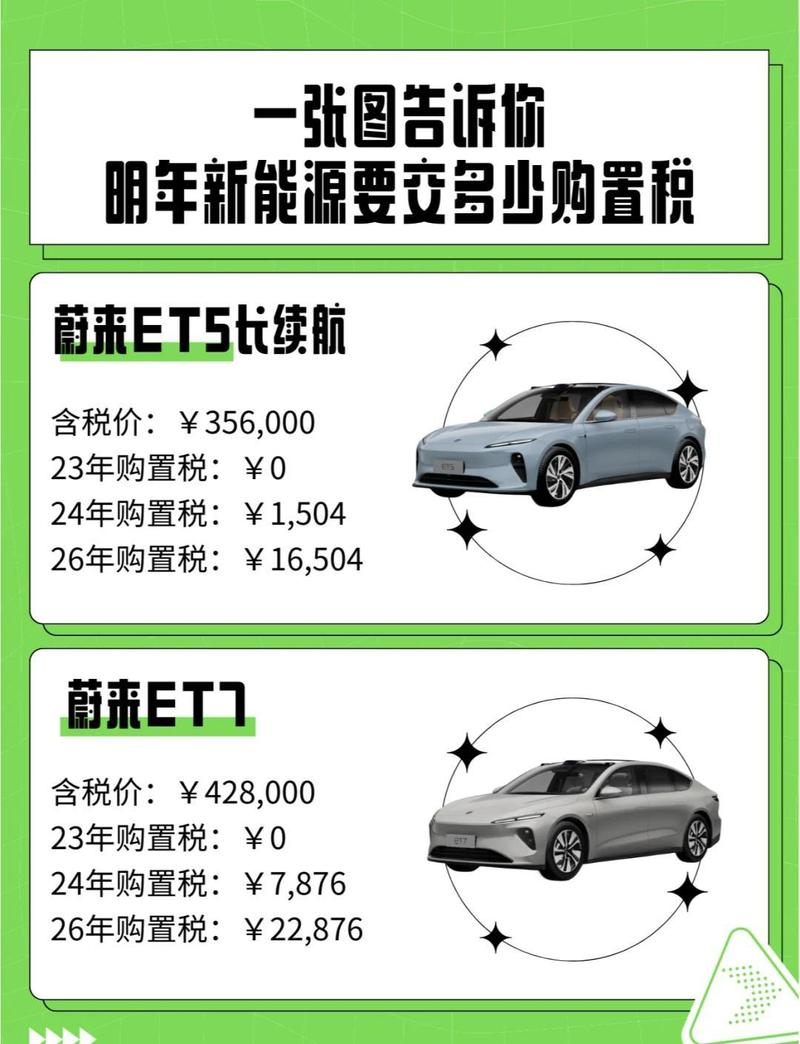
According to a 4s salesman, current sources suggest that new energy vehicles may no longer be exempt from acquisition taxes, combined with a fall in state subsidies and the elimination of local subsidies. Although the factory's policy of securing prices will continue until the end of the month, the market situation is changing and new energy vehicles will still be bought early. Consumers are in trouble with the advice of shopkeepers。
In response, the journalist advice 12366 tax service hotline was informed that the new type of energy vehicle entering the new energy car model list, free of taxes on vehicle purchases, would not be affected by the new acquisition tax law and would continue to benefit from a preferential acquisition tax exemption until 31 december 2020。
According to wang zhigo, this is in line with the broader policy context of the decline in subsidies for the acquisition of new energy vehicles. The gradual reduction or even withdrawal of economic incentives in the vehicle acquisition chain could provide space for the promotion of other links in the new energy vehicle, such as incentives for infrastructure development such as charging stakes. This would also facilitate more focused technology development by new energy car producers, increase market competitiveness of new energy vehicles, including safety, reliability and accessibility, and accelerate cost reductions. Sustainable development can be achieved through the provision of services of good quality that meet market demand。
How will the new acquisition tax laws affect dealers and the automobile market? Liu se yu believes that they will be the first to regulate their sales. The current car market, especially in the price system, is not very regulated. Consumers can feel that “the price is reduced if the sale is bad, the price is increased if the sale is good. There are many reasons for the increase, such as the fact that when porsche cayler sold the hottest car in the year, 850,000 naked cars, and consumers arrived at $1. 35 million, half a million of which were selected packages, would never be bought if consumers did not buy the half million. There is a direct need for an increase in the amount of the money, which may be a mere receipt, not even an invoice, and a lot of money.”
According to liu, the new purchase tax is stringent and regulated in the tax code, both by addressing the issue of random issuance of tickets for the sale of automobiles and by restricting their sale, while making the system of market prices more transparent, legitimate and conducive to consumer protection。