01
I. The case
In february 2015, a-aluminium company entered into a contract for direct trade in transmission and distribution services with b-aluminium company and the c-c-munal power authority, and on the same day, a-aluminium company and b-aluminium company entered into a direct trade contract for the purchase and sale of electricity. In 2016 and 2017, aluminium a, together with b and c, respectively, entered into tripartite contracts for direct trade in transmission and distribution services。
Subsequently, as a result of aluminium's failure to pay its electricity bills, the municipal electricity authority filed a lawsuit with the court requesting that it be legally ordered to pay immediately to the aluminium power authority the amount owed as at 28 december 2017, and to pay the default amount until the date of payment of the electricity bills, as contracted。
The plaintiff and aluminium company signed the supply contract (high pressure) on 3 march 2014, under which default payments are calculated at 0. 2 per cent of the total amount of arrears per day from the date of default, and 0. 3 per cent of the total amount of arrears per day. The contract is valid for a period of three years and is automatically renewed for a period of one year without limitation of the number of extensions. As of 25 january 2014, aluminium began to owe electricity costs, and after the expiration of the supply contract (high pressure) on 2 april 2017, the contract was automatically extended, and both parties ' rights and obligations continued to be performed under the contract。
The provincial high court held that according to article 114 of the contract law: “a party may agree that a party should pay the other party a certain amount of default money in the event of a breach of contract, or may agree on the method of calculating the damages arising from the breach. If the agreed default is less than the loss, the parties may request the people's court or the arbitration agency to increase it; if the agreed default is too high, the parties may request the people's court or the arbitration authority to reduce it as appropriate.” the court may adjust the agreed default on the application of the parties. In accordance with the supreme people's court's interpretation of (ii) article 29 on certain issues (on the application of the law on contracts): “if the parties claim that the agreed amount of the amount of the breach is properly reduced, the people's court shall base its decision on actual losses, taking into account the combination of the performance of the contract, the degree of fault of the parties and the expected benefit, and shall be measured in accordance with the principles of fairness and good faith. Where the parties have agreed to contract more than 30 per cent of the loss caused by the breach, it is generally possible to qualify as an excess of loss under article 114, paragraph 2, of the contract law” and aluminium is entitled to request a reduction in the agreed criteria for calculating the breach. As agreed, the default amount paid by aluminium to the power authority was calculated at 0. 3 per cent per day and the equivalent annual interest rate was 108 per cent, which was clearly excessive and should be reduced. The losses sustained by the authority were the cost of the funds, and the losses should have been calculated by aluminium industries on the basis of a 30 per cent default payment to the authority at the benchmark rate of the loan of the people's bank of china for the same period。
The post-aluminium company appealed, and the supreme court held that the court of first instance did not support it in view of the fact that the court of first instance had adjusted the criteria for calculating the default money on the basis of the application of aluminium and that aluminium company had argued that the calculation criteria for the default money had no legal basis by reference to the people's bank deposit rate for the same period。
02
Ii. Differing criteria for adjudication
(a) the “similarity” of the default on electricity is more common, with an acceptance of the effect of the law on electricity, which is agreed upon in contracts for the supply of electricity; another view was that, even if the contract agreed on the rate of default under the electricity legislation, it was too high。
(i) proportion of non-conformity payments based on electricity regulations
Article 27 of the electricity supply and use regulations provides that: “the power provider shall charge the user a charge based on the price of the electricity approved by the state and the record of the electrometric devices. The user shall pay the cost of the electricity at the price approved by the state and in accordance with the specified period, manner or contractual arrangements.” article 39 provides that: “if, in violation of article 27 of these regulations, the electricity provider fails to pay the electricity bill, it may receive a daily amount of 0. 1 per cent - 0. 3 per cent of the total electricity bill plus the default payment, as agreed by the parties to the supply contract; if, after 30 days after the expiry of the deadline, the electricity provider has not paid the fee, it may, in accordance with procedures established by the state, suspend the supply.” in article 98 of the rules of conduct for electricity supply, the amount of the default amount for electricity is 0. 1 per cent and 10. 3 per cent for various defaulting households。
Although there are provisions in the above-mentioned laws and regulations under which default money may be charged to an electrician, since it is not mandatory by law or regulation, the determination of default money and the percentage of default money collection by an electrician depends entirely on the will of the parties to the power contract. The court held that the standard was premised on the fact that the default payment clause had been expressly agreed in the supply contract and that the agreed default calculation criteria were in line with regulations such as the electricity supply and use regulations, the rules governing the rate of default payments for non-payment of electricity bills, i. E. The criteria in the sectoral regulations were confirmed by the court in the form of a default clause in the actual determination. If the calculation criteria for liquidated damages were not agreed upon in the power supply contract, the court would not support a direct application by the power provider of 0. 1 per cent - 0. 3 per cent of the amount of the default, but would rather be sentenced to ordinary claims and actual losses。
The statutory default is an enterprise under the supervision of the executive branch, which is obliged to include the breach clause in the contract in accordance with the amount and proportion specified by it at the time of its conclusion, rather than directly restraining and sanctioning the parties to the contract. A growing number of judicial decisions tend to suggest that default payments under laws, regulations and sectoral rules cannot constitute contract default clauses without reference to them in the contract. Statutory defaults are merely instructive and not directly applicable, and in fact they are contractual defaults, thus reflecting the equality of the public enterprise vis-à-vis the contract. Even statutory defaults should fall within the scope of article 114 of contract law。
(ii) an ex officio adjustment of the agreed default standard to be considered excessive
Even if the power company had agreed to default under the provisions of the electricity laws and regulations, it had sometimes been adjusted by the court to be too high. In such cases, the court found that the default amount was calculated at 0. 3 per cent per day and the equivalent annual rate was 108 per cent, which was clearly excessive and should be reduced. In practice, therefore, courts tend to adjust ex officio when the standard of agreed default is raised by the power user, but the criteria vary。
There is no uniform understanding in judicial practice of the actual loss of monetary debt, and there is a different understanding of the actual loss incurred by the electrician when the electrician is late in paying the electricity bill: (1) the principal amount of the electricity bill is treated as a loss, at which point the standard of default money is capped at 30 per cent of the principal amount of the electricity bill; (2) the interest on bank loans for the same period arising from the late payment of the electricity bill is used as a loss, and the rate of default on electricity charges is defined as one to four times the interest on bank loans for the same period (see para. The interest rate on private lending may not exceed four times the rate on loans of the same kind published by the people's bank during the same period, or is subject to a discretion of the supreme people's court, in accordance with the provisions of the law on certain questions relating to the trial of private borrowing cases, to an annual rate of less than 24 per cent, or to a 30 per cent increase in the base rate on loans of the people's bank for the same period。
Thus, in the case of monetary debt, there is a different understanding of the principal or interest as a loss, and there are different criteria for calculating interest even when interest is a loss. In the above-mentioned case, the court of first and second instance found that the loss suffered by the electricity authority was the cost of the use of funds and that the loss should be calculated on the basis of the 30 per cent increase in the base rate of the loan of the people's bank of china for the same period on the basis of unpaid electricity charges. The underlying logic is that the losses suffered by the compliance party are primarily interest losses, which are quantified as 130 per cent of the loss under article 29 of the law of contract (ii) and are more than 130 per cent of the actual loss, i. E., that the amount of the breach is deemed to be excessive than the loss and should be adjusted in accordance with the law or not。
On 8 november 2019, the supreme people's court published the proceedings of the national conference on civil and commercial trials of courts (hereinafter referred to as the summary of the meeting of the nine peoples) and began to implement them on the date of publication. The minutes are not judicial interpretations and cannot be invoked as a basis for a decision, but may be reasoned in the light of the relevant provisions of the minutes, when a specific analysis of the reasons for the application of the law is to be found in the part of the deciding instrument “in the opinion of the court”. The summary of the meeting of the nine peoples explicitly requires dual contracts other than borrowing contracts, that the payment of the price is not a repayment obligation of the borrowing contract, that the ceiling on private borrowing interest rates (24 per cent per annum) should not be used as a criterion for determining whether the default is excessive, and that a combination of contract performance, the degree of fault and the expected benefits would increase the cost of default for the defaulting party, safeguard the fundamental principle of good faith and protect the fundamental interests of the party that is in compliance. At the same time, the burden of proof of whether or not the breach is excessive is on the party claiming the breach. According to this provision, the cap on private borrowing rates is not a criterion for determining whether default money is excessive. As a result, it is foreseen that there will be a corresponding reduction in the number of cases in which default payments for electricity will be calculated at 24 per cent of the annual rate in the future。
(iii) trends in the adjudication of default payments against electricity in the context of market-based reforms
The power company has consistently argued that the calculation of default money for electricity costs should be carried out directly in accordance with the provisions of the electricity supply and use regulations, the rules for the operation of electricity supply, but this claim has not been upheld by the courts in many of the electricity fee disputes in recent years and has been found to be excessive. The provisions of administrative regulations cannot be fully recognized by the judiciary, and electricity enterprises face a dilemma。
The electricity supply and use regulations, the rules for the operation of electricity supply, provide for a specific proportion of the default on electricity charges, with particular background and reasons. The legislative background at the time was that the power market reform was at an exploratory stage, that the network had not yet been separated, and that, together with the technical conditions at the time, the “first-to-first-to-first-to-pay” method of payment of electricity had been widely used, thereby posing a significant risk to the electricity companies, which had been given a clear, specific and high percentage of the right to collect default money. The default on electricity is an agreed default on statutory default funds, which are provided for by law because, as a natural monopoly, the failure of the law to provide uniform regulation of the default on electricity costs necessarily leads to a variety of practices, which is the real reason for the ratio of default on the part of the electricity supply and use regulations, the electricity business rules。
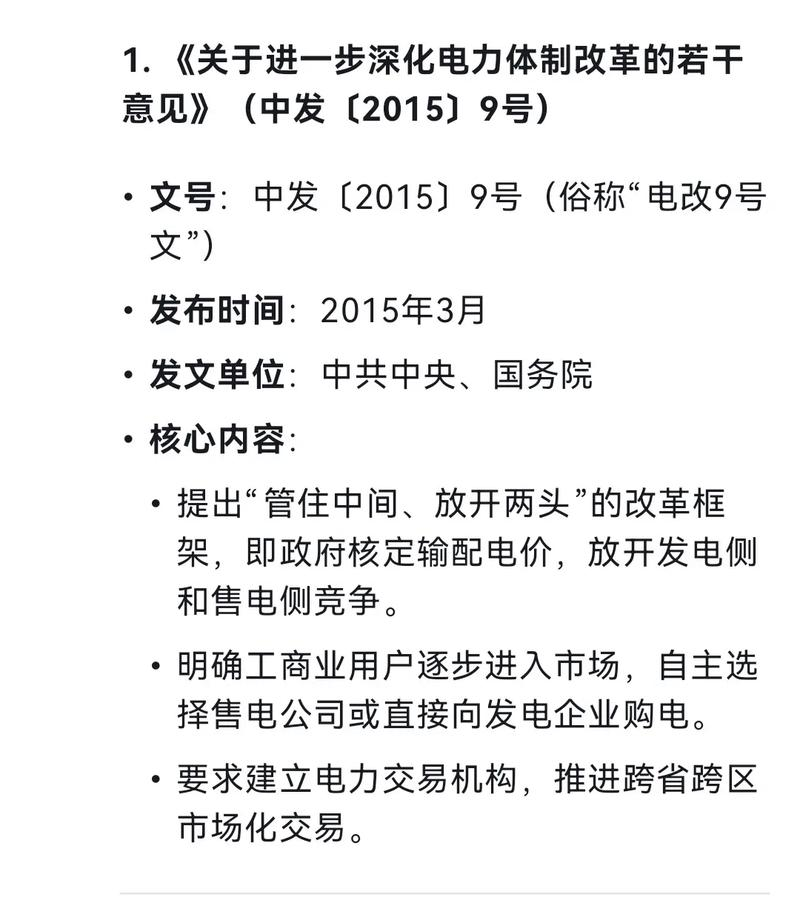
The legislative basis for electricity legislation has changed significantly as the reform of the electricity system has advanced. Electricity users will have the option to purchase electricity from different market subjects, and electricity will gradually be restored to the attributes of ordinary commodities. In cases where users choose to supply electricity to grid enterprises, the parties continue to establish a supply contract. However, when a user deals directly with the power plant or purchases electricity through a sales company, there is a business commissioning relationship between the power grid company and the company that sells the electricity, and the user. Power users who have been involved in market transactions have gained more options and have broken the monopoly model of the power company for the “whole-purchase” of electricity commodities, and the supply contract relationship, as defined in the electricity supply and use regulations and the electricity business rules, has changed significantly。
The decision in the above-mentioned case shows that if the power company does not have evidence that it suffered losses as a result of the defaulting party's late payment, the court will find that its loss was primarily a loss of interest due to the occupation of funds. The courts generally determine the proportion of the default money for electricity in the fair and honest credit measurement system, taking into account the circumstances of the case, after a combination of factors such as the actual loss caused by the breach and the level of fault of the defaulting party。