“the electricity sector in various parts of shandong is using practical action to resist the policy of supporting provincial and municipal enterprises to withhold payments.” on 2 march, the relevant head of a listed company in qingdao, shandong, told the securities times e that 13 days earlier, the sundong province's mail company had been providing electricity “unreservedly” but that the electricity sector was pressing for electricity charges。
In shandong province, the “unreserved payment” policy does not provide for the withholding of late payment of electricity by enterprises, at an annual interest rate of around 73 per cent. In order not to pay such a high amount of late-payment, enterprises have to pay their electricity bills on time。
The electricity bill is slow, but it has to be high
During the new coronary pneumonia epidemic, various government policies were put in place throughout the country to “reduce” enterprises and to help them overcome their difficulties. In shandong province, the company's policy of withholding electricity payments was also well intended, but there was a “glass door” that businesses could not see。
“the electricity sector in various parts of shandong is using practical action to resist the policy of provincial and municipal support for enterprises to withhold their payments and is forcing enterprises to pay for their electricity. Although power cuts were not possible, the electricity sector was routinely collecting late payments. Now there's no way for a company to pay the electricity bill first.” u ming, the relevant head of a listed company in qingdao, shandong, recently reported to the securities times e。
The source of the incident was the opinions on supporting the health development of the wholesale and distribution trades and film shows in life services in response to the new crown pneumonia epidemic issued by the office of the people's government of shandong province on 18 february, article 10 of which provides for the introduction of “non-stop payments” for electricity, gas, water, etc. For the operation of enterprises, and the payment of fees by enterprises within three months of the end of the epidemic. Municipalities may develop support policies based on local affordability studies to reduce the water and gas burden of enterprises。
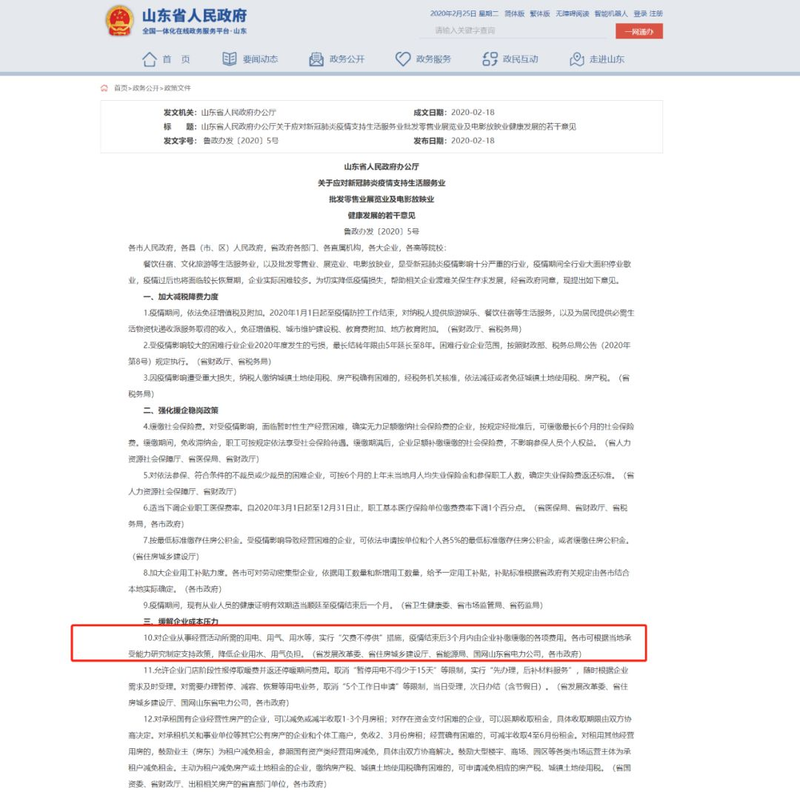
The government's policy was originally designed to ease corporate cash flow strains in the epidemic, but it did not require late payment of electricity bills。
The electricity sector provides that the portion of the arrears for the current year is calculated at two per cent of the total arrears per day and the portion of the arrears per day at three per cent of the total。
In other words, in the case of the portion of the current year's arrears, the annualized interest rate for late payment is 73 per cent. Of course, the amount to be paid is no more than 30 per cent of the electricity sector losses。
“as soon as the payment of the electricity fee is made, the cut-off rate will be applied. U ming analyses that it is believed that the government was originally intended to alleviate the cash flow problems of the enterprise, but the wording is somewhat problematic, and the document does not address the issue of late payment, leaving a mark on the electricity sector.” despite the difficulties encountered by businesses in the epidemic, our cash reserves can be paid for. Many enterprises are certainly the most urgent in terms of employee wages, raw materials required for delivery, regular payment of accounts payable, etc., and other costs of electricity will be stretched, with a three-month delay in paying, and in the short term cash will meet more urgent needs.”
According to u ming, it is understandable that even bank interest on deferred electricity payments would amount to disguised short-term financing, and that the deferred payments would “take it”。
Electricity sector: all late payments
So, how did the power sector respond to the delay
In the afternoon, journalists called the electricity sector service, and the electricity service providers explained the preferential policy during the epidemic。
For the affected sectors. Under the current policy, industries associated with the epidemic, such as production facilities such as hospitals, detection sites, medical devices, etc., are guaranteed electricity supply and are completely suspended. However, although the payment of electricity can be deferred, default payments (delay payments) are also required。
In the case of smes, there is a “defunct supply” requirement. In the case of default money, the above-mentioned electrician responded that there should be default money。
In the case of large enterprises, in addition to the priority enterprises involved in the pandemic, the failure to pay for electricity cuts is strictly enforced, the notice of arrears is in place and the payment of default payments is more important. In the case of epidemic-related cases, such as hospitals and outpatient clinics, default money may be deferred by applying to the local department of operations and zone managers。
That is to say, no matter how close an enterprise or sector is to the epidemic, the largest power sector can achieve a “push supply”, but default payments must be made, at most on a deferred basis。
Jenan enterprises: no concessions
On 2 march, the head of a chain retail business in jenan city told the securities times e that the policy currently enjoyed was to provide workers with a respite from paying social security and that utilities were paid normally。
Another firm's related director also told the securities times e company that “we still pay the electricity bill in the same way as before.” there is another state, provincial and municipal development commission policy of preferential electricity, which the company does not enjoy。
On 7 february, the national commission issued a circular on the adoption of a policy of supporting two-tier electricity prices during the epidemic to reduce the cost of electricity for enterprises; on 10 february, the shandong provincial commission issued a circular on strict enforcement of the policy on supporting electricity prices during the epidemic control, which refined the commission's policy; and on 11 february, the jenan municipal commission issued a circular on strict enforcement of the policy on supporting electricity prices during the epidemic control. According to the circular issued by the shandong provincial commission for development and rehabilitation, the preferential policies consist of three main provisions:
In the case of enterprises that are not in a position to resume work, the application for suspension (restoration), reduction (restoration) and change in the method of collection of the basic electricity charge shall no longer be subject to the conditions of “the selection of the basic electricity bill as being fixed for a period of three months”, “the suspension of electricity shall not be less than 15 days”, “an application for reduction, suspension, restoration, suspension of electricity”. Enterprises can do this as they need to, and grid-connected enterprises can provide retroactive relief for the time that has elapsed since the outbreak。
In the case of enterprises that have resumed work and have resumed production during the epidemic, when they have chosen to pay the basic electricity bill on the basis of the contract's maximum requirement, the actual maximum need exceeds the actual charge for electricity by more than 105 per cent of the contract's value, suspending the policy of double the basic electricity bill for more than 105 per cent。
Iii. The need for electricity in new and expanded facilities, such as medical facilities, which provide direct services for disease prevention and control, is exempted from the high reliability of electricity at rates ranging from $50 to $200 per kva。
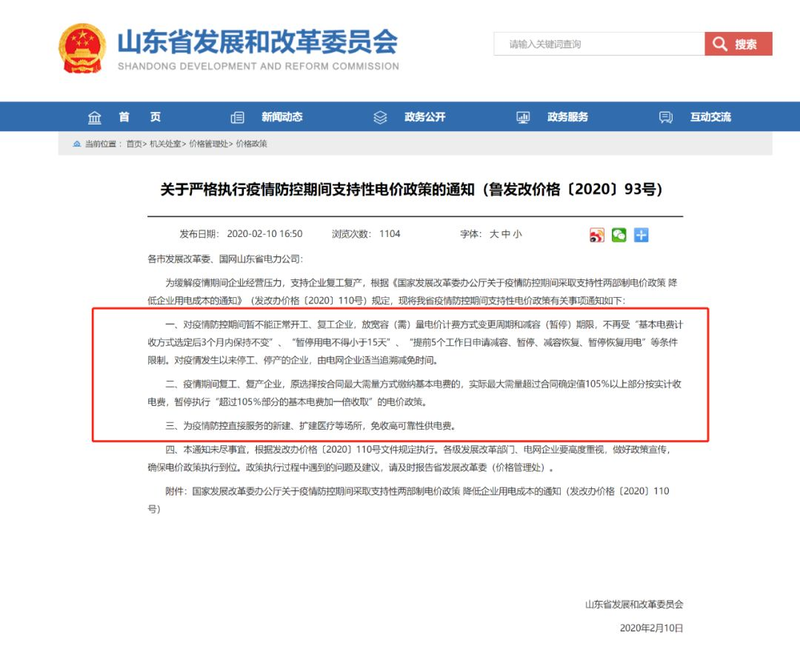
“we also did not enjoy these three policies.” according to the above-mentioned director of the jenan enterprise。
U ming believes that the government's starting point is good, but that the preferential policies put in place during the epidemic should be “outright”, detailed and enforceable so that businesses can truly benefit。
Source: e company officer (id:lianhuacaijing)