I. Concepts related to enterprise knowledge management
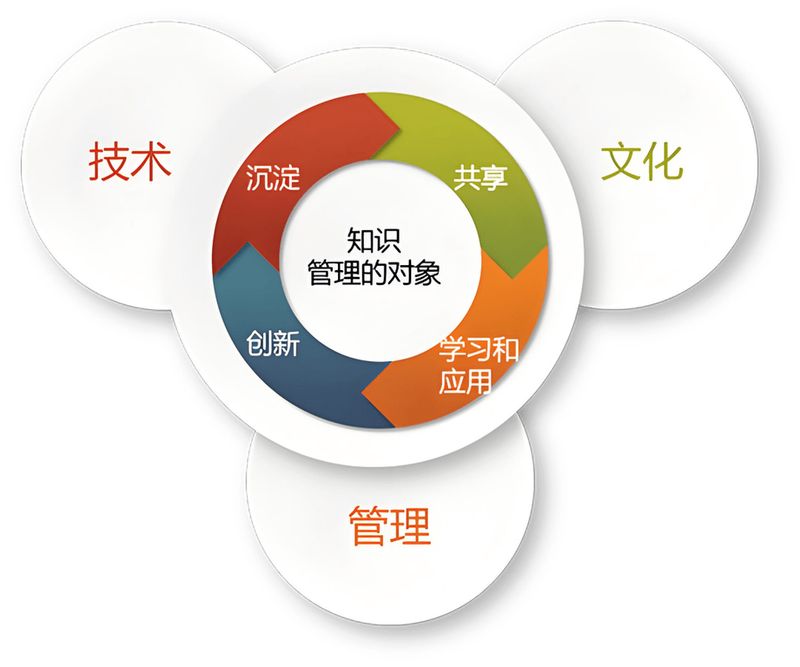
“knowledge management” is often understood by enterprises as an enterprise knowledge management system, and in practice the scope of knowledge management is broader than that of a knowledge management system, which also includes knowledge management concepts, implementation methods, etc. Driven by cutting-edge technologies such as today's cloud services, big data and artificial intelligence, knowledge management has been injected into new dynamics and prospects, playing an increasing role in the core business of enterprises。
Since the scope of km itself is borderless, its application in an enterprise requires an artificial definition of “boundary”. We define business knowledge management as “the inheritance and development of business knowledge”, while business knowledge is limited to knowledge that plays a key role in the core business of the enterprise。
In terms of the development of enterprise knowledge management, enterprise knowledge management has gone through km 1. 0 (km1. 0), which addresses the assetization of business knowledge; km 2. 0 (km2. 0), which addresses the landscape of business knowledge; and km 3. 0 (km3. 0), which addresses the intellectualization of business knowledge。
As the theory and practice of knowledge management has evolved in recent years, the business-based model of knowledge management is roughly six: knowledge content orientation, community of practice orientation, staff growth orientation, business process orientation, integrated application orientation and innovation-driven orientation。
In the implementation and promotion of an enterprise, a mix of community-based, business process-oriented and integrated applications has been used to guide three land landing models。
Ii. Enterprise knowledge management implementation requirements and preparation
We find that business people's knowledge of business knowledge management varies widely, with most remaining at the level of “collecting business knowledge (which is concentrated in disarray) to facilitate the work of their employees”. Indeed, the most important use of implementing knowledge management in enterprises is to provide the foundation platform for innovation and development of the core business of the enterprise, which includes people, knowledge, landscape, applications and their linkages. It is therefore essential that enterprise staff be trained in corporate knowledge management。
By analysing and summarizing cases of application of enterprise knowledge management, we believe that the key points for success in implementing enterprise knowledge management are team, strategy, and planning。
(i) enterprise knowledge management team
The corporate knowledge management team is generally divided into three levels:
Leadership
Some enterprises have corporate knowledge management in their own hands, others have “knowledge management committees”, “knowledge management expert committees” and others have appointed cko (chief knowledge officer). The name of the organization and role may vary, but the function at this level must be fulfilled: to promote the implementation and application of enterprise knowledge management。
2. Supervisory level
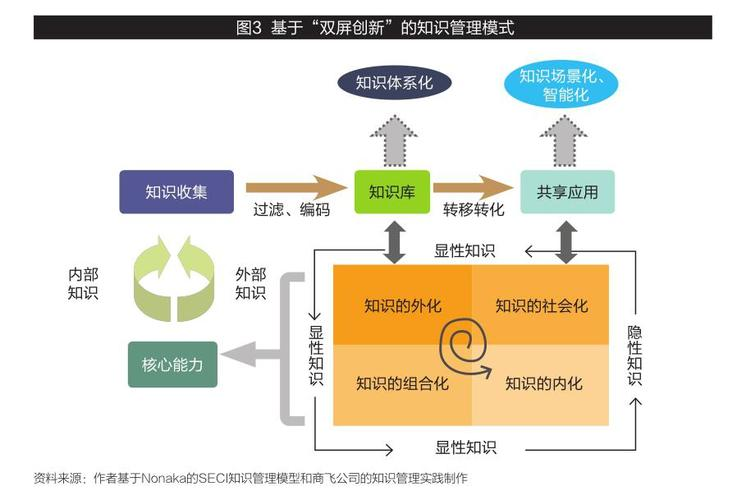
This tier is primarily responsible for the implementation and management of enterprise knowledge management, consisting mainly of two functions: management and technical support, where enterprises can set up specific units (e. G., knowledge management centres, knowledge management departments) on a case-by-case basis, or where they already exist (e. G., technology development ministries, technology strategy and development ministries, process improvement centres, etc.)。
3. Executive level
This tier is primarily responsible for knowledge provision and application of enterprise knowledge management, and is staffed by project leaders, department heads, knowledge management commissioners and enterprise staff。
Some of the older experts in the enterprise can play an important role in enterprise knowledge management, as they can do specific tasks such as collecting, collating, auditing, etc., because of their high level of skills and adequate working hours。
It is also a better option to leave the business knowledge management system to professional teams outside the enterprise。
(ii) enterprise knowledge management strategy
Since knowledge management is not as immediate as a specific business, how to motivate business knowledge management practitioners and employees is an important factor in the success of enterprise knowledge management. Based on the successful experience of corporate knowledge management, the main strategy is to provide incentives through points, rankings, knowledge competitions, etc. Some enterprises, for example, provide for 500 credits for one day of paid annual leave。
(iii) enterprise knowledge management planning
Based on its objectives and capabilities, an enterprise can choose a path of implementation appropriate to itself, typical of which are the following: a. Combination of key business and knowledge systems, near-term system landing, long-term planning routes (usual practice); b. Clarifying core competencies, building knowledge systems, knowledge landscapes (suitable for a base enterprise); c. Integrating knowledge to support innovative mechanisms (suitable for industry leaders); d. Focusing differentiation to support system innovation (suit for a gaping enterprise); and e. Replicating models (suitable for group-to-subsidiate)。
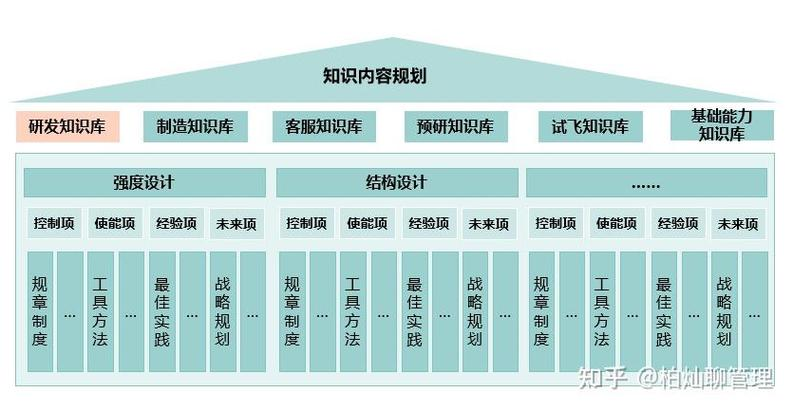
In the context of an enterprise's outreach, a path of implementation was chosen for “defining core competencies, building knowledge systems, mapping knowledge”. The engineering knowledge of an enterprise consists of knowledge entries, application scenarios and user behaviour, and the enterprise needs not only to build knowledge systems to manage knowledge assets, but also to manage knowledge applications and user behaviour。
Iii. Exploring the confusion about enterprise knowledge management
(i) what value enterprise knowledge management can bring
The implementation and application of enterprise knowledge management is a long-term undertaking, and it is not always clear in the short term that there will be tangible results and value. So we do not generally measure the value of enterprise knowledge management alone, but rather the value of business results. In other words, the core business of the enterprise has been upgraded and the core competitiveness of the enterprise has been strengthened, that is, the value of enterprise knowledge management。
(ii) whether enterprise knowledge management can lead to a loss of business knowledge and a “breach of confidentiality”
Many enterprises are concerned about the loss of corporate knowledge after the implementation and application of enterprise knowledge management, as well as the resulting “discretion”, which should in fact be understood in terms of screening their technological secrets or sensitive information and handling them separately, such as controlled access to such technology secrets or sensitive information that is not placed in the enterprise's shared database or security measures, which can generally be effective in preventing the loss of technological secrets or sensitive information from being stolen; and in terms of the benefits of appropriate disclosure of some of the technology of the enterprise, where advanced countries, such as europe and the united states, have resorted to regular declassification of some of the technological secrets in order to deliberately allow others to follow their technology so that they can always maintain a leading advantage in the field of technology. Our business should also have such a strategic approach to share the relevant technology for the products of the previous generation, so that it can be studied, followed and developed by a wide range of participants, as well as a powerful contribution to itself while maintaining its own lead in the field of technology。
(iii) whether enterprise knowledge management leads to “disorder” by employees
Many enterprises are concerned that when knowledge management systems are online, staff are busy communicating, asking questions, contests, points, etc., which affects their job. We know that the ultimate goal of enterprise knowledge management is to support the innovative development of enterprises, and that innovation is not achieved only by doing business well, that the necessary external stimulus is effective, and that cross-border thinking by r & d practitioners often leads to undesirable awareness and thus innovation and breakthroughs. Thus, from the point of view of supporting innovation development, enterprises should encourage “moderate” “business failure”. Overseas google allows employees to spend 20 per cent of their time thinking; 3m allows employees to spend 15 per cent of their time on projects of interest。
(iv) automatic access to tacit knowledge by enterprises
At current levels of technology, access to tacit knowledge is not yet automated and needs to be done manually. The “expert system” and “dialogue robots” are all intellectually and technologically oriented and are not yet ripe for large-scale applications. However, with the rapid development of cutting-edge technologies such as cloud services, big data and artificial intelligence, automatic access to tacit knowledge will be progressively realized, and firms will simply follow these technologies and gradually apply them to their own knowledge management systems。
Iv. Functions of an enterprise knowledge management system
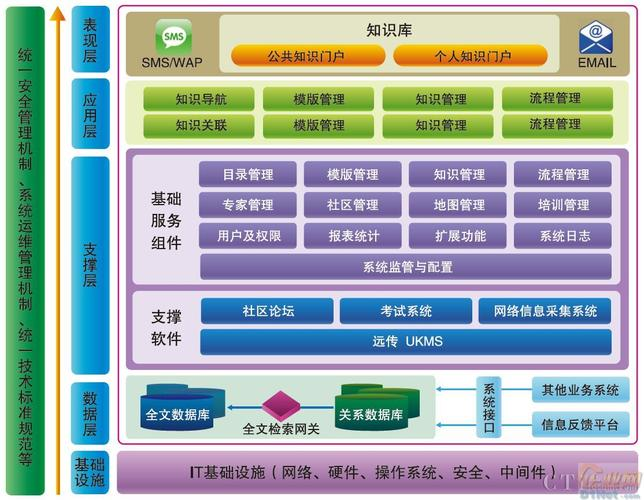
Enterprise knowledge management systems play a key role in supporting enterprise knowledge management. The enterprise knowledge management system should have three main functional functions: a knowledge portal, a knowledge hub and system management。
(i) knowledge portal
The first page of the portal provides users with a centralized presentation of information, including, inter alia, news bulletin areas, retrieval areas, knowledge target areas and statistical row areas。
The news bulletin area contains photographic displays, announcements and news developments。
Knowledge retrieval is the main way to achieve the application of knowledge. Semantic search uses semantic techniques to analyse search conditions and results and to output search results that meet the intent of the user. Knowledge navigation uses graphical means to visualize terminology and the relationship between terminology。
The knowledge constituency presents users with the latest hottest items, the latest hottest questions and answers, while providing different types of knowledge, such as failure knowledge, documentation knowledge, etc。
The statistical row area is used to rank the quality of knowledge in the graphical display system, the level of participation and contribution of users, and to provide users with visual insight into the status of knowledge activities in the system. Among them, the knowledge quality line is used to evaluate the value of knowledge, to calculate and rank statistically according to the user's rating, comment, association, recommendation, subscription, push behaviour, and to graphically display the top 10 knowledge items. Participation rows are used to evaluate the level of participation of users in the system, to calculate and rank comments, create, query, click, rate, upload, download, import, answer, collection, recommendation, subscription, etc., and to graphically display the top ten users. The contribution line is used to evaluate the contribution of users in the system, to make statistical calculations and rows of user queries, connections, creation, modification, clicks, ratings, comments, uploads, etc., and to graphically display the top 10 users。
(ii) knowledge centres
Individual centres: the individual centres include “application list”, “approval list”, “my collection”, “recommendant box”, “knowledge subscription” etc。
Message management: recording knowledge ratings, reviews and sending messages to knowledge contributors。
Knowledge item management: support the management of knowledge item status, version, change and approval, and support the management of knowledge item life cycle。
Communities of practice: support the formation of communities of practice in day-to-day work, where work is discussed, questions are answered and knowledge is linked to the communities of practice。
Vocabulary management: supports the management of phrase collections, phrase sets, phrase arrays and terminology networks。
Expert management: support the management of basic information, course materials, research materials of experts。
Index management: manage the index library distributed on different physical servers by registration。
(iii) system management
User management: support the harmonization of user integration and field user integration。
Rights management: supports data privileges and functional privileges, privileges for cell users, user groups, and rational handling of controls and sharing。
Object modelling (knowledge templates): support the creation of knowledge templates for each type of engineering knowledge in the enterprise as a parent board to provide a rational and accurate description of engineering knowledge。
V. Status of knowledge management applications
After decades of development, an enterprise has accumulated a wealth of knowledge assets such as product development cases, experiences, methodologies, tools, failures lessons, standards and standards. Business leaders have a strong interest in the effective management, use and value added of knowledge assets. Through the knowledge portal, business leaders are able to see the performance of their knowledge engineering activities. The knowledge portal brings together the most up-to-date, hottest knowledge and issue information, as well as the most recent type of knowledge of greatest interest to enterprises, and presents an assessment of business knowledge, functional sectors and staff, as well as knowledge dynamics and announcements。
The enterprise's employees expect to have access to relevant knowledge in a timely and efficient manner during the course of their work, so that the time taken to search for knowledge can be reduced. However, existing technical tools and tools are less available for the acquisition, organization, transfer and reuse of knowledge. The knowledge centre provides a knowledge retrieval function based on semantic technology to meet the needs of business employees in finding knowledge, ensuring that it is found and used; and establishing task-based knowledge exchange mechanisms among business employees through communities of practice. After receiving a mission, employees of the enterprise build a community of knowledge with their staff, where they can express their views, ask questions and receive the help of a team, and invite them to join the community of practice when they need the help of experts and other staff。
In summary, knowledge portals, knowledge centres are in line with the real needs of enterprise knowledge asset management and knowledge landscape management; knowledge management systems effectively drive enterprise informatization further。