We are in an era of information explosions, from reading books to reading newspapers to reading live, microblogging, short videos, and the larger the volume of information, the richer it is presented. We enjoy the satisfaction of easy access to information, but the overload of information also causes us anxiety。
Too much input would take us a little bit of judgment. What information is worth thinking and internalizing? How can information really be absorbed into knowledge? How can knowledge be stored more effectively in the brain and easily accessible when needed
There is actually a knowledge behind this, called knowledge management. Impression notes chairman & ceo tang yi spoke about these issues in detail at the oppo's exclusive title-sponsored polar park innovation conference。
Here's a video of tang yi's speech, edited by optimus park:
Build a second brain to manage knowledge more scientifically
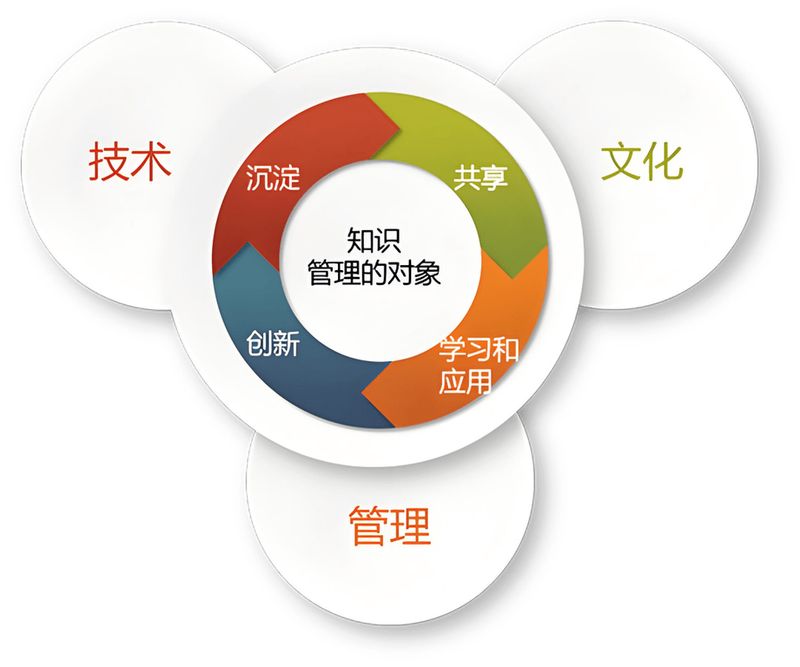
Today, my topic is knowledge management, which brings together some knowledge management approaches and places people in knowledge management to understand more dilemmas. How can knowledge be effectively managed scientifically in an age of explosion of information and knowledge? We look at both the way and the human person。
First, we talk about some of the most primitive points of demand for knowledge and information management: first, information should be captured, whether it is debris or systematic; secondly, information should be stored; and more importantly, it should be remembered and accessed whenever needed. In terms of these claim points, there are many different reflections in the theory of knowledge management。
One of the important angles was presented by stepan panchikov, founder of evernote. He said, "the essence of humanity is to fight for oblivion." so, evernote was the first product to help people remember and think about information。
You're all familiar with the espinhos oblivion curve. The new message that people accept, if there's no way to deepen it, it's probably declining in human memory in 31 days. Thus, the functionality of evernote's original pc version, in addition to supporting the expansion of users ' access to and capture of information, focuses on strengthening information search and linking。
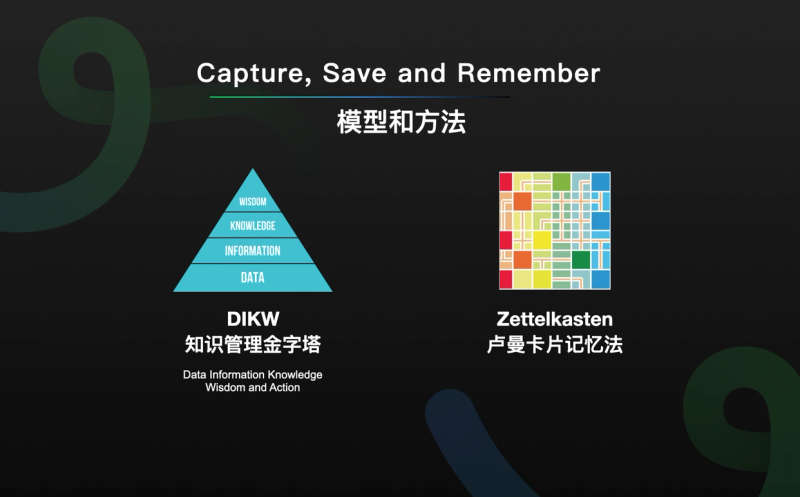
From collecting information to remembering it, this in itself is a contradiction to km. To address this problem, we have seen different approaches to summing up and practice, dating back to the 1970s and 1980s and even earlier。
After decades of evolution, such as card memory, knowledge management pyramid theory, the solution is how to help us translate data into information and into knowledge。
These methods have a common feature, helping us build the second brain and manage knowledge more scientifically。
The "second brain" of humans is also the vision that impressory note has been pursuing。
What are the human requirements for proactive management of knowledge
In an era of knowledge fragmentation, we must answer one question: what needs to be done in knowledge management
In fact, in the context of information explosions, people are recorded from time to time. In the face of a wealth of information channels and excesses, information management demands people to be “active” in responding proactively to the flow of information and identifying what is important and needs to be addressed。
At the same time, we have to confront oblivion. One solution is to "repeat," which requires specialized software tools to present messages and alert messages at different points of time or in different contexts。
In addition, some theoretical studies have taught us that a considerable amount of active knowledge management is accomplished through knowledge classification, change and reorganization。
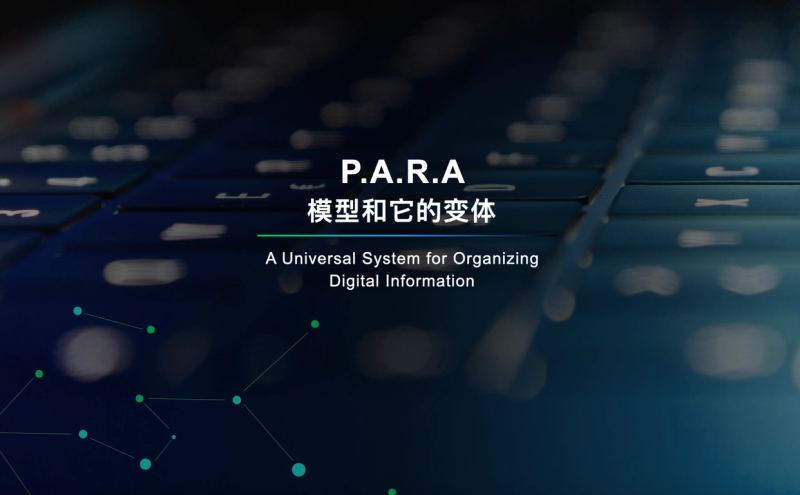
There's a method called p. A. R. A. (project. Area. Resources. Archive), where project is the smallest module of your information processing, and area is the definition of the fields of your in-depth knowledge, and resources is what you can support in understanding the resources for these and more areas, and archive is the archive of information. One of its central points is its emphasis on how to classify knowledge with a small amount of work in the context of active knowledge management, and then on how to study it in depth and actively archive it。
The growing demand for people to manage knowledge proactively is behind the emergence of new capacities for knowledge organization and appreciation. You can see, for example, a two-way link, where an article has been quoted, at which point in the knowledge chain. Search is also an important way of acquiring knowledge, and a new generation of knowledge management tools must also address multi-modular, multi-format search。
How can we avoid the illusion that we have acquired knowledge
Impress notes have a range of products that address knowledge management in different settings. In fact, there is some "impersonality" in managing knowledge. It wants you to stop what you're doing and spend more time on knowledge in order to reap more knowledge。
That sounds like a lot of trouble, but there's a lot of challenges behind it. First, the process must be complex, and second, there must be constant reminders for every link, and then you have to adapt to multiple tools to do these things。
Finally, you have to avoid the illusion that you have acquired knowledge. Because you keep categorizing, creating links to knowledge, and restructuring. But you don't have the knowledge, we need to see something deeper。
The first question is how to testify. It's like you read a book and did a long book. But failure to avoid such knowledge may be wrong. What platform can help you with efficient criticism and proof
The second question is how to acquire knowledge in areas that you do not know yourself. The search does not actually solve the problem of "not knowing." how do you acquire and manage knowledge when you are completely unaware of the basic framework of knowledge in a given area
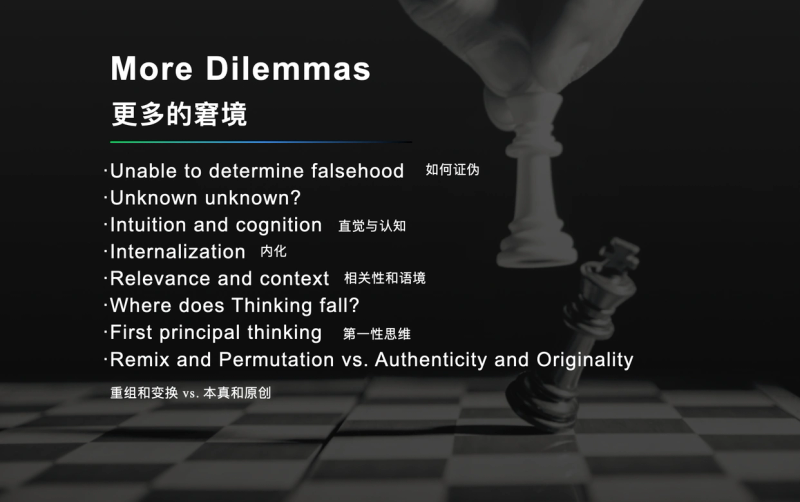
The third question is, how can knowledge be managed in a way that ensures that knowledge is adequately reflected in the brain sciences and leaves room for intuition, compared to traditional card or taxonomy? An inflexible approach leaves little room for intuition。
The fourth question is how to internalize. The repeated reminders do not mean that they must be internalized. So i just said that there are tools that give you the illusion of knowledge, but when you really use it, it may not。
The fifth question is, is the question related to itself? What if there's a lot of irrelevant information? How? There is a saying that technology is left to tools and thinking to itself. When the record stops, thinking begins。
The sixth question is how to keep thinking first in the ongoing reconstruction. Originality, intuition, first thought, etc. Need to be built on in knowledge-based tools。
People create tools, tools shape people
We often say "well-being," which translates as happiness, but it may mean more than happiness. Indeed, the human element is rarely carefully considered in knowledge management。
We will see people often imitating other ways of working and learning. Did you learn enough about other people's methods to become this person? Are you happy when you become someone else
As we look at knowledge management, many users "can only understand it" and, if they don't understand it, they get anxious. But when will it be clear? Where's the balance of comfort
The central point is your happiness, your whole knowledge and well-being together. This is the key to knowledge management. In our view, knowledge management for all is the future。
In the future, we need a ubiquitous, multi-model, permanent online knowledge-processing tool. This tool supports both personal knowledge management and collaborative knowledge generation and management. Knowledge management is no longer the business of one person but of a group of people。
In addition, we feel that the future of knowledge management requires answers from many angles, such as sociology, cognitive science. From my point of view, i think i'm going to need answers to brain interfaces, to connect to information technology。
Man created tools. Tools also shape people. Technology, as an ubiquitous tool, affects public perceptions of the world of experience. These are the thoughts on knowledge management that we base on。
We hope that these tools will not only lead to methods and functions, but also to the exploration of deeper knowledge management and the human solutions behind it。