I. Format of receipt of deposits:
Payment of deposits
So far, we've received a deposit for the rental of the house: –$. Two copies in one form, with equal legal force。
The deposit was returned to the tenant upon expiry of the contract。
Payee:
Id number:
Cashier:
Id number:
Date:
2. The form of receipt of the deposit consists of three parts, the heading, the content and the down payment。
(i) the title is written in the middle of the text and the font is slightly larger. That is, the words “receipt” or “receipt”. You can also use the headings “received today”, “received now”, “received received”。
(ii) the body of the text normally begins in two spaces in the second line, but the entry headed “received today” is not empty. The text should generally contain information on the amount of money received, the type of items, specifications, etc., bearing in mind that the amount of money is to be capitalized。
(iii) loans normally require the name of the person or unit receiving the money, the date of receipt on which it is received, and a stamp. It is the word “person” that a person normally handles in front of a name. If it is received on behalf of another person, the name shall be replaced by the words “the recipient:”。
(iv) refunds/refunds are accompanied by recovery notes. This is a point that requires special attention, and when money is exchanged, remember to take back the receipt。
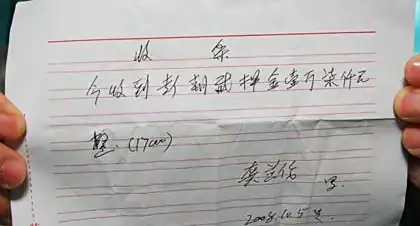
Extension
Receipts
Internal receipts are self-generated documents within the unit and are used for intra-unit operations, such as internal transfers of materials, collection of staff deposits, refund of excess mission loans, etc. Internal home-made receipts at this time are legal and can be recorded as cost。
If transactions between units occur and the recipient does not have to pay taxes after collection, the recipient may issue a receipt prepared by the tax authorities。
Administrative service charges incurred by administrative establishments may be based on receipts produced by the treasury。
In the case of transactions between units and troops, which are not required to be taxable, a force-controlled receipt may be used, which is also a legal basis for recording。
In addition to the above-mentioned receipts, other home-made receipts used by units or individuals in the collection of payments are routinely referred to as "white bars" and cannot be recorded as supporting documents。