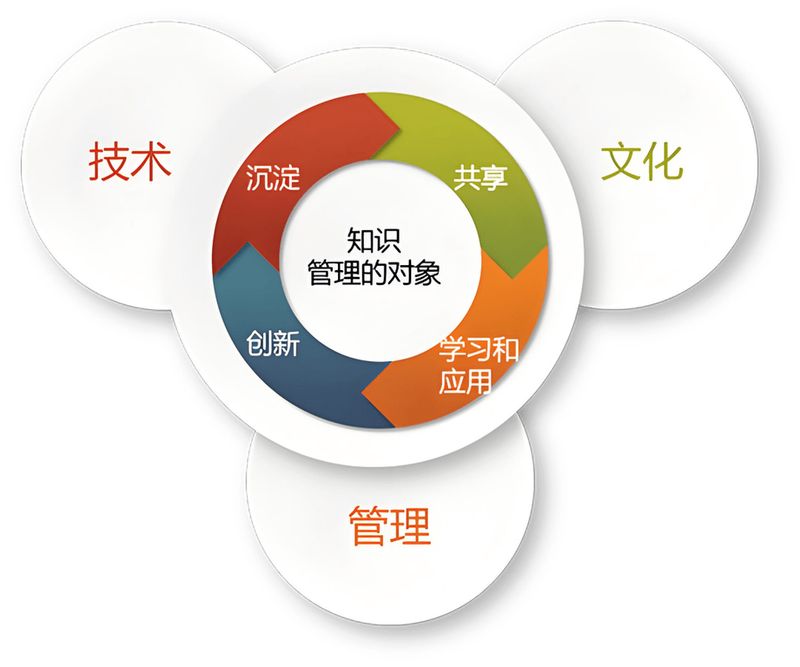
Hospitals, as typical knowledge-intensive organizations, have a large amount of knowledge capital in a hidden way, and individual knowledge has not been translated into collective knowledge, resulting in the creation of knowledge isolations, leading to a large amount of knowledge capital being wasted。
Digital knowledge management systems through the oa system can help hospitals to integrate knowledge resources, build knowledge networks, create an environment for knowledge learning, accumulation and sharing, communicate and share knowledge, and motivate staff to use visible and hidden knowledge for intellectual innovation。

A hospital in wuhan city was established in 1955 as a three-academic hospital that combines medical care, prevention, scientific research, teaching and rehabilitation. The hospital has multiple sections, which require a large number of meetings and academic discussions on a daily basis, and a very rich body of visible and hidden knowledge that needs to be managed, including its acquisition, collection, processing and subsequent creation and use。
On the basis of their needs, the china-power engineers have established a knowledge management platform for the integration of all available knowledge resources in hospitals to facilitate effective knowledge assessment, utilization and sharing, and to ensure the upgrading of the capacity for innovation in hospitals and the accumulation and expansion of knowledge resources。
I. Towards a coherent framework for knowledge systems
By building a unified knowledge management system, the knowledge management platform creates a shared and secure knowledge dissemination, browsing and application system to achieve the knowledge management goals of hospital knowledge sharing. Paperless offices are implemented in all sections, with documents dominated by digital electronics and supported by non-digitized documents; knowledge documents are collected in a timely manner, collated and rapidly transferred to the hospital, accelerating the visibleization of hidden knowledge and the sharing of knowledge。
All knowledge documents are standardized through digital transfer, classification and a unified knowledge architecture, including knowledge classification, knowledge labelling, document numbering, document version, document repository catalogue, document approval process, etc. When used, individual sections can build their own knowledge systems through catalogues of work and catalogues of knowledge that allow for the full use and expansion of hospital knowledge, the orderly and effective integration of decentralized knowledge, and the efficiency and utilization of knowledge management。
In addition, the oa system brings together knowledge based on the accumulation of knowledge in the system, by producing different knowledge maps that allow users to systematize and systematize knowledge. For the knowledge to be found, users can also quickly find the relevant maps through the map category, which in turn guides users to quickly find the required knowledge。
Ii. Effective exploitation of hidden knowledge resources
The hospital has a very large team of medical specialists, who have a wealth of hidden knowledge in their minds of medical reference, but who have long had heavy medical and scientific tasks, making it difficult to demonstrate this wealth of medical and scientific knowledge in language and logic. In collaboration with the oa system knowledge management platform, china-governance provides these experts with a practical platform for communication and engages managers, allowing medical workers to develop their intellectual potential and tacit knowledge, thereby generating visible knowledge。
1. Expert maps
The expert maps focus on experts in various fields, by ranking of experts and classification of categories of experts. The expert maps provide direct access to profiles of current experts, excellent, published and evaluated papers, as well as the number of times expert documents are shared for reading, comment and download. A map of an expert can also be viewed with specific reference to the current expert's hotspot file, the latest reader. For expert documents with access rights, you can also click on the expert documents, respond to comments on them, and interact with experts online。
Ii. Expert responses
Operational issues at work can also be addressed directly to experts, with authoritative answers from experts, or through in-house mail to experts, effective online communication with experts and sharing of expert knowledge。
Experts can also organize knowledge files based on operational question and answer content, from single point-to-point communication to shared knowledge results that can be accessed by hospital-wide, thus building a knowledge base。
3. Knowledge communities
In collaboration with the knowledge community of the oa system, it is possible to share knowledge through the issuance of posts of interest, voluntary participation of health-care staff in the section, access to the creation of posts, praises, comments, etc., and exchange of information with other users by means of praises and comments。
Common work problems within the organization can also be resolved quickly by asking questions and answering questions in the community. All people can share their current questions and answers, and they can answer others ' questions, or they can express their views on others ' answers, and share their views and knowledge with other users by saying yes and commenting on them。
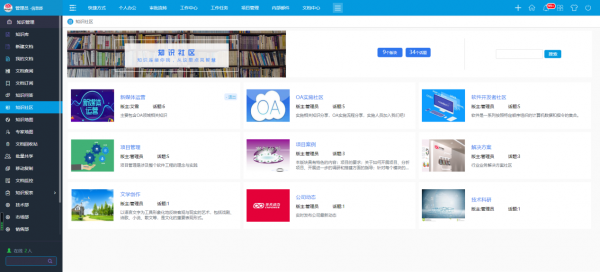
China's oa establishes a digitally efficient knowledge management platform for a hospital in wuhan, establishes a unified framework of knowledge systems, enables orderly visits to display medical materials, facilitates their availability, improves their use, and deepens the hidden knowledge resources within hospitals, promotes their transformation into visible knowledge, enables the exchange and sharing of knowledge, enables individuals to stimulate innovation, acquire new ideas, concepts, and transform them into new knowledge and capabilities within an effective time frame, thus improving the health care of hospitals。