The background of the time of "joko"
The battles of spring and autumn were competitive in nature and, as a result, song zheng failed to fight while the enemy crossed the river, reflecting a noble legacy of war in spring and autumn. War in wartime has turned into a brutal and brutal spree. The main thrust of national reforms is to reward farming. The methods of war are sophisticated and large in scale. For example, in the famous yong-ping campaign, the zhao army was set up for nothing and 400,000 dead. According to statistics, the population of the country was about 20 million when qin was reunited. This pit killed about one eighth of the total population of zhao and all young men! Monko said that “the battles of the land, the killing of the wild, the battles of the cities, the killing of the city”, were the true picture of social life at the time。
In such a society, people are “blessed by virtue of goodness, neither knows what; and evil is greater than the earth and neither knows what to do”. To witness such a bloody and unprecedented massacre, the focus of the great thinkers week is on how people can survive in a world of chaos. In his view, all high-ranking officials are inferior to life. These externalities are often at the expense of freedom or even life. If only he were alive, even if he lived in the mud like a pig, he would be a hundred times better than the cattle who eat and then sacrifice。
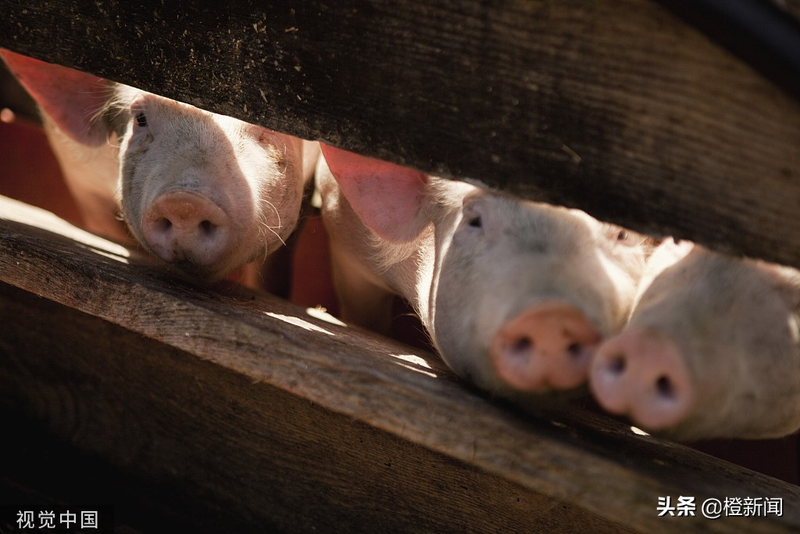
The whole life in this world is the focus of his attention
The scripts and the sons of autumn, wrote the story of king chu, who sent a man to ask the house of representatives to be the chief. The house of representatives said to the messenger: "glory, the great benefit, and the throne." you don't see the bulls of the suburbs? A few years old, clothed, to enter the temple. And when it is, it's worth it if you want to be alone? I'm in a hurry. Don't insult me. From this perspective, we will have a deep understanding of, and an understanding of, the phrase "to the west, to the other side" that ugly women are nothing different from beautiful women; to understand the advice of shoko. Let us not be a useful tool, be a victim of a “no use” and understand the praise of the pagans for those who look strange and uglyly alienated, lamented and lamented, for they have been saved from disingenuousness in their troubled lives。
Meng's opposition to the idea of a “grateful government” and to the idea of a “gentle and low-minded people” were the same concerns as those of a man. Monko sought to eliminate war and killing by lobbying the rulers of the country for a “grateful government”, while the shogun demanded that people avoid contradictions and be cautious in order to survive. They simply proposed different solutions to the problems of the times. On this point, it can be said that monkoh is positive and the house is retreating。
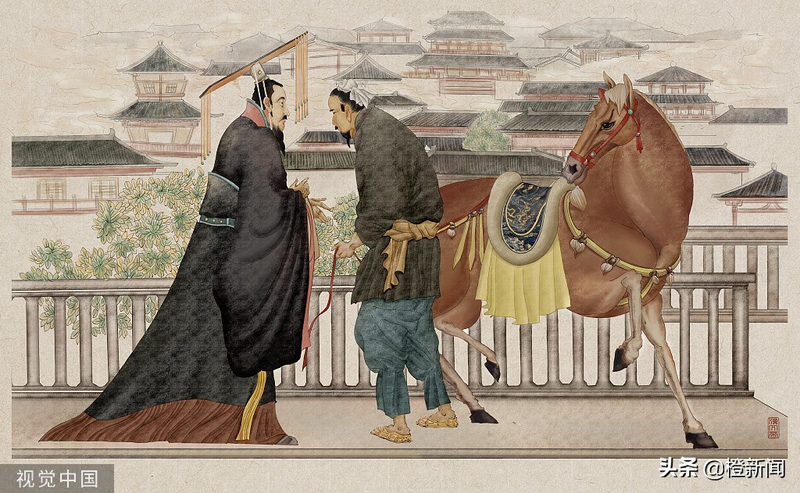
In the spring and autumn, wars continued, with different schools presenting their own laws of governance and survival
Of course, he lived in the south of china more than 2,000 years ago, and his knowledge of the world was limited to the knowledge systems of the people of that time and is far from what we know today. The so-called “real person comes with his throat”, that is, the real person breathes with his toes, that is, the specific sense of the time of the house。
It can also be read as a philosophical classic comparable to plato. In terms of ethics, the dojo condemned the piousness and morality preached by the confucian family as a shackle and punishment, and called the confucian and the confucian “the punishment of heaven”, which is the punishment of heaven and nature. This is because the idea of "who is alive" is completely contrary to the confucian's idea of "who knows what to do". This idea of " jung-ja " complements confucian thinking and has had extremely far-reaching effects in china's history. An ancient doctor who followed the idea of “daze and the rest of the world, and the poor alone” was a central expression of confucian's ideas。
The world, language and things
In intellectual terms, the question of whether the world is known, and the relationship between language and things, as represented by the jurisprudence, is extremely profound. According to the house of lords, language as a pointer is not fully compatible with what is referred to: “it is not a pointer, not a pointer, not a pointer, not a pointer, not a horse, not a horse, not a horse.” as a result, language cannot grasp the world in terms of its relationship to the world, which is unknown. First of all, it is very mysterious, as the "trad" of the universe's very essence: "the best, the best, the best, the best, the best." thus, words cannot express “the word”: “the word is unheard, the word is not; the word is invisible, the word is not; the word is not; the word is unspoken, not the word”
Secondly, in the sense that it occurs and is generated in the sense that it is indiscreet: “there is the beginning, there is the beginning, there is the beginning, there is the beginning, there is the beginning. There are, there are, there are, there are, there are, there are. There is nothing in russia, and there is nothing in the unknown." in other words, the creation of things cannot be traced in time, and “yes” and “no” cannot be pursued in absolute terms. As a result, so-called knowledge, often sought by the people, especially by the readers, has earned nothing but bad。
As an example, the shogun used to say, “the wheel is unsatisfied and ill. And there is no doubt in their hearts, nor in their mouths, but there are few. I cannot speak for my son, nor can i accept his son, who is an old man of 70 years. The ancients shall not die, nor shall they die, but the eyes of the kings and the evil of the ancients shall be upon them.” the logic and rationality of our thinking cannot grasp the world。
The logic and rationality of thinking is not the answer to the world
In the view of the house of lords, all the men and women of the society at that time were at fault, and that argument was never fruitful. “even if i speak with you, if i win, if i win, then if i do, will i be evil? If i don't win, i will, and i won't? Or is it, or is it not? Is it all true and all evil?" because people are used to mastering the world with knowledge and governing the country, they create many problems and confusion: “every great mess in the world is therefore a matter of good knowledge”. In this way, the shogun has taken a position of extreme relativism: “yes, and neither. Neither is he, nor is he.” the know-how seems to be right and right, and there is nothing to be done. The house wants people to rise above what is right and wrong in the knowledge that they are “defeated, intelligent, detached, like chase”. This extreme relativism and agnosticism, espoused in the western philosophy of nietzsche from ancient greece to the twentieth century, is an important clue in the history of philosophy. And the question of the relationship between language and things, the question of the ultimate truth and the question of the truth and the question of the indispensability of truth, which was raised by the house of representatives, remains a hot spot for philosophers to discuss。
The 20th-century french philosopher, derida, believes that words can be used to mean what they mean, not two sides of a coin. In essence, it means never being able to reach the point. It can only point to the next finger, always running in it. This theory breaks the indissoluble relationship between words and things and dispels beliefs and illusions about the certainty of meaning. In fundamental terms, this conclusion is consistent with the linguistic philosophy of the shogun。
There is also the value of history, especially academic history. For example, the term “six chapters” begins with the word “jews”. The manor depicts many people, many of whom are “false”, as well as well as well as famous children, zijiang, confucian, yang zhu, reyung, hueshi and komen students, although they are mostly “false”, but they can also be consulted for academic research。
It also keeps a lot of family propositions and so on. Of course, these readings, whether literary, ideological, philosophical or historical, are not completely fragmented but can be integrated. While appreciating the obscenity of the house of lords, we can shock our understanding of their deep thoughts and philosophies and surprise us with the unexpected discovery of historical figures。

It's a classic of literature and philosophy
It's best to read the original
Finally, there's the wrong place to read the house. It's easy for ordinary readers to read "the son" as "the heart's chicken soup" and "there's no way out." in fact, the opening page of the house tells us that it is impossible for people in reality to be “free”. In addition, reading the mankoko is forbidden to read white translation. Look at the difference between the two:
"there's fish in the north, the name of the fish. It's so big, it's thousands of miles away. Turned into a bird named peng. Peng's back, thousands of miles. Flying in anger, and its wings as if it were a cloud. It's the bird, and the sea will be in the southern meditation. The southern pluto, the skyboard."
It has a strange meaning, its language is unsuspecting, it is full of text, and it is read with a respiration. Let's see the white translation:
There's a fish in the north sea, whose name is zip. It's huge, thousands of miles. To become a bird, it's called penang. The back of the platinum, not knowing it is thousands of miles, rising up, and its wings are like clouds in the sky. This bird moved to the south china sea when the sea was winding. The south china sea is a natural pool. Chen dang, "jokokoto today's note, beijing chinese book office, 1983 edition"
It's all fun, taste and chew wax. In order to understand and understand the beauty of this, we must face the original words of the house. The note in the good house is written by the king's humblest "steve the house" and "steve the house" by chanmo, and guo qinghu's "steve the house" and uncle wang's "study the house" are somewhat cumbersome and suitable for reading and reading. The chinese reader in the day, whether or not he likes the house is a threshold。
People are afraid of their rhetoric and their ideas, and do not touch them. However, it is difficult to say what has been said by those who have loved the shogun since ancient times, and the notes, philosophies, sound training, hearts and the like about the shogun can be described as a great view. There's a story in jung-ja that says that a craftsman can cut another man's nostrils with an axe
Drop. Then the co-author died and the craftsman was never able to perform. Zhang zhou said that he and huixie were like craftsmen and deputies, and that he had no one to talk to after his death. How many of us in the sea today are like the hymens
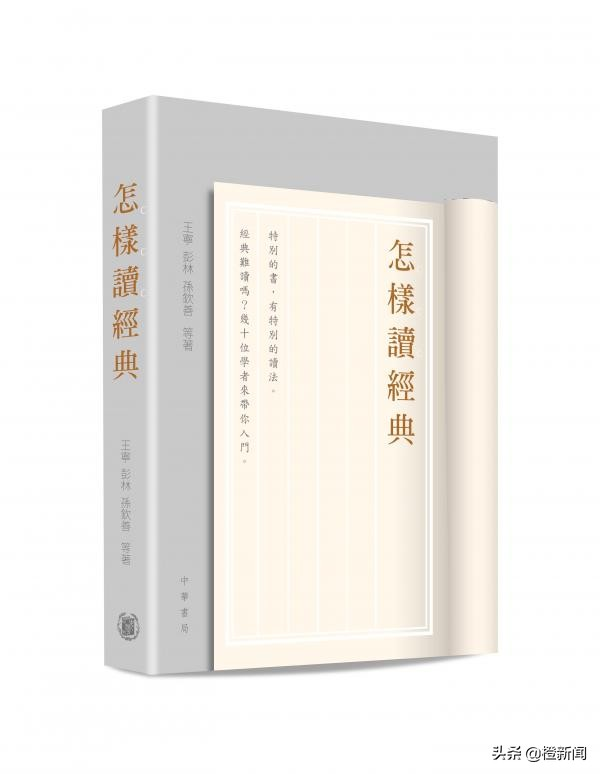
Excerpts from how to read the book
Net
How to read the book