Executive summary: autumn cabbage is not good enough? It's a 6 o'clock planting technique. Good
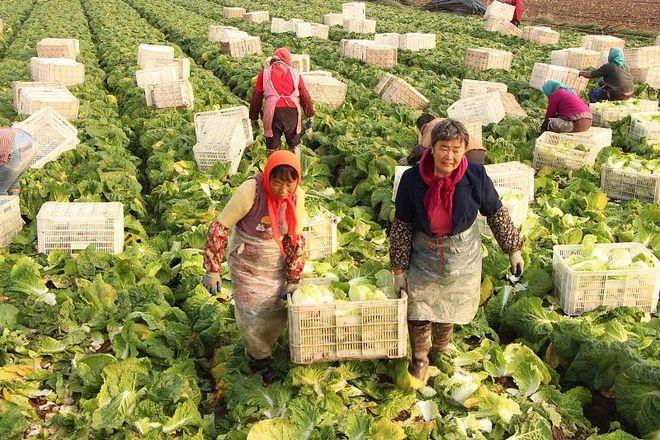
The cabbage is a long dish for the autumn and winter festival in the northern part of the country, and it is also an essential dish for the winter table. There are countless dishes made of cabbages, such as pickles, sour cabbage, sauerkraut and pickles. The nutritional value of cabbage is high and consists of dietary fibres, proteins, fats, moisture, potassium, sodium, calcium, magnesium, iron, zinc and vitamin c, among others, as well as a wealth of crude fibre. Not only is it of high nutritional value, but it is also possible to significantly improve people's stomachs, and it is very necessary to increase the production of large cabbage, given the country's wider area of cultivation and the level of management of its cultivation。
1. Land selection
Large cabbage roots are shallow, so the absorption of water fattening is largely concentrated in shallow soils, so soil selection should be based first on soft and fertile soil. Soft and fertile soils contribute to the growth and growth of the cabbage roots. It should be noted, however, that cabbage must be planted in order to reduce the incidence of endemic diseases。
2. Choice of varieties
The variety of cabbage is large and can be divided into three basic ecological types, namely, straight-clarine, round-head and egg-round, the corresponding long-term life being divided into early, medium and late. This is also to be seen when choosing the fall cabbage, which many farmers in north china want to grow after a piece of big cabbage and then grow late wheat, so that the big cabbage will have to be cooked early. It is also important to combine their own planting schedules。
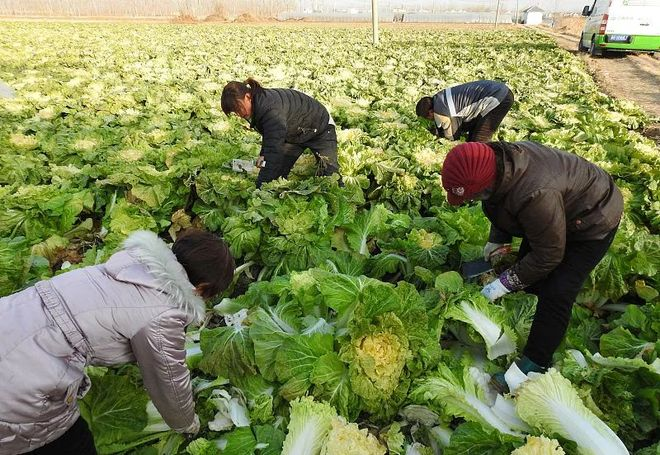
3 time of seeding
As a rule, planting in the northern part of the country was desirable in late august and the year of high temperatures could be postponed until early september. For some hot-temperature-resistant cabbage varieties, early seeding can be appropriate, for disease-resistant, long-lived, and long-lived, medium- and long-term, ready-to-sprune varieties can be available for several days. It is noted that large cabbage seed grains are relatively small, and therefore, in order to save the amount of seeds to be planted, it is recommended how to move them。
4. Cultivation management
In general, large cabbage is shallow, so overall fertilization prior to planting is very beneficial to the seeding, and large cabbage is a cross-facing crop, which is susceptible to disease if it is rotated with these crops. In addition, cabbage is not flood resistant and is therefore recommended to be grown throughout the land, with an acre fertilization of 20,000 kg organicly, 3,000 kg farmer fat and 30 kg potassium nitrogen phosphorus compound fat。
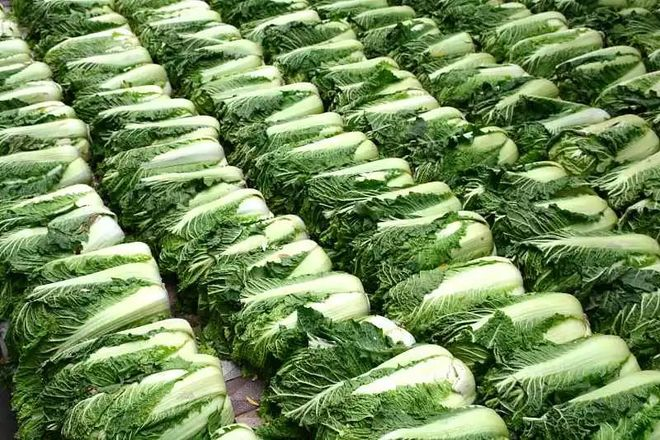
Seeding: zirconium is grown 12-15 cm tall, zirconium tends to grow in a row, and zirconium is wide depending on the species. Pre-maturated varieties range 55-60 cm. It's 45 to 55 centimetres, about 2,200 to 2,500 acres, 65 to 70 centimetres for medium- and late-literate varieties, 55 to 60 centimetres, and about 1800 to 2,000 acres。
Shrimp management: this is a very important stage in the growth of large cabbage, and the management of seedlings, such as pest prevention, irrigation, etc., has been described in recent articles by science-based farmers on several occasions。
5. Fertilizer water management
In the case of a full measure of bottom fertilization, no fertilisation can be applied during the nursery period. But if the bottom is not fat enough, the large cabbage is produced and the demand for it is high, so fertilization is necessary, with the first application of fertilizers in three to four real leaves, 10 kg of compound fertilizer per acre, on both sides of the seedling, which can be distributed with water. The cabbage is falling, the temperature is rising, the temperature of the day is rising, and water can be properly watered, and the end of the cabbage can be properly controlled for days, thus helping to root and grow。
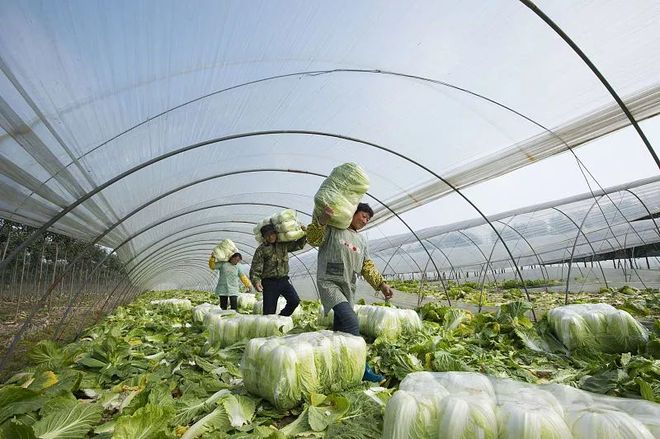
6. Pest management
Some of the common pests that grow in cabbage are molluscs, cardiac diseases, frosting, etc. The main pests are aphids, larvae, slashed night moths, moths, etc., which can be used for rotational treatments such as aphids, sharpness, avisterinal salt, or so on. More of these are heartburns and soft rots, which require attention. Soft rots are bacterial diseases, which can be dealt with by resupplying calcium fats with agrocystalcin 150-200 times more or with new cocinosis 4,000 times more。
For cabbage, the timely binding of the cabbage when it grows can improve the quality of the cabbage and make it stronger and growing. Two or three days before the snow, it should be harvested in time, laid out in the fields, left to rot, and stored. Field management, when in place, is essentially yielding significant harvests。