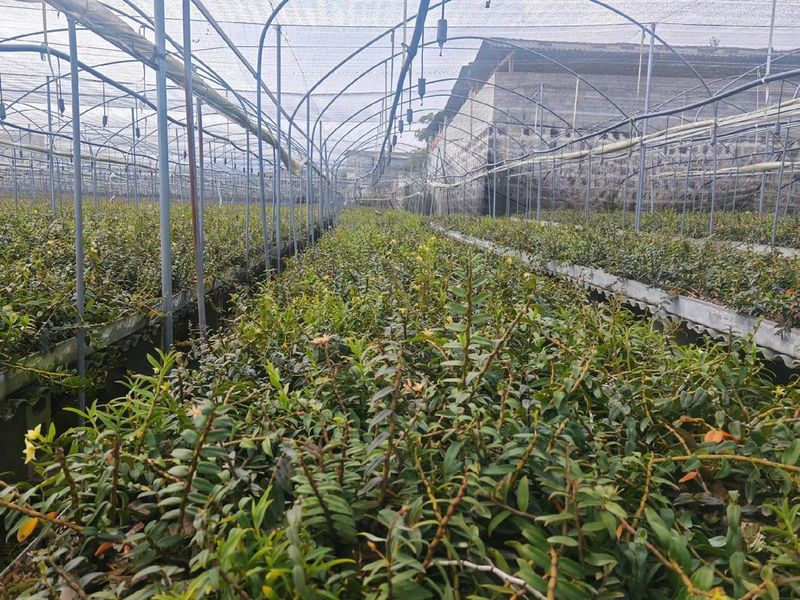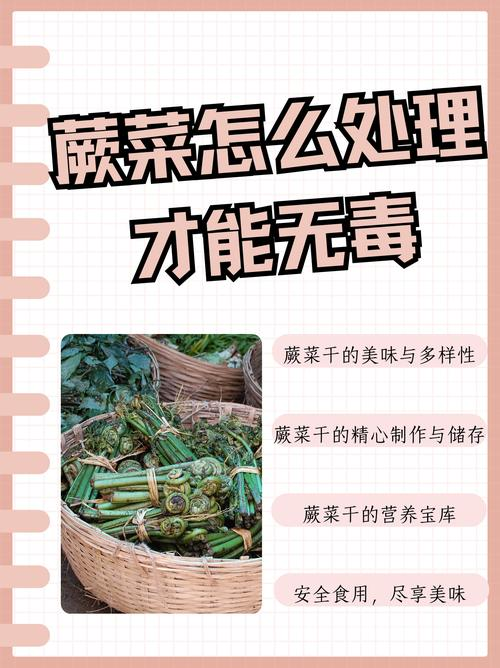
The cuisine appreciates the magical goals of nature and knows about herring, its morphological characteristics, growth habits, distribution ranges, breeding methods, planting techniques, pest control, key values, plant culture, etc. Increased knowledge of plant diversity and conservation, and the hope that the concept of conservation of the ecological environment will reach people's minds and preserve biodiversity, called for more active participation in biodiversity conservation initiatives. Focusing on learning about herbs and seeing the wonders of nature. Being close to and integrated into nature, exploring the beauty of nature's biodiversity, inspires the determination to respect nature, adapt to it and preserve it. It called for people to join in efforts to protect the environment and build beautiful homes. Process profile (name: pteridiumaquilinum (l.) kuhnvar. Latiusculum (desv.) underw. Exherler) alias: boxing, yamachi, a variant of privy, growing up to 1 metre. And the roots were long and strung, and they were covered in rusty yellow, and they fell down. Leaf long, 20-80 cm long, base thick 3-6 mm, brown brown or brown tan, slightly light, smooth, with a shallow ditch. Leaf dry near or gel, dark green, with no hair on it, and much of the following on the main artery of the fragmentation, either brown or grey, or near hairless. The leaves and plume are smooth, the small plume is smooth, the bottom is trimmed, there is less hairy, there is a deep ditch on each plume, and there is no hair in the plume. Botany history is spread throughout china, but mainly in the yangtze basin and north, and subtropical regions; it is also spread across other tropical and temperate regions of the world. Mountain slopes, which grow at 200-830 metres above sea level, and areas on the margins of forests have plenty of sunlight. The morphological morphological characterizations are planted up to 1 m high. And the roots were long and strung, and they were covered in rusty yellow, and they fell down. Leaf long; 20-80 cm long, thick, 3-6 mm thick, brown or brown, hairy, slightly glitter, smooth, smooth, with a shallow groove on top; broad or long triangles of leaves, 30-60 cm long, 20-45 cm long, 20-45 cm wide, with a tip of the front end, with a wedge of the base, three-fold feathers; four-6 cm pair, with a peri or near opposite, an oscillation, a pair of the base, a pair of the largest (slightly smaller towards the tail), a triangle, 15-25 cm long, 14-18 cm wide, with a morphological fracture of about 3-5 cm long, with a long circle of approximately 14 mm long, with a piny, with a long line of about 5 mm long, with a long, long, long, long, long, long, long, long, long, long, long, long, long, long, long, long, long, long, long, long, long, long, long, long, long, long, long, long, long, long, long, long, the leaves are dense, only visible below. Leaf dry near or gel, dark green, with no hair on it, and much of the following on the main artery of the fragmentation, either brown or grey, or near hairless. The leaves and plume are smooth, the small plume is smooth, the bottom is trimmed, there is less hairy, there is a deep ditch on each plume, and there is no hair in the plume. Chromosome 2n = 104. The habitat of the land is grown on an environment of 200-830 metres above sea level, on the slopes of the mountain and on the margins of forests where there is plenty of sunlight. High temperature tolerance is also low, 32°c is still growing and -35°c is safe for winter. At 12°c, at 15°c, the leaf blades begin to grow rapidly. Selena is highly resilient and adaptable, prefers wet and cool climatic conditions, requiring organically rich, deep earthy, well-watered, medium or microtacid soils with high vegetation cover. The distribution is spread across china, but mainly in the yangtze basin and north, but also in subtropical areas, and in other tropical and temperate regions of the world. Cultivation methods can be developed through roots, runners and foliage. In the process of growing the vines, their roots continue to grow in the soil, so that new plants grow, and the leaves fall behind, so that they can grow new roots in the soil, while the runners that grow on the edges of the cabbage can fall into the soil when they mature, and then take root and grow new plants. The preservation of radiant vines is suitable for growing in a fully luminous environment and, in the maintenance process, can provide them with day-to-day sunlight so that plants can maintain the greenness of the leaves. However, it is not possible to grow in an environment where the sun is too strong, so that in a strong light environment, it is necessary to cover up the vine and avoid strong light burning of the plant. The proper breeding method requires a higher demand for moisture during the growth process, which in the maintenance process requires watering every three days, keeping the soil wet outside the soil and, in the case of excessive water, defusing and ventilating the soil, excreting the excess water from the soil and helping to replant the plant. Scientific fertilizers are suitable for growing in a more fertile environment, and lack of nutrients leads to poor growth of the plant and yellowing of the leaves, so that, in the maintenance process, the vegetable can be provided with composite fertilizers enriched with potassium aminophosphate, allowing the plant to absorb balanced nutrients, but in the application of fertilizers, it is not possible to use incompetence in a single way, so as to avoid the ten-plains, preferably with organic fertilizer. Plantation technology selected inter-forest clearings for the whole field, with an average acres with roots of 40-75 kg. The first year of planting wild herring is dominated by a chain of roots, the second year is profitable for growers and the third year is productive. Fertilizers in the field: deep and lax in the autumn to deepen the tillage and reservoirs. In the spring, a fine combination of fine flooring should be combined with the watering of the bottom floor, the application of base fattening, the application of 2,000 kg per acre of decomposed and high-quality agricultural fattening, and then bedmaking. The floor bed, the underground bed, the flat bed, the bed bed is 100-200 cm wide, 20 cm high, 15-20 m long and the bed is 50 cm apart. (b) cultivation techniques: planting roots, choosing disease-resistant varieties, and rational planting. (b) a defined ditch at a distance of 10 centimetres wide and 15 centimetres deep at 25 centimetres long, with roots adjusted to 5 centimetres sprouts, then 10 centimetres of ground, water pouring through, water sinking and then 5 centimetres of soil, with rakes. New, high-fat membranes are then sprayed to combat the soil sheeting and to increase the yield rate. In the first year of field management, care should be taken to catch seedlings, so that they are well and strong, so that weeds are ploughed in a timely manner and water is used to fatten them. Cultivation shall be carried out in a ditch in which the water is filled to ensure the survival of the plant. Pest and pest control and pest control are relatively few pests and insect control, but most pelican plants prefer to grow in high-temperature, high-humid environments and insect hazards are inevitable. The management of cultivation is also to be combated in order to improve its impact. Infections of sexually transmitted diseases are caused by bacteria, which cause a variety of symptoms and impacts on viewing. Serious harm also leads to death. The main ones are anthrax, brown spots, nematodes, rusty, coal pollution and sudden fallout. Physiological diseases 1. Most of the sunburns are warm and half-obsolete, resistant to strong light, which is appropriate for 1,000-6,000 lx. Strong direct light dehydrates the blades dry, yellow or focal. Prevention and treatment: under a semi-negative state, accompanied by two to three hours of sunlight, so as to keep the leaf green; the curvy leaves, which are already on the focal edge, should be carefully preserved and protected from strong light. 2. Humidity disorders of the air are too dry to cause foliage and therefore require more water during spring and summer periods. The main values are mainly platinum sprouts, lumber-rich nutrients, multi-vitamin content for human needs, and beryllium contains 0. 43 grams of protein per 100 grams of fresh food, 0. 39 grams of fat, 3. 6 grams of sugar and 0. 45 grams of organic acid. The food portion of the bellies is unexplored young leaves, which are often cooked with fresh and dried vegetables, which are then boiled with boiling water and then immersed in cold water to remove the odor. The processed cuisine tastes smooth, mixed and cooled, and typical green food. The roots of the beryllium contain 35 to 40 per cent starch, which can be extracted to supplement the food. The roots of the aluminum are also available for medicinal use, which has the effect of cooling, sliding, degasing, scavenging, hiccuping, hiccupping, intestinal fever and corrosive activity. The platinum plant, whose main value is ours, is the richest region in the world, many of which are medicinal plants, such as congested, sea gold sand. The gills are green, tactful, attractive, beautification of the garden, introduction of success, and many types of important basin view of indoor dots. A number of pelicans play an important role in industrial production. The most important of these are the many species of thilica, whose spores (commonly known as thiphony) are excellent demodels in the metallurgical industry, which improve the quality of the casting. Because of the age of the platinum plants, fossils and spores are an important indicator of the identification of the ground. Plant culture and plant culture: honesty. Trust. People who like cysts are wise, funny and funny, have unique ideas and take people seriously and earn the trust of friends. Love is smoother and has many followers, but it is important to learn to listen to others and not just to express themselves。neoplasm is a class of higher plants that is lower than seed plants and has the dual properties of the original piped plants and the higher hidden plants. Because the edges of the leaves are usually thin cracks, like the chewing marks of the sheep, they are also referred to as “sheep teeth”. The phyto-cultural poems include the poaching of the water and the eating of the plume. – li baek, a tea maker, with a gravel, four or five inches long, and jovi, with a gushing, with a groove. - the tea book three envies you to take the crown. — wang wei, "spring night bamboo pavilion for bluefield" — zhushan — zhushan — zhu zhu zhu zhu zhu zhui — zhu zhu zhu zhu zhu zhu zhu zhu zhu zhu zhu zhu zhu zhu zhu zhu zhu zhu zhu zhu zhu zhu zhu zhu zhu - wetten wrote books on the case of the town of jincheng, as a window of guin, full of land. In its summary, ning cui cui-cui-cui-cui-cui-cui-cui-cui-cui-cui-cui-cui-cui-cui-cui-cui-cui-cui-cui-cui-cui-cui-cui-cui-cui-cui-cui-cui-cui-cui-cui-cui-cui-cui-cui-cui-cui-cui-cui-cui-cui-cui-cui-cui-cui-cui-cui-cui-cui-cui-cui-cui-cui-cui-cui-cui-cui-cui-cui-cui-cui-cui-cui-cui-cui-cui-cui-cui-cui-cui-cui-cui-cui-cui-cui-cui-cui-cui-cui-cui-cui-cui-cui increased knowledge of plant diversity and conservation, hopes that the concept of conservation of the ecological environment will reach the hearts and minds of people, preserve biodiversity, and call on more people to participate actively in actions to conserve biodiversity, so that we can live with nature, go with light and build beautiful homes together! Thank you
Thank you