From the food encyclopedia
Go to: ,
Banana
Bananas are known for their tropical fruits, and at present there are a wide variety of edible berylliums, most of which have evolved from mutation, self-taught and hybrids of pre-generous wild species. The short bananas that we planted are three times the evolution of the spicy scallop, and three times the hybrid。
I. Distribution
Our country is one of the world's oldest banana-growing countries, and most of the banana varieties currently grown abroad are passed on by our country. Bananas are located in tropical and subtropical areas in the eastern, western and southern hemispheres at 30° north-south latitudes. The world has 130 banana-growing countries, with the highest production in central america, followed by asia. Our bananas are distributed mainly in guangdong, guangxi, fujian, taiwan, yunnan and hainan, and there are small cultivations in guizhou, sichuan and chongqing. In guangdong, the main production areas are chaijiang, maoming, nakayama, dong chong chong, guangzhou and chiu chong cai; in guangxi, the main production areas are lingshan, pubei, yulin, nanning and chin counties. Fujian is concentrated mainly in the counties (cities, districts) of xiaipura, pinghing, yangtai, dynasty, hua an, yunhui, longhai, xiamen, nam an, xinda and xian zhou, and taiwan's bananas are planted mainly in takahao and zhengdong, followed by taijung and taidong。
Ii. The value of cultivation
Banana fruit is sweet, rich in carbohydrates and nutrients. According to analysis, 20 grams of carbohydrates, 1. 23 grams of protein, 0. 66 grams of fat, 0. 9 grams of coarse fibre, 0. 7 grams of inorganic salt, 70 per cent of water, and multivitamins a, b1, vitamin b2, vitamin c and vitamin u, as well as minerals such as calcium, phosphorus and iron, are needed in the human body。
In addition to fruit, banana fruit is used as food in tropical regions of africa, asia and the americas. Banana fruit, in addition to fresh food, can be produced as a variety of processed products and raw materials for the extraction of perfumes; banana plantations have high medicinal value: fruity cold, able to smooth large intestines, perfluent and pulmonary; tubing, leafy urine, able to treat oedema, foot gas; roots that, when crushed, cure scabies, heat and dysentery; and flowers and floss that can cure vomit and peri-blood. Fresh dry tubers, sprouts and sprouts also contain abundant nutrients and can be crushed into pig feed. Fibres of the mantle can make ropes, sacks and paper. In sum, bananas serve the needs of consumers as fruits and food, and serve as a source of wealth for rural communities in the south。
Iii. Cultivation characteristics
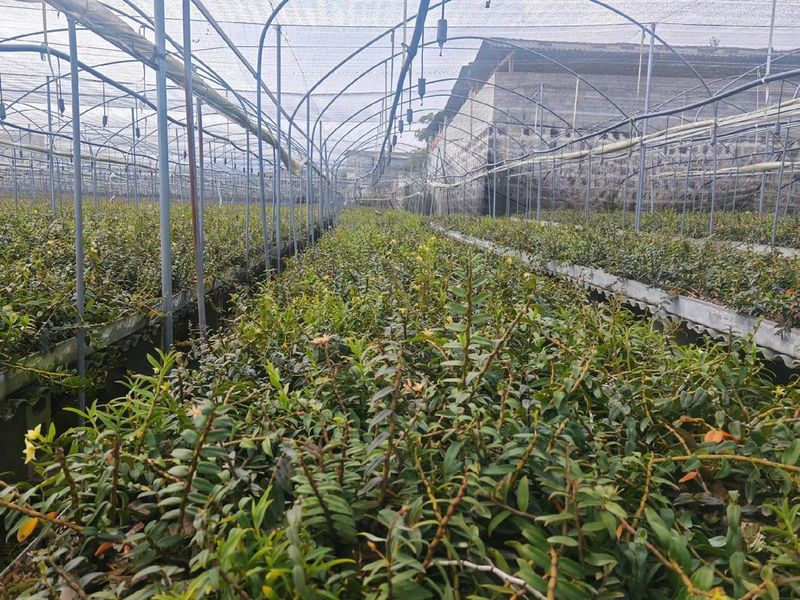
Bananas are large-scale grass-nap plants that grow over the years, with thick tubers, roots, tubers, leaves, flowers, fruit and sprouts (reproduction)。
Bananas are hot and wet, usually growing at 20 - 35°c, with the highest temperature of 24 - 32°c, with a critical temperature of 10 - 12°c for each organ, 13°c for fruit and 13-15°c for roots. The average annual temperature is above 21 °c, the main distribution of bananas, with a small number of areas at or below 20 °c. Banana plantations have high moisture content, large area of leaves and high evaporation levels, and therefore require large quantities of water. Banana monthly average water of 200 to 300 mm is most appropriate, at least not less than 50 mm. Bananas require plenty of sunlight, but not too intense. It has been reported in the literature that, when the light intensity increased from 2000 to 10,000, light cooperation increased rapidly, but from 10,000 to 30,000, light efficiency increased slowly. The light doesn't match the fruit, the light and the taste. Bananas with no root, normal plant with 200 to 300 stubs, 10 to 30 centimetres of earth cover the main distribution of the root system, are large and shallow, sensitive to wind and vulnerable to typhoons and strong winds. When wind speeds 25-30 km/hour, it is observed that leaves can be severely torn up at 40-65 km/ hours often break the mantle and wind speeds 100 km/hour, which can completely destroy the quail garden. Bananas are highly adapted to the soil, but are most suitable in alluvial or corrosive soils; ph 4. 5-7. 8 can be grown, but above ph 6. 0 is most appropriate。
Bananas reproduce sexually, with seedlings and seedlings. One of the saplings is a bud (a sprouts before winter, a blade of swords, and a part of the swollen leaves after winter as a sprouts, a name), a sprouts (a sprouts after spring and a red leaf) and an exhilaration (a sprouts from old sprouts after longer harvests, also known as sprouts), three of which are preferred by sprouts. Two groups of seedlings grow in a well-developed manner, suitable for 6 to 10 leaves. Group seedlings are susceptible to variability, weaker growth and less resilient, and should be carefully managed in the early stages of growth。
High-quality production techniques vary according to season and variety, as do high-quality production techniques in spring and summer beryllium (anti-season beryllium), active beryllium, big beryllium, powder beryllium, dragon tooth beak, and grouping of plume seedlings。
Banana diseases include banana beam disease, a serious viral disease worldwide, which is frequently dealt with by increasing resistance to disease, anti-alcoholism and scavengers, planting free seedlings, digging out strains and crop rotations. In addition, there are more than 60 aphids that transmit banana necrosis and viral diseases. In addition, bananas have foliage, banana black heart disease, banana panama disease, banana anthrax, banana coronary and banana root worm disease. Banana pests include, inter alia, banana walrus, banana foliage, banana diarrhea and banana masts。
Iv. Banana species and varieties
The two original wild species of bananas are sarcastic and long infarction, and banana varieties have evolved from within or between the two wild species。
Collection, processing and markets
When the precipitine is 60-50% full, then the precipice is ready to eat, and more than 90%, then the precipice is fragile. For this reason, 70 to 90 percent of the harvest is desirable. In addition, the maturity and harvest period of acupunctures are judged by the number of days of growth following the break of a bud or a pull。
Blue bananas are to be vinylized at 16-24°c in order to be ready for sale。
Bananas serve both fruits and staples. It produces a wide range of products, such as banana chips, banana powder, banana mud, banana jam, banana fudge and banana juice. Banana chips are easy to process; banana mud can be further used as processed colours, incense, excellent banana ice cream, banana ice cream, banana pudding, etc。

Bananas are our vital southern fruit. It has been growing faster for more than a decade. In 1999, the country's banana area and production amounted to 3. 0399 million acres and 4. 942 million tons, respectively. The annual production of bananas in the world is about 59 million tons, with an average human consumption of nearly 10 kilograms, and our annual production of 7. 1 per cent of the world's banana production is about 3. 4 kilograms。
The bow, the fragrance, the maggot
Musa paradisiaca l. Var. Sapientum o. Kuntze, a banana plant of the bacopa, used as herbicide. Four seasons are available, which are generally scarce。
[stealing]。
"function master."
Pyrolytic detoxification, urinal descompression, birthing。
Whole grass: used for epidemic type b encephalitis, white belts, foetal disturbances; external antisemic osteoporosis, diarrhea。
Banana skin or handle: hypertension。
One-four taels. A proper amount of exterior, fresh things torn out or torn in. To cure ear inflammation, to get a penis drip。
[excerpt] national herbal compilation
Bananas are frozen, or their skin is touched, often with black spots that look like the skin of a cheetah. This is another chemical change. It turns out that banana skin cells also contain an oxidated enzyme. Usually, it is tightly wrapped by cellular membranes, without contact with air, just as you lie in bed nets in the summer, free from mosquitoes. However, once it is frozen, touched and the membrane is broken, the fermentation flows, oxidizing with oxygen in the air, resulting in a black complex product。

This is also true of pears and olives。
(i) selection: bananas used to make banana chips are fully mature, insect-free, non-decomposition, wash, decorate, cut to 0. 5-1 cm thin。
(2) bananas: 10, powdered milk: 1 and water: 5。
(3) production: first, powdered milk and water poured into the banana tablets, with full mixing so that all banana slices can be glued to powdered milk. Banana chips that are mixed can be removed from the container when they contain 16 to 18 per cent of water. For ease of extraction from the heating container, some vegetable oil may be coated at the bottom of the container prior to filling。
(4) frying: banana slices that are baked and then added to the 130-150°c vegetable oil, which will be made of pine brilliance。
From a nutritional point of view, bananas are useful fruits of starch, which are analysed from a medium-med medical point of view. The bananas are fertilized, warm and promote gastrointestinal creeping, but they are not suitable for spleen ventilators. There is always a reasonable explanation for the fact that bananas are cold and, according to the "hot" doctrine, are best used by hot people. Hemorrhagic haemorrhage and fetal stress caused by heat can be eaten rawly。
However, precisely because of the banana cold, the body is biased towards the cold, and it is best to avoid it. For example, in cases of cold stomachs (low stomachs), colds (depressions, dizziness), kidney inflammation (also colds), and swollen feet during pregnancy, it is better not to eat bananas. Only if the sauerkraut is evaporated can the cold fall and feed. As for cold cough, bananas should not be eaten, but they could be cooked and then eaten。
Civilians are more likely to use banana-cooked ice cream to treat long coughs; bananas are used as a therapeutic diet. Recent medical advice suggests that bananas are used to treat hypertension because of their abundance of potassium, to balance the adverse effects of sodium and to promote cell and tissue growth. Bananas are used to treat constipation, as they promote gastrointestinal creeping. The most interesting is the fact that german researchers say that bananas can cure depression and emotional distress, as they can promote brain endocrine morphine chemicals。
In any case, the body heater can have bananas for one day, but if he fears banana cold, he can choose to eat other varieties such as mackerel (more pottery) and emperors。
"http://www. Foodbk. Com/wiki/%e9%a6%99%e8%95%89"