Strawberry cultivation and production in china are higher than the world average, and strawberry is the largest fruit planted in chinese facilities, but there is a large gap between cultivation techniques and those in developed countries. The variety of strawberry varieties produced in different countries is characterized by differences in climatic conditions, planting patterns and consumption demand across countries. In japan, strawberry varieties are highly sugary and smelly, but are less rigid, less resistant to storage and less resistant to disease; european and american varieties are larger, more productive and more resistant to disease, and are more resistant to storage transport than japanese varieties, but they are more acidic, less fragrance and less windy. Strawberry cultivation in china started later, with most of the main plant varieties being introduced from japan and the european and american countries. The author analyses the main problems in the current development of the strawberry industry in china and provides directions and recommendations for its development, while presenting the team's main research work in the area of strawberries in recent years to inform the healthy development of the strawberry industry。
Strawberry development directions and recommendations for facilities
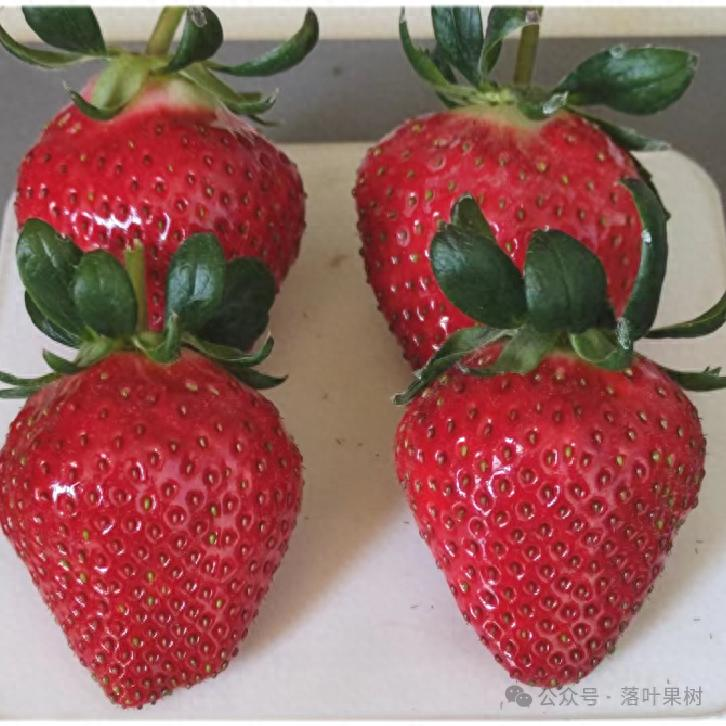
Selecting new, efficient strawberry varieties for autonomous development
The current home-grown strawberry varieties are dominated by japanese and european-american varieties. Due to degradation of varieties and inadequate technology for standardized seeding, many varieties have been exposed to inverse decay, reduced fruit quality and production. There is a lack of integrated and excellent varieties, either imported abroad or independently. In recent years, some of the new varieties of home-grown strawberries have had low visibility and recognition and low market ownership。
Domestic strawberry breeding units should foster new varieties of strawberries that are of good taste, high hardness, resistant to disease, high yield, fresh food and processing performance, promote self-selection of good varieties and promote demonstration. Media and institutions associated with the strawberry industry should step up their advocacy efforts to increase the market share of new strawberry varieties。
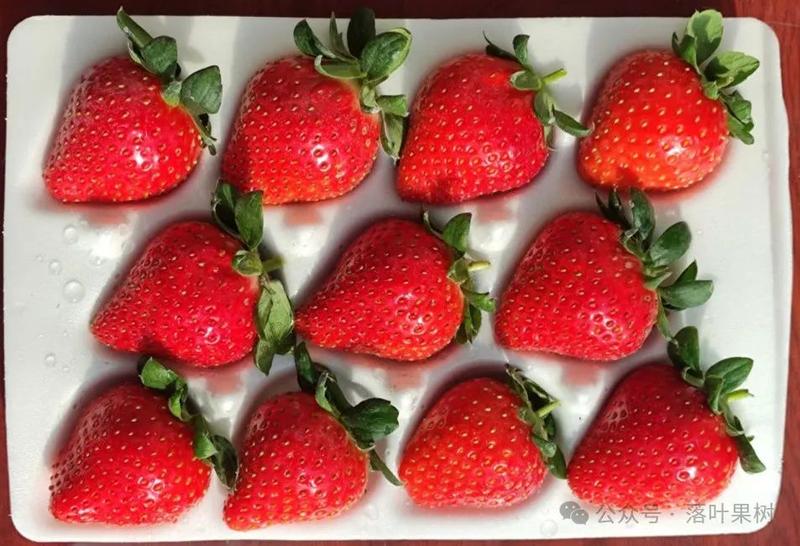
Development of safe and high-quality production seedlings
Strawberry seedlings, which are still largely home-grown over the years, are of uneven quality, without detoxification, with severe disease and low resistance, amplified by a large market of poor bare seedlings, which is a serious constraint to the healthy and sustainable development of the strawberry industry. High-quality strawberry-producing seedlings suitable for safe production should be developed from plant-based intensive seedling techniques such as detoxification, high-season rain avoidance and foundational cultivation。
Improvement of the system of high-quality, efficient and safe cultivation techniques
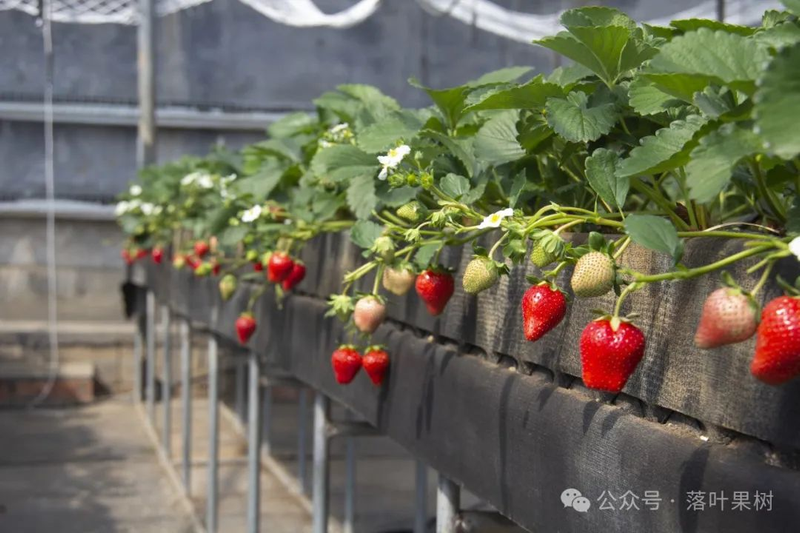
Strawberry chain cultivation is currently highly problematic and soil disease is high; some farmers lack expertise, misuse of pesticides, growth regulators, etc., leading to excess residue of strawberry pesticides, and the safety of fruit is at risk, which greatly discourages consumers from purchasing. The strawberry industry is less skilled, technical guidance services are lacking and a high-quality, efficient and safe culture technology system is difficult to achieve. High-standard model production parks should be established, starting with innovation in cultivation models, upgrading of planting technologies, modernization of supporting facilities and specialization of growers。
Strengthening transport and processing technologies
More than 95 per cent of the strawberries planted in china are currently used for fresh food consumption, the proportion of strawberries used for processing is very small, and problems such as inadequate cold-chain transport systems have led to a situation of “boiled street” and “no one to ask”. China currently has less than 20 per cent of the cold chain circulation of strawberries, but the rate of loss is as high as 25 to 30 per cent, six times higher than in developed countries. In this regard, efforts should be made to develop fresh and mixed strawberry varieties, improve the strawberry transport and processing technology system, develop a series of strawberry processing products, improve cold chain transport systems, and develop cold chain processing facilities。
Good new strawberries
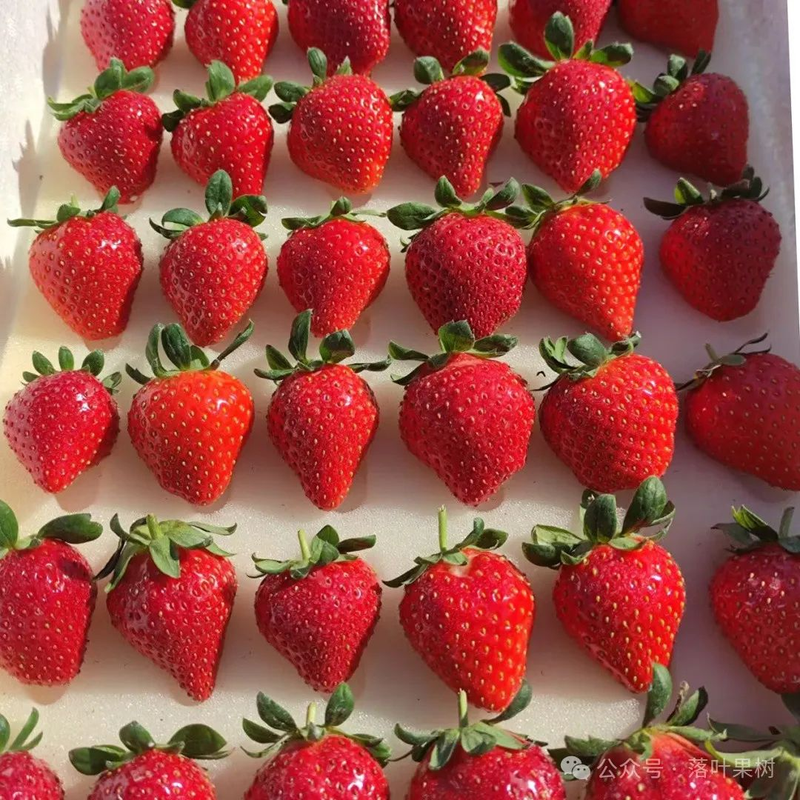
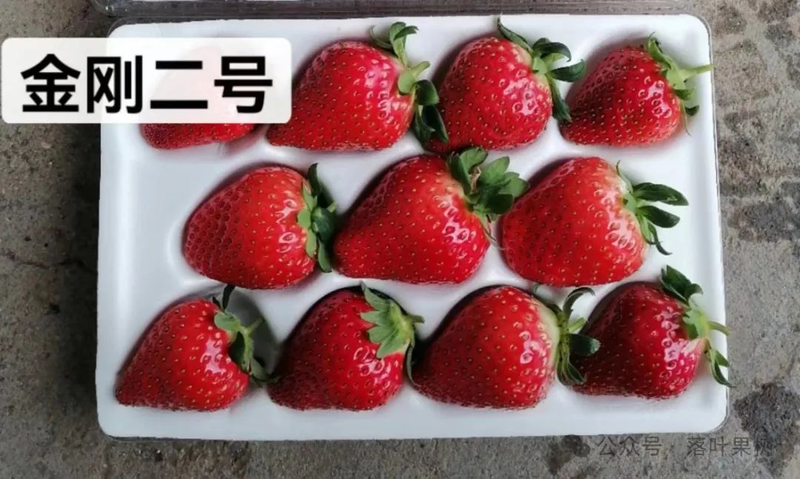
With regard to the selection of new varieties of strawberries, the team of fruit trees in the facilities of shandong university of agriculture has selected five new varieties of high hardness, sugar, resistance, high production, i. E. Winteryang red 1, winter yang red 3, winter yang red 4, winter yang red 5, king kong 2, which was identified by experts organized by the shandong horticulture institute on 25 march 2023。
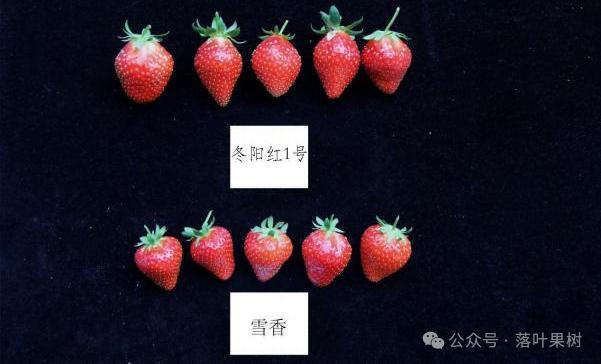
Sunny red one
The fragrance is grown by a combination of high hardness, durable transport, high sugar, and a fragrance. Very early to ripe, and in the shandong region, under the conditions of solar greenhouses, matured in mid-november. On average, a single fruit weighs 30 g, with a maximum of 54 g, a short cone, where the seed is condensed, the fruit is red and the face is smooth and smooth. The hardness of the fruit is twice the hardness of the snow, and it has a hard taste and a very small marrow. Powdered fruit, soluble solids at 12. 4 per cent, sweet and fragrance. Temperature storage 10 d soft and cold storage 15 d soft and constant。
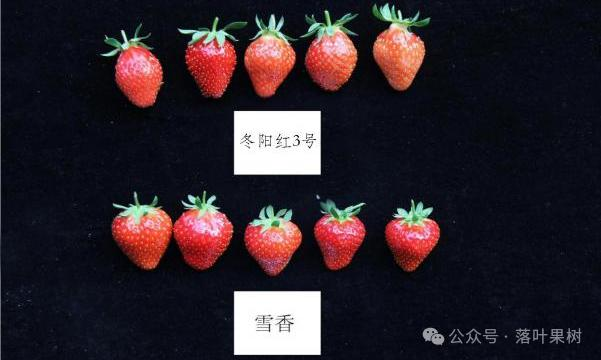
Sunny red 3
Designed on the basis of high hardness, durable transport and high sugar target combinations, bred by a combination of snow x monterey. Very early to ripe, and in the shandong region, under the conditions of solar greenhouses, matured in mid-november. Average single fruit weights of 32 g, max. 44 g, long cone shape, seeds flat or thin on the face of the fruit, the fruit is red and the face is smooth and smooth. The fruit is twice as hard as the snow. It has a hard taste and a very small marrow. Powdered fruit, soluble solids of 12. 2%, sweet sour and fragrance. Temperature storage 10 d soft and cold storage 15 d soft and constant。
Sunny red 4
It's bred with a fragrance. Very early and matured in mid-november under the conditions of solar greenhouses in the shandong region, with an average single fruit weight of 32 g, with a maximum of 46 g, a short cone, seeds condensed on the face of the fruit, full red fruit, smooth face of the fruit, soft taste and very small marrow. Jell-o pink, soluble solids at 12. 8 per cent, sweet, fragrance, constant temperature storage at 10 d soft, cold storage at 15 d soft and constant。
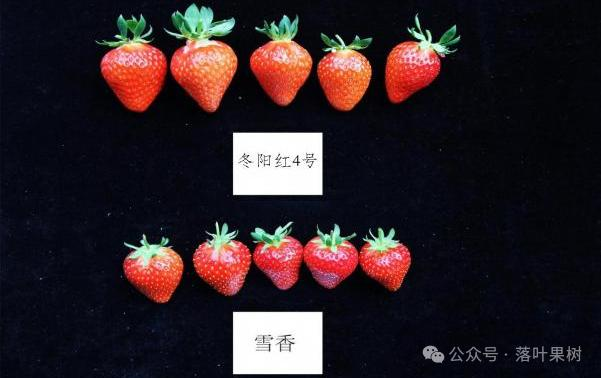
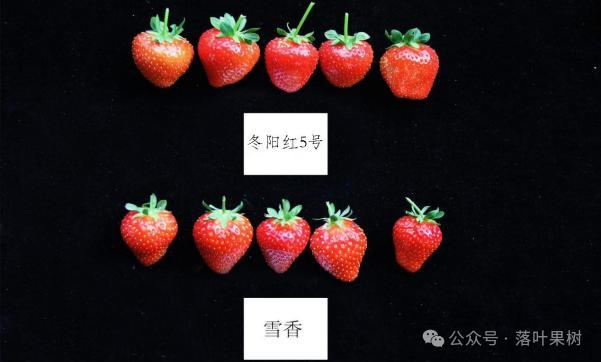
Sunny red five
Designed for target combinations based on high hardness, durable transport, high sugar, bred by a combination of cedar x acetate. Very early to ripe, and in the shandong region, under the conditions of solar greenhouses, matured in mid-november. On average, a single fruit weighs 30 g, with a maximum of 50 g, a short cone, with seeds condensed on the face of the fruit, full of red fruit, smooth face of the fruit, hard meat and heart. Powdered fruit, soluble solids of 13 per cent, sweet and fragrance. Temperature storage 10 d soft and cold storage 15 d soft and constant。
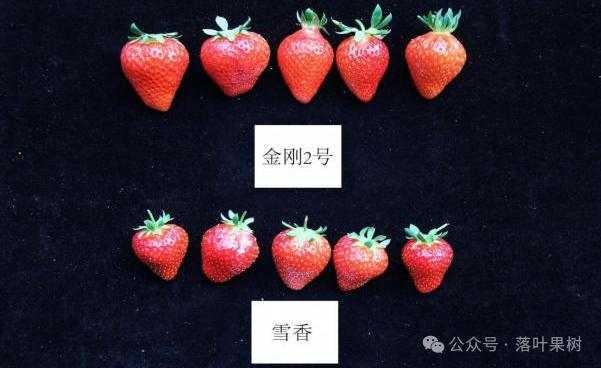
Kong two
It's bred with fragrance. Very early and matured, with sun-soiling greenhouses in the shandong region matured in mid-november, with short cone shapes of fruit, seeds condensed on the face of fruit, all red fruit, smooth and glitter face of fruit, heavy hardness of fruit, hard flesh and very small heart. Average single fruit weight of 26 g, maximum of 45 g, fruit and meat powder, soluble solids content of 13. 4%, sweetness, fragrance, constant temperature storage of 10 d, soft, cold storage of 15 d, soft。
Facility strawberry semi-matrix cultivation technology
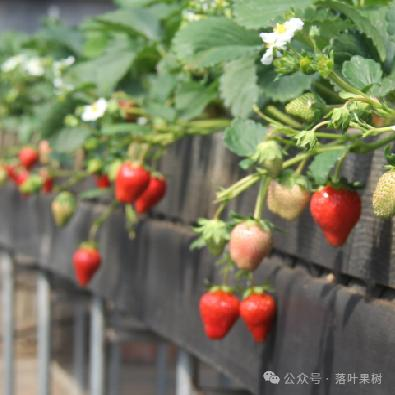
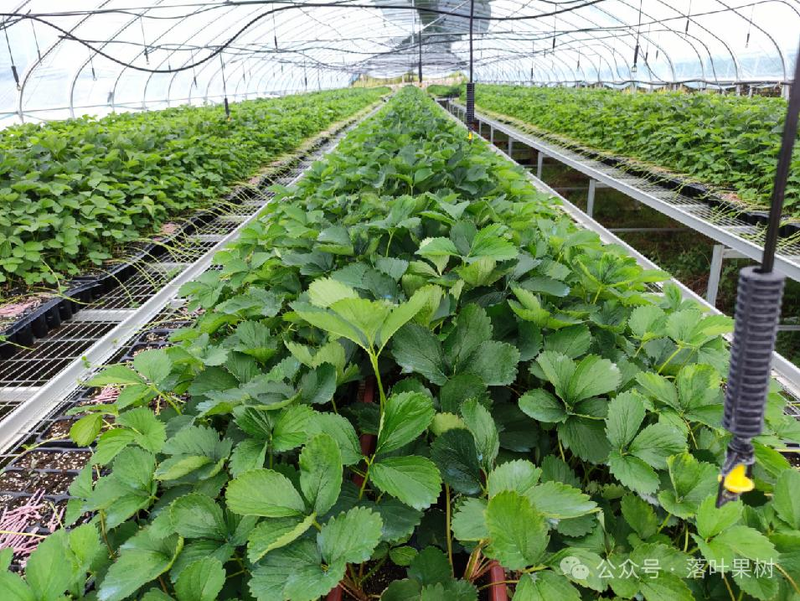
Strawberry semi-matrix cultivation is a new cultivation model for the planting of strawberries using hydrofertilizer integration techniques by installing fixed devices in greenhouses such as planting cells or matrix bags. The main underlying components used are coconut, stork, grass-grass, pearl rock, wood crumbs, corroded straw, mushroom slag, pine needles, water-washing cow dung, etc. Plantation packagings and specifications are determined on the basis of the set structure used, and can also be designed freely; the common matrix and its proportion is grass-breeding: pearl rock: cylindrical = 2:1:1,1 and the production matrix can also be mixed with 10% of the pebbles to increase its permeability, planting can be added to controlled fertilizers 4 kg/m3 and decomposition farmers 40 kg/m3。
Varieties and seed selection
Semi-matropods should be selected for low-sleeping, disease-resistant, low-temperature, weak light-resistant, pollinating, productive, fragrance, hardness, sugar-rich varieties (e. G. Snow aroma, snow aroma, snow aroma, sun accelerator, sun agglomeration 1, winter angglomeration no. 3, winter angyang red 4, winter angglomeration no. 5, king kong ii, etc.). The selection of base seedlings to be cultivated in high-altitude cold areas is recommended, with strong, green leaves, well-developed roots, consistent strength, short seeding time, fast flowering, high flowering quality。
Zhang
The northern region was generally established between mid-august and early september. The weather day should cover the sunnet (75 per cent of the sun density is appropriate). In the first month of planting, high-temperature shacks 20-30 d were used to physically kill insects and pests in greenhouses, and in the first week sprays were thoroughly infested, sterile and disinfected. The relative humidity of the matrix is maintained at around 80 per cent. Based on the growth characteristics of the species, the plant range is 20-25 cm x 1-1. 5 m. Strawberry leaves, leaves, bouquets, stasis, stasis, whole strains of microbicides with earth-borne diseases such as anthrax, deadness, roots, etc., are removed, immersed 2-3 times, 2-3 times, each time, with treated strawberry seedlings placed in a fixed den, “with bows facing the back and facilitating pick-up”, planted “deeply unheard, bare roots” and tied to the surrounding base, with 8,000 to 10,000 units per 666. 7 m2 with production of 1,500 to 3,000 kg. After planting, dripping is done in time to avoid the loss of aqueous strawberries, and after four to seven d, the new leaf is pumped out。
Management before planting until now
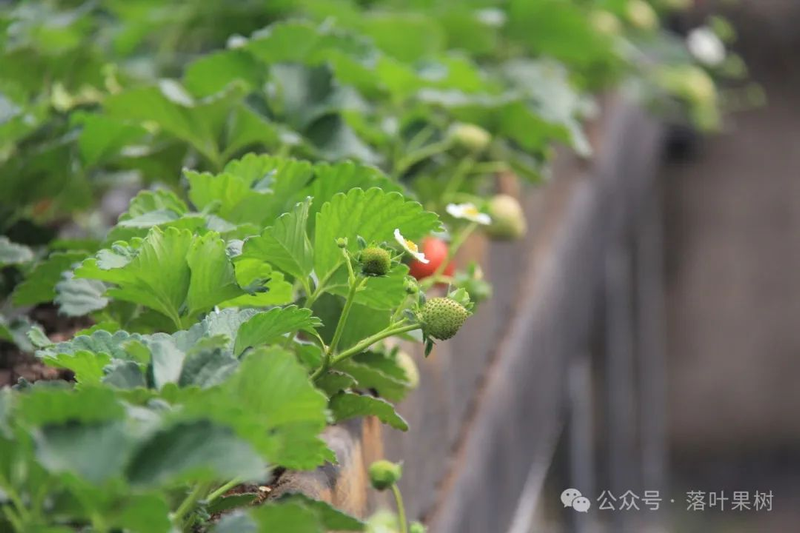
The plant is scheduled for about a week and is replaced by seedlings. At around 15min before 9 a. M. And after 5 p. M. Biocicides such as tetracin, bacillus sourium and other fungicides to combat root and anthrax are added to the first watering, and every 7-10 d is treated with a drug. Microbicides are required before shacks, before rain, after rain and after farming operations。
In order to balance strawberry growth, water-controlled fattening should be controlled to prevent strawberries from growing, and it would be appropriate to maintain a base of approximately 60 per cent water content relative to the base, to avoid excessive application of nitrogen fattening by dripping fertilizers, fish proteins, etc., to promote root system growth. Pest control is based on the control of trams, larvae, mites, etc. The temperature and humidity management could not be performed accurately owing to the fact that it had not been secured。
Current period management
A strong, resilient plant is the best time to cover the membrane. The diaphragm is treated with moderate drought, with a control matrix of 40-50 per cent relative to water, with a good effect on the pre-morning and post-morning of the diaphragm, with additional moisture in the evening. The cover of the membrane is used to remove the leaves, the sick leaves and the runners, to promote the production of new leaves and to stimulate the growth of the roots and the extraction of the course。
Late in october, temperatures were below 10 °c. Pre-correction of equipment such as membranes, membranes, etc. The amphibious membrane needs to be luminous, resilient, temperature-preserving and fog-proof. The temperature in the lacquer is rising rapidly and should be supplemented with appropriate amounts of water at the appropriate time to prevent strawberry atrophy。
Flower season management
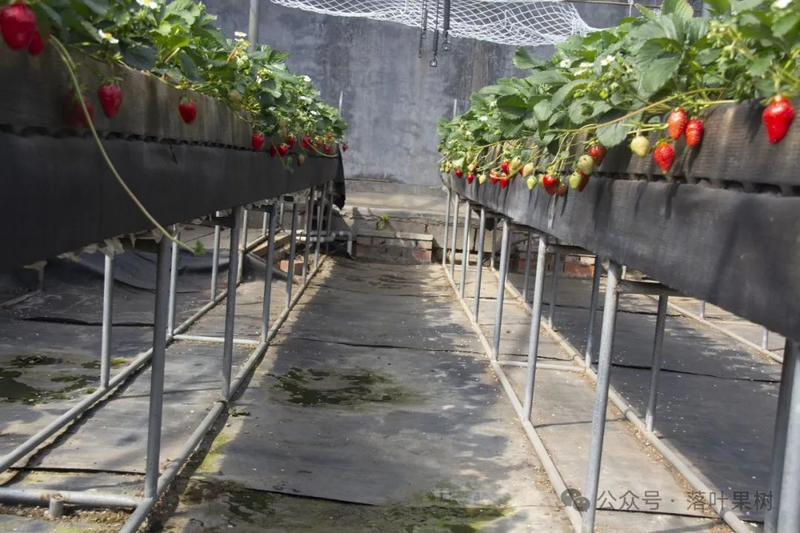
Flower management, which directly affects flowering and production, is one of the most critical links throughout the strawberry production cycle. The main tasks are pollination, temperature control, vermin, etc. Questing is carried out at the beginning of the period, keeping the pre-open sequence and removing the late-opening, deforming and sick flowers, each with six to eight buds. After three to five prematures have been formed, the excess buds, the feeble fruit, the sick fruit, the insect fruit, and the abnormal fruit have been removed. A low concentration microbicide is applied in a timely manner to avoid infection with the wound. The flower control temperature is 20-30°c during the day and not less than 10°c during the night, reducing the frequency of water irrigation and reducing the humidity in the shed as appropriate。
Fertilizer management. Strawberries ensure good and stable soil water, fat, gas and heat. The control matrix has a relative water content of about 75% and the management cycle is 7-10 d. The control matrix has a relative water content of about 65 per cent during the chromatography period, which is 3 to 5 d. Fertilizers are applied in fertilized fertilizers to balance composite fertilizers (nitrogen, phosphorus, potassium content = 21-21-21) and are replenished on a separate basis with calcium, boron and silicon fertilizer, followed by one to two high potassium water solubility (over 35% potassium content) after the fruit swells。
The ventilation is usually performed at 9 a. M. At 15 mins to increase fresh air in the shed, remove harmful gases and parts of the gas from the shed and reduce humidity. Temperature differentials are generally controlled at 15-20°c. Clear weather opens temperature guard at 8:30 a. M., airs at 15min, temperatures at about 10°c, temperatures at 10°30 can rise to 30°c, sustains the temperature to 12. 30°c, opens the ventilation vent, reduces the temperature to 23-25°c, maintains the temperature to 15°c, closes the wind vent at 20°c and closes the air cover shed at about 13°c. The temperature remained at 10°c until the opening of the shed on the second morning。
Post-harvest management
In june, the production of strawberries for the foundational cultivation of the facility was winding down, after the last fruit had been harvested, the water supply could be stopped and all wind vents in the shed closed for a month in high-temperature shacks could be cleared until the strawberries plant and the matrix had no water。