Analysis of the properties of the three pre-established large cherry varieties and efficient cultivation techniques
Ren hongwei and others
Cherry is the first fruit to mature in the leaves and leaves, known as "precious fruit" . Commercial farming began in 1980 and in 1990 the area covered by the cherries was 3,000 hm2. There are currently approximately 2667 000 hm2 of the country's cherries, of which 2333 000 hm2 are cherries. Annual output 1. 7 million t with an average annual growth rate of 255. 9 per cent。
The main areas of cherry cultivation are shandong (smoking tower), shaanxi (sian), liaoning (dalian), hebei and beijing. The great cherry of luoyang has the beauty of “the first piece of chinese cherries”, of which xin an county has the same name as “the first county of chinese cherries pre-finished cherries”, and the area under cultivation now stands at 6,800 hm2. The planting of cherries in luoyang is more efficient, but lacks good cherries and is somewhat blind at seeding. This paper is mainly an introduction to the three pre-maturized varieties of wallery, zhighu and desakura i, which were seeded by the academy of agro-forestry sciences of luoyang, with a view to providing a reference for the introduction and promotion of pre-cherries in luoyang and surrounding areas。
The characteristics of the three cherry varieties
1. 1 waleli
Valeriy is a cherries species from hungary that were pre-established by soviet scientific institutions from natural pollinators of the caucasus roses. It has a single fruit mass of 6-9 g, thick and easily separated from the branch of fruit, with a deep red skin with white stripes, a soft, juicy meat and a unique wine fragrance, fresh food of excellent quality, matured in luoyang in early may, with a fruit development period of 32-35 d (figure 1)。
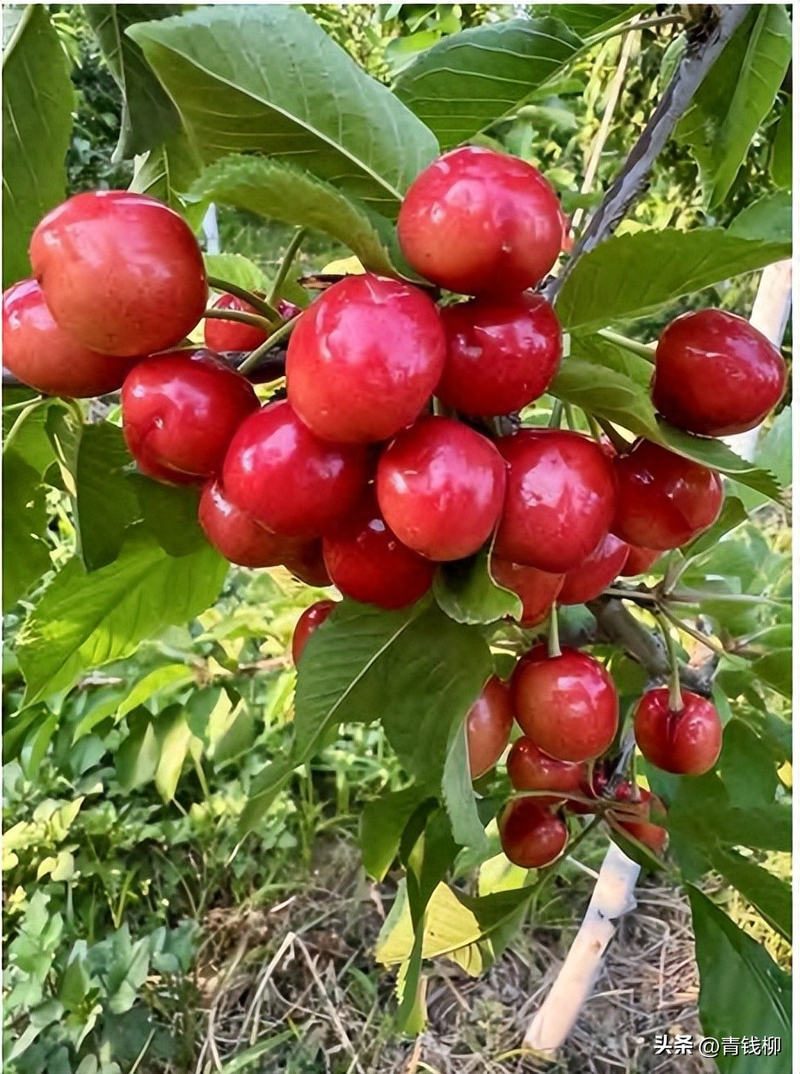
Figure 1
1. 2 early
Premature cherries, fruit and meat red, sweet, 21 per cent of the average soluble solids, with a high rate of self-flowering. The fruit is large, full and average, 12. 5 g of single fruit mass, with a maximum of 15. 9 g of fruit mass; the fruit is heart-shaped, top of the fruit, dim; the fruit handle is medium long, the fruit is red to dark red, with light and a feeding rate of 96. 1 per cent. Vegetables mature around 35d, luoyang matured late in april, 6-7d prematured earlier than the premature fruit, consummated, non-fracketed, non-abergenic fruit, and productively good (figure 2)。
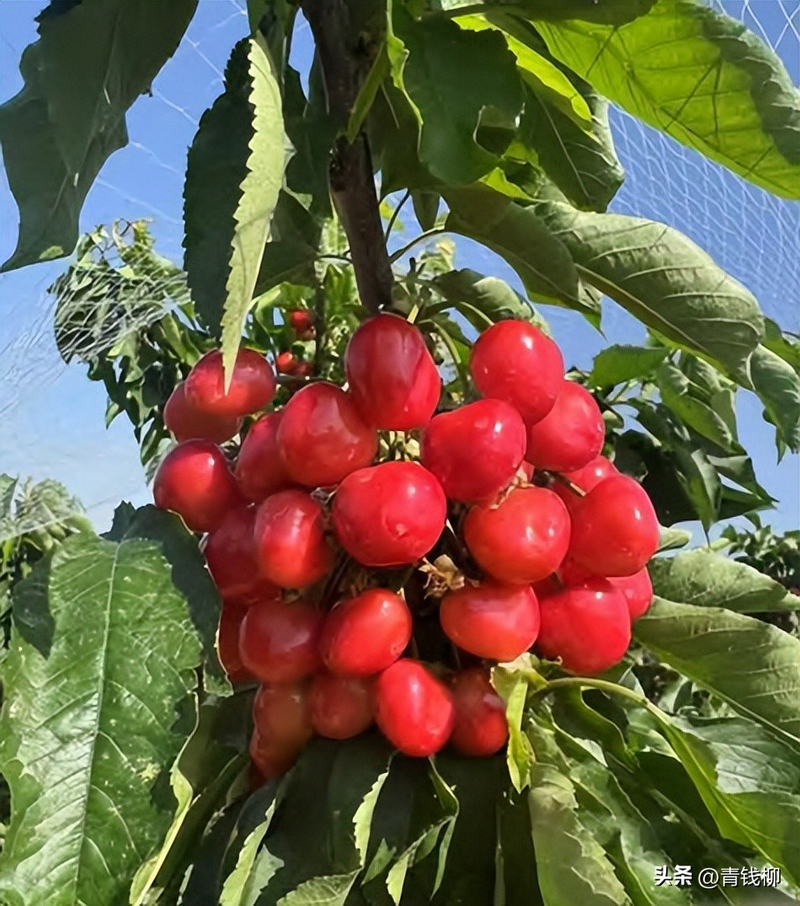
Figure 2
1. 3 desakura i
Decuria no. 1, also known as the austro-red cherry, is a medium-prematured species from our country. The fruit is flat and even. Average single fruit mass is around 12g. The fruit is beautiful, mostly round or wide heart, the fruit is compact, and 5-7d is ripe before the red light (figure 3)。
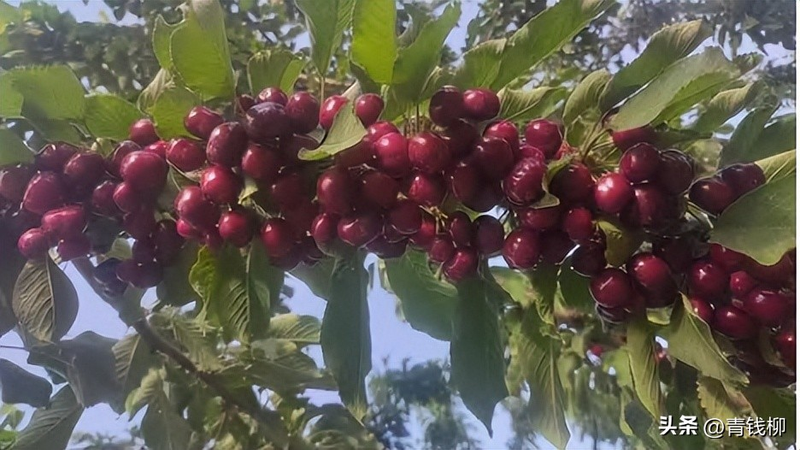
Figure 3 desakura-1
2. Quality analysis of fruit from three cherry varieties
Three pre-finished cherry varieties were introduced in 2020 and planted in the grand cherry resource garden of the institute of fruit trees of the academy of agroforestry of agriculture and forestry in zhao village, lolong district, luyang city. The experiment was carried out in 2021 in the fruit tree nursery of the academy of agroforestry of the city of lauyang. The city of luoyang has an average annual temperature of 14. 2°c, with an average annual precipitation of 620 mm, which is concentrated in july-september, with a frostfree period of around 220d, with early frost in mid-october and late in march. The experiment was in the eastern part of zhao village, lolong district, loyang city, with a thicker earth layer, micro-alkalinity, organic content of 1. 1 per cent, medium soil fertility, good watering conditions and an area of 1. 33 hm2 (20 acres)。
The three varieties, which are broadly the same tree crown size and tree size, have a fine long hammer-shaped tree, with a range of 2. 0 m x 4. 5 m, north and south, are well ventilated, and are managed rationally by fat water, and three varieties are grown with two gill trees, each of which grows well and is relatively adaptable。
As can be seen from table 1, the early fruit handle is longer, at 35. 70 mm; as far as single fruit quality is concerned, it is similar to desakura i, with a small valilis, with little difference between the edible rate and the fruit index. Table 2 shows that the soluble solids of the valari fruit have a high content, but the sodium acid content is also high, with no significant difference in the sodic acid ratio among the three; the hardness of the valier is greater, and the total phenol content of the drasak 1 is higher, with 3 varieties matured in 2025 in loyang on 28 april, desakura i on 6 may, and valery on 13 may. In the light of the above, these three varieties are shown to be pre-maturized, of good quality and adapted in the luoyang region, and are therefore suitable for extension in and around the suxi region。
Table 1 mass

Note: the data in the table are average ± standard errors, same as below。
Table 2

3 elements of cultivation technology
3. 1 cultivation
Three pre-established cherries can be fertilized with mahari and gisela wood, high-water fertilized land or sheds can be grown to choose gisella lumber, and dry slopes, non-clubber or poorly fertilized plots can choose mahali lumber. The construction of plantations on more flat or low-lying plots requires planting and drainage。
3. 2 timing of planting
The planting of large cherry trees is usually appropriate after falling leaves and entering the hibernation period until the spring gestation, i. E. From early january to early march。
3. 3 sapling selection
3 when the pre-maturized large cherry varieties are established, they select a healthy, high-quality tree that meets quality standards, is free of pests and pests, and is free of mechanical damage. The selected tree is divided into different sizes according to thickness and heights. The tree is planted separately, with a small area (or rows) in full size, and is managed separately for profit and according to the different sizes of the tree (child tree) to avoid mixed seedlings of different sizes。
3. 4 thorough digging
In the first year of planting, it is required to be 1 m wide, 60-80 cm deep, to mix leaves, straws, weeds, etc. With the surrounding tops, into fully decomposed amounts of organic fattening, refilling the pits, levelling the pits, filling the pits, filling the pits and filling them with water。
3. 5 cultivation density
Vegetable orchards use (1. 0~2. 0) mx (3. 5~4. 5) m range; joed orchard uses (3. 5~4) mx (4~5) m range; v type high-intensity facilities use (2~2. 5) mx
(0. 6~1. 2) + (3~5)
M line spacing; orchard "ufo integration" uses (2. 0~3. 0) mx (3~4) m line spacing。
3. 6 plantation techniques
A small pit shall be dug and planted in a ready-prepared sapling or cleavage; the tree shall be placed in the centre of the pit, the root system shall be stretched, the tree shall be raised as it crosses; the soil shall be filled, and when the soil is refilled, the insecticide shall be distributed evenly, and the seedling shall be laid down to ensure full contact between the root and the soil, and the water shall be watered or taped; the water shall be poured into the ground; when the water has been dried up, there shall be a fine layer of soil protected by drying of the surface or by the next day, which shall ensure that the mating is slightly higher than the ground; the spring seedling shall be laid down immediately after planting; and the fall seed shall be dried before the spring of the next sprawn. When it's dry, it's cut with wax. Watch out, it's hard to dry. It's usually early。
3. 7 integrative shears
3. 7. 1 long hammer-shaped dry height 80-85 cm, primary height 50 cm. After the completion of the long hammer shape, 10-12 main branches were left open at an angle of 90° and 20-30 cm between the main branches in a spiral-up state; the backbone of the main branches was less than one half of the grossness of the department and the crown height was 3. 5 ~ 4. 0 m。
3. 7. 2 v-shaped tree shall be grown with a v-shaped integrator, with a wide and narrow range of 1. 8 ~ 2. 5 m and a long range
(0. 8~1. 5) + (4~5. 5)
M, with a two-line v font, planted 120-138 strains 666 m2. It is extremely short, with a distance of 1. 0~2. 0 m。
The production of cherries during the poignant period was 1,500 to 1800 kg/667 m2 using the v font model. V fontworks are suitable for the production of large cherry field and facilities。
Year 1, planting. In the second year, the main branch and the main branch were systematically attached to the barbed wire at 90°, with the first branch being 50°cm above the ground and the side branch being cultivated; in the third year, the new main branch continued to be chained to the wire at 90°c in an orderly manner, leaving the side branch to occupy all space, with the main branch being smaller than the first half of the main branch's dryness, the branches being cultivated and combined with the summer triming, removing the thick branches from each side, with the number of 8-10 branches on each side, without permanent branches, and the top of the tree is controlled at 2. 5m, with the crown being in the form of v。
Establishment of a v font support frame. (1) planting in the form of a planting pattern requires a fixed line, which normally plants two concrete or pine racks at 10 m per 10 m, with a horizontal angle of 45° ~ 60°, with a v font between the two shelves; (2) 3 m in length and 50 cm below ground and 150 mm in diameter; and (3) pulls the first floor of steel or wire at a distance of 50 - 60 cm above the ground at a distance of 50 - 60 cm and a total of 4 - 5 floors per 50 - 60 cm。
The point of a font integer. (1) plant 2 cement stakes every 10 m, leaning 60°, with a v-shaped shape; (2) draw 4-5 layers of wire evenly above 60 cm above the ground; (3) plan 2 cherry trees with a v-shaped gradient of 60°, with a range of 0. 8 ~ 1. 5 m, with the main branch of the 1st layer approximately 50 cm above the ground; (4) tie the main branch to the main branch at an angle of 90° in the second year; (5) number 8-10 branches on each side, without permanent branches; (6) the plastic crown is v-shaped; and (7) the crown height of the tree is 2. 0 ~ 2. 5 m (figure 4)。
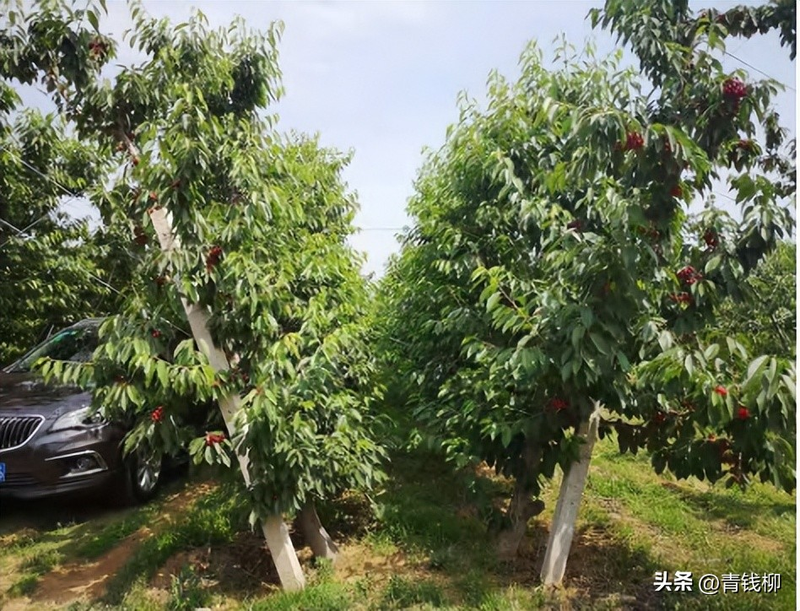
Figure 4 large cherry v font tree
3. 7. 3 the form of the kgb tree, the form of the y-word tree, the form of the ufo tree, which is reformed according to the selected tree reference information, is not detailed here。
4. Fertilizer management
4. 1 irrigation
The principles of “less indigence, small quantities, wet soil and dry air” need to be understood, and attention should be paid to periods of water recharge, such as unfreezing, pre-flower, post-flower, hard core, pre-harvest, base fat, frozen water, etc. Water is also pumped in conjunction with the pursuit of fattening, and can be pumped in accordance with soil conditions. Where conditions permit, integrated water fertilization systems are preferred。
4. 2 fertilisation
Fertilisation is divided into base and pursuit. Autumn fertilizers: fertilizers are applied from mid-august to mid-september, mainly by organic fertilizers, supported by fertilizers, with primary fruit trees reaching at least “snakes”, during which large fruit trees apply high-quality soil fertilizers or corified organic fertilizers 2500 to 667 m2, combining a large number of elements and moderate trace elements。
Fertilizers: fertilizers are applied before, after, during, during, during, during, during, during, after, after. Fertilizers are the sources of potassium acetate, amino-algae, root-based morbid fertilizers, which are applied in combination with a large number of elements and moderate trace elements. The urea of 0. 3 % and the potassium phosphate of 0. 3 % are sprayed every 10 ~ 15 d, urea of phosphate or micro- or amino acid-based foliage every 10 ~ 15 d and 0. 3 % of the leaf before harvest。
5 flower fruit management
5. 1 pollination
At the beginning of the season, bell buds are collected from pollination varieties, pollen is produced and one artificial pollination is carried out during the first flower (25% open) and during the flowering (75% open). Manual dotting, mechanical spraying, chicken brush rolling can be used. Pollination should preferably take place from 10 a. M. To 5 p. M. On sunday. (b) sterilization with a symphony agent, the first symbiotic treatment when the flower is 80 per cent open or the symphony petals fall, and the edible erythrin is added to the symphony to mark the flowers that have been sprayed in order to prevent leakage or repeated spraying. Spraying is carried out on the nectar, filling it with a full dose of medicine, and a second sift agent is required after the spray。
5. 2 plumbing fruit
The flowering takes place before the flowering and during the flowering season, mainly to remove the deformities and the weak flowers from the thin branches inside the canopy. Each bouquet-like branch leaves two to three bouquets. At the end of the flowering season, empty bowls of flowers, unopened flowers of the bouquets, unopened entire bouquets of bouquets. Go on