3-storey membrane-covered cavity grapes early planting process management techniques
Zhang bao-yu and others
Grapes are one of the main fruit trees grown in jiangsu province, and there are problems in planting them, such as the planting of summer black grapes in the field, which began to mature in mid-july, when the northern part of the country is in the middle of the rainy season, the grapes are in poor colour and the fissures and bad fruit are severe, resulting in poor quality and low selling prices; and the planting of sun rose grapes, where fruit maturity is concentrated and large quantities are brought on the market, directly affecting the benefits of planting. In order to address these problems, facilities are being used in various parts of jiangsu to cover a layer of filament for early cultivation, but a layer of membrane is often difficult to cover effectively to isolate cold air and humidity from the outside world, resulting in high temperature and humidity fluctuations in the sheds, which are detrimental to normal grape growth. In recent years, after continuous exploration and testing, the author has developed a management technique for a three-storey membrane-covered tree planting model, which promotes the early growth of grapes and their early maturity, avoids the rainy season when the fruits mature, are well coloured, sugary, well-commodated and marketed early, thus pre-empting the market and increasing the efficiency of cultivation。
The three-layer plankton cultivation model, based on the first layer of membrane-based insulation, can prevent the intrusion of cold air into the outside world and reduce the spread of heat within the shed; the second layer of membrane further enhances the temperature-preservation effect; and the third layer of membranes, as an additional climate layer, especially during cold seasons, can significantly increase the temperature within the shed, provide a suitable environment for the growth of grapes and effectively prevent the intrusion of external pests and reduce the incidence of grape pests。
1 park selection
Gravity gardens should choose plots that are accessible, ecologically friendly and high ground. Plantation soils need to be lax, ventilated, deep, ph neutral or micro-acid. Gravity gardens also require adequate and stable sources of irrigation water, and water quality meets irrigation requirements, avoiding injury to grapes by having too many harmful substances in water (e. G. Heavy metals, salt)。
2 facilities built
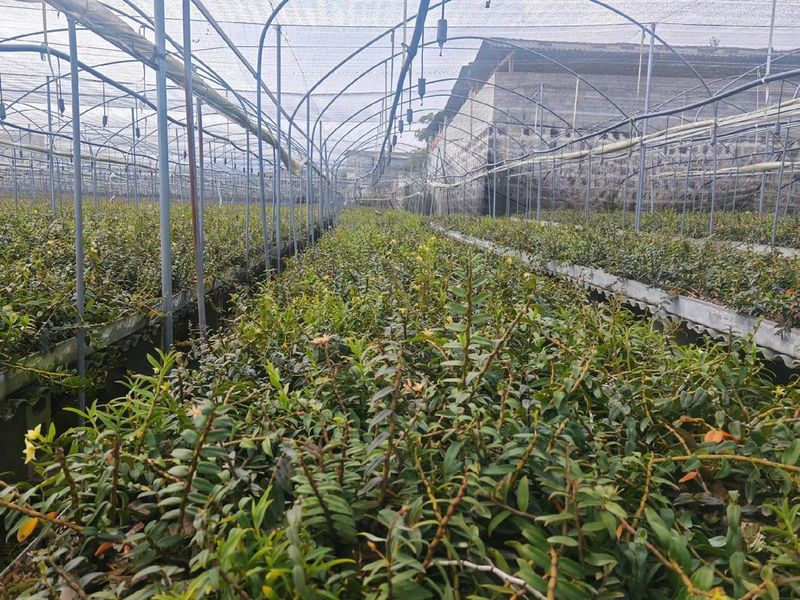
The sheds are structured with steel frames, moving north and south, 50 to 80 metres long, 6 metres wide, up 3. 7 to 4. 5 metres high and shoulder height 2. 0 to 2. 8 metres high. The huts cannot be too long, otherwise they are not conducive to ventilation and are prone to high temperatures and burning in the summer. The roof of the shed is built on an internal and external two-storey arched steel frame, with a distance of 20 to 30 cm between the two-storey steel racks, covering the top and nepotism on both-storey arches, and after the completion of the two-storey cover, the third membrane is covered with barbed wire, which is multi-grouped and in a medium-high and low-side shape, and the third membrane is covered on the outer surface of the barbed, and its position is appropriately adjusted to ensure coverage of the entire large shed. The shroom film should be selected for a specialized agricultural plastic film that is luminous, warm and anti-aging。
3 plantation management techniques
3. 1 duplicate and defilm
(1) duplicate. Optimistic polyethylene multi-flow membranes are selected, the outermost film (first layer) is chosen to be 0. 07 mm thick, the middle layer (second layer) to be 0. 04 mm thick and the innermost layer (third layer) to be 0. 03 mm thick. The best time to cover the outermost sheeting is in mid-december, when the coverage of premature grape hibernation affects yields and the effect of late and early coverage is not significant. Water is poured in front of the membranes to ensure soil moisture. After the first layer of membrane cover, the temperature in the shed rises, and if the temperature is lower than in the middle of the shed near both of the sheds, the membrane can be covered under the two grape trees of the sheds, both of which cover a third of the length of the shed, so as to balance the overall temperature of the ground in order to facilitate the gestation. Seven days after the first film is covered, the second membrane is covered and the third membrane is covered in another seven days, increasing the temperature in the shed。
(2) decontamination. When grapes are new to the innermost membrane top, the innermost membrane is removed in a timely manner, while the membrane is removed; the second membrane is withdrawn when the minimum temperature is above 10°c; and the outer membrane is removed when the minimum temperature is above 15°c, with only the top membrane protected from the rain。
3. 2 temperature management
Temperature management is divided into several critical periods. The first period was before the grape sprouts, at which time the maximum temperature in the shed should not exceed 28°c and the relative humidity of the air should remain at around 90% in order to facilitate the early sprouts of grapes. In the second period, when grapes are sprouts, the minimum temperature must not be below 0°c, otherwise it is prone to freezing, and if below 0°c, the temperature measures are applied, and the relative humidity of the air is controlled by about 70%. The third period is a flowering period, with temperatures at 25-28°c and no less than 15°c at night, and the relative humidity of the air at around 55%. The fourth period is one of long-term fruit production, at which time the temperature must not exceed 30°c during the day, at more than 15°c during the night and the relative humidity of the air is controlled at 60% to 65%. When temperatures reach 28°c in the shed, vents are opened in time for ventilation。
3. 3 embry management
Water should be pumped immediately after the large sheds, but care should be taken to avoid water accumulation, as soil water can cause oxygen deficiency in the roots and affect their normal functioning. The air in the water shed is relatively wet at over 90 per cent, and 50 per cent of the melamine can be sprung as a sleeping agent to break the raisins. The buds should be ploughed in time to remove the extra buds and leave two to three strong buds on each parent branch of the result. The sprouts shall be removed from the weak buds, the sub-sprouts of the twin sprouts, the low sprouts near the ground, the insect sprouts, etc., in order to promote new growth and the fracturing of the buds。
3. 4 new site management
(1) set. And when the line is fully revealed, make sure that the excess branches, such as non-frozen, overt and thin, are removed. On the main chicken it is set at a distance of 18 to 20 centimetres, and when it grows up to 40 to 50 centimetres, it is tied to the barbed wire in a vertical direction with the main chicken。
(2) caution. As a result, the branches tend to be choreographed three to five days before the flowers bloom, leaving six to eight leaves above the bouquet, ensuring that the fruit has enough area for light co-operation and that the new steps can be properly distributed on the shelf; four leaves for the top side and one to two leaves for the rest. The nutrient branch leaves six to seven leaf blades, the top swirling is repeatedly grafted, the base swirl leaves two to three leaves behind and the rest is removed。
(3) distinction of volume. Grapes should be removed in a timely manner throughout the growing season, together with the removal of the mustaches when they are taken from the heart, drawn to the top, removed to the bystand, thus improving the efficiency of work and reducing damage to and interference with grape strains from multiple operations。
3. 5 frozen fruit management
(1) flowers. The gravitation can be performed when the bouquet is open, i. E. `see the bouquet', at which point it is easy to control the length of the bouquet. The degree of gravitation is determined by species, tree positions and target yields, and can be properly preserved for stronger growing plants and larger leaves, while less growing plants are kept。
(2) taki. And it shall take a week after the flower, and it shall remove the lumbers that are surplus and in poor shape, and a branch of the result shall leave only one lumber, and a smoulder of similar shape shall keep a speck of the base。
(3) pocket. Precautions are treated one to three days after the flower bloom, and the flowers need to be ploughed and selected from different varieties for a suitable concentration of cactic acid with a microbicide。
(4) sudden fruit. Ten to fifteen days after the bouquet, the fruit is grown into soybean grains for a very long time. It is to be fertilized, the deformity, the small figs and the poor-growing grains, so that the whole chain of fruit is preserved in one layer. In the summer dark, 60 to 70 are kept in each ear and in the sun roses 50 to 60 in each ear。
(5) growing fruit. After 10-15 days of porridge, the suitable concentration of cromic acid, chloracinicides and pure water are selected for different varieties, and the immersion is followed by the immersion of extra fluids on the fruit. Treatment at temperatures below 28°c in the shed should be avoided at noon temperatures, otherwise burn-prone fruit grains。
(6) fruit pack. After the fruit has ended, packs are made, different colours of the fruit bags are chosen according to the grape varieties, white bags are chosen for coloured varieties such as chahe and queen nina, and green varieties such as sun roses are chosen for green or blue fruit bags. The bag should be carried out in the middle of the day and must be preceded by a dose of fungicides and insecticides for the grapes, with a focus on the fruit ears, and must wait for the liquid to be dried up before the bag is carried out. When the bag is in place, the bag is torn open, the ear is to be placed in the middle of the bag, and the pocket is to be tightened to prevent the fungus, pests, etc. From entering the bag。
3. 6 fertilizer water management
(1) water. It should be followed immediately by a major water injection to promote grape sprouts; from the onset of the germs to the beginning of the softening of the fruit, to ensure that the soil is humid and that soil moisture is maintained at 70 to 85 per cent of the water held in the field; from the softening of the fruit, to control the water recharge, which is conducive to the accumulation of colour and sugar, with soil moisture remaining at 60 to 70 per cent of the water held in the field; and from the harvest of grapes, which is combined with the timely application of fertilisation, which should be filled in the autumn after the application of the base fertilizer, and thereafter with a break of 20 to 30 days of water to keep the soil dry。
(2) base weight. The application of base weights once a year in the autumn, accounting for 70 per cent of the annual application, is conducive to the recovery of the damaged roots and the growth of the new roots. The period of fertilizer in the supei region is from late september to late october, and it is desirable that it be done sooner rather than later. Organic fertilizer is based mainly on organic fertilizers, with an acre with organic fertilizers ranging from 2,000 to 3,000 kg, compound fats ranging from 15 to 20 kg, phosphorus fats ranging from 40 to 50 kg, micronutrient fats ranging from 1 to 2 kg and the addition of microbiological agents. Fertilizers can be applied in the form of ditches that open on the side of a grape farm, usually 40-60 cm deep and wide, so that the fertilizer is evenly applied into the cleavage and the dust behind it。
(3) getting fat. The focus was on four periods, the first of which was a embryonic period, dominated by nitrogen fertilizer, combined with the application of appropriate phosphorus potassium fat and the pursuit of moderate element fattening, such as urea, ammonium nitrate, etc. The second period is a flowering period, at which time nitrogen is the dominant factor, which can be combined with the application of potassium phosphorus fat, and increases the application of moderate element fat, such as balanced water solubility. The third period was during a period of fruit expansion, when the grains were growing rapidly, requiring large amounts of nutrients, application of fertilizers dominated by nitrogen fertilizer, supported by potassium phosphorus fertilizer, and application of high potassium fertilizer at the end of the hard core of the fruit. The fourth period is a chromosomal period in which nitrogen fertilisation is reduced and high potassium fertilisation is increased, such as acid fertilizers, potassium sulphate, potassium phosphate, etc. During the grape growing season, tree trends are observed at all times, and when the tree is weak, leaf face fats are sprayed during pharmacizing, pre-facing is dominated by trace element fattening, calcium is used in early fruit, and potassium fat is sprayed when the fruit changes。
3. 7 pest management
Grapes planted in the three-storey membranes are covered and pests are significantly reduced, but diseases such as frosty are more likely to occur because of the high temperature and humidity in the shed. Integrated prevention strategies should be adopted, with prevention as the main focus, and science should be based on effective control of pest hazards through agricultural, physical and chemical measures。
(1) agricultural control. The first is the winter clean-up, which cleans up and centralizes the winter cut-off of disease, leaves, weeds, etc., and reduces the winterization base of the source of the disease. Two is the trunk white. The third is rational planting, scientific trimming, so as to rationalize the structure of the tree, even distribution of the chickens and good ventilation. Fourth is the rational application of fertilisation, an increase in organic fertilization, an appropriate reduction in nitrogen fertilization, and an increase in tree position to increase the resistance of plants to disease。
(2) physical control. Prevention using simple tools and various physical factors, such as the use of insecticidal lamps, stickers, sexual baits and artificial pest catch in gardens, and packaging of fruit。
(3) chemical control. There are a number of critical periods that need to be captured for pharmaceutical control, pre-emergence, new life, long-lived, early childhood, pre-package, post-harvest. Pesticides used must meet national criteria. Priority is given to the use of pesticides from mineral sources, biological pesticides and the use of low toxic and low residual pesticides for organicly synthesized pesticides. Pesticides are used interchangeably, with only one to two times the same agent during a production cycle, with strict implementation of the safe interval between pesticide use and a ban on pesticide use in the first month of production。
3. 8 collection
When the fruit matures, the soluble solidity of the specky grain reaches 16 per cent, i. E. When the sugar gauge detects the sugar content of the stalk at 16 per cent. (c) select the morning or evening of the clear day to harvest to reduce the loss of water and oxidation of the fruit, which should be lightly collected to avoid touching the fruit and powder。
3. 9 winter shearing
Winter cutting is an important part of vineyard management, and the optimal period is one month after the fall of the grapes and one month before the injury, when it is not appropriate to do so prematurely or late, which may lead to loss of nutrients, while the lateness may result in the waste of large amounts of nutrition due to the injury. The method is to remove twigs, insect branches and weak branches from the main chickens, to leave one medium-sized strong branch every 20 centimetres or so, and to leave one to two short sproutings on the strong branches。
Summary 4
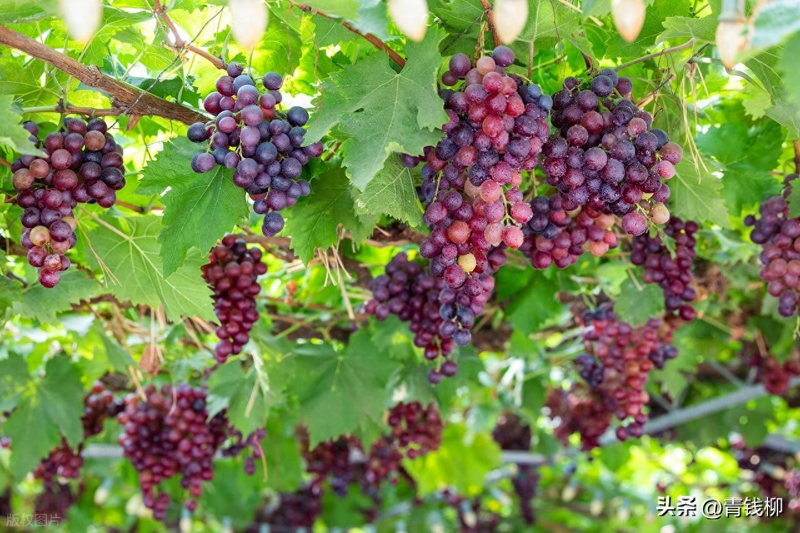
Grapes are grown early with three layers of membrane cover, accompanied by appropriate planting management measures, which have had the good effect of pre-eating, pre-emerging, maturation and avoiding the rainy season, 30 to 40 days earlier than rain-shielding, and with a good color, high sugar content and good commerciality, which have significantly increased the efficiency of cultivation and have important extension value。