The packaging process can be divided into two simple categories: colouring and printing。
I. Package colouring process
Aluminium electron: aluminium surface, a layer wrapped in inner plastic。
2 plating (uv): the effect is bright compared to spray paint。
3. Spraying: the colour is dark and dumb compared to plating。
4. Momentum: a layer of sandy taste。
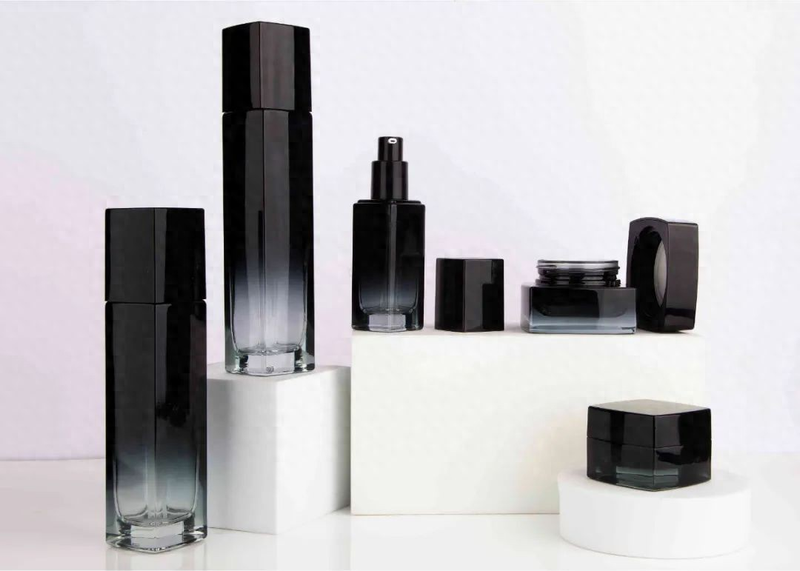
5. Out of the inner bottle: the spray is sprayed outside the inner bottle, with a clear gap between the external viewing and the external bottle, with a small surface view of the spray area。
6- intra-barrel spraying: the spraying is carried out on the inside side of the external bottle, which appears to be larger in size from its appearance, smaller in size from the vertical plane and has no gap with the inner bottle。
7. Lasségé gold: it's a membrane, and it's possible to look closely at the gap in the bottle。
8. Second oxidation: secondary oxidation based on the original oxidation layer, which results in a lumber-covered luminous or a luminous face, most of which is used in logo production。
Note: the process is relatively cheap to add powder to the feedstock at the time the product is retrofitted. It can also be added, or it can be added too white to make pet opacity non-transparent (and add some powder that can be colored). Waterlines are created because of how much of the added bead powder。
Ii. Package printing process
1 ribbon: the effect of printing has a clear permutation because it is a layer of ink. The bottle (cylinder) of the typographical rule may be printed at one time; the other is an irregular one-time cost. Colours are also a one-time cost and are divided into dry ink and uv ink, which are easily removed over a long period of time, which can be wiped out with alcohol, and with a clear sense of concussion on the ink。
2. Incineration: it is printed on a thin sheet of paper, so there is no filamentation, and it is better not to be printed directly on the two materials, pe and pp, which need to be printed in the heat before they are burned, or with good paper. It's not allowed to burn on aluminium. It's allowed to burn on the whole。
3. Water trans-printing: it is an irregular printing process carried out in the water, with inconsistent printed textures and more expensive prices。
4. Thermal reproduction: thermal printing is mostly used for large, printed and complex products that are attached to the surface. Prices are expensive。
5. Rubber: mostly for aluminium and whole plastic hoses. If the film is made white by a coloured hose, it must be filamented, and it will come out in the background. And sometimes a bright film or a subfilm is attached to the surface of the hose。