What's hiv
Hiv (human immunociety virus) is the human immunodeficiency virus, the disease caused by the virus, known as aids, or acquired immunodeficiency syndrome (aids). The virus can directly attack cd4+ cells, which play an important role in the human immune system, and after infection it can lead to the total or partial loss of the functioning of the immune system。
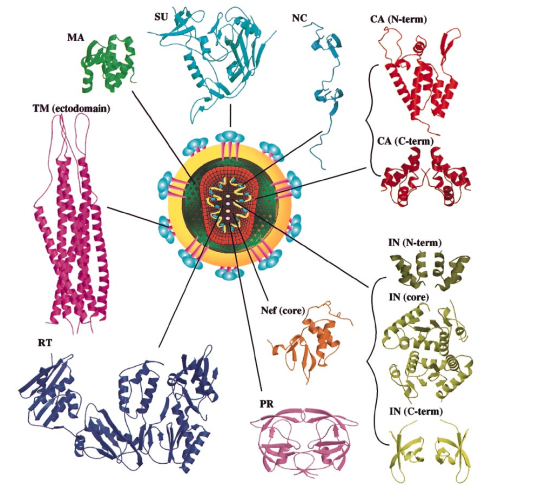
Structure of mature hiv protein
The hiv virus is transmitted mainly through the body fluids and blood of the carriers, mainly through sexual contact, blood and mother-to-child transmission. The most critical is the lack of access to medication, the inability to heal for life and the control of drugs. Some hiv carriers also have a period of incubation, ranging from years to decades, and risk wider transmission if not detected in time. It was also for that reason that you were talking about the change of colour。
How is hiv infected
After entering the infected person through the blood and body fluid of the carrier, hiv undergoes the life cycle of intrusion-reverse-integration-translation-translation, integrating its own genetic material into the human genome and using the substance in the human body to replicate more viral particles and then attack the human immune system。
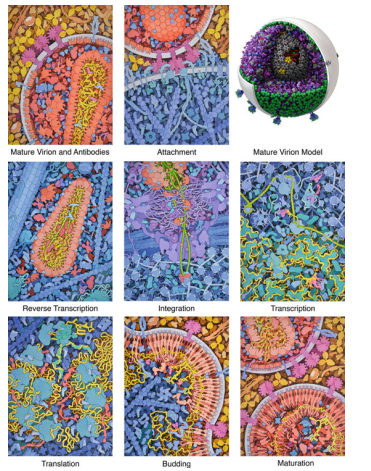
Reproduction cycle of hiv virus
Thus, the hiv virus is a subtle “invasive” one that cannot be replicated on its own and that requires the reproduction of human substances to produce more children and grandchildren; on the other hand, it infringes on the immune system of the human body, leading to a decrease in human immunity and inability to combat diseases that are subject to opportunistic infections, tumors, etc. It needs you, and at the same time it hurts you, and it is “inimical to others”. It is, however, well-transmitted and is constantly looking for opportunities to find suitable hosts to start the next round of infection and abuse。
What are the symptoms of contracting hiv
In the early years of hiv infection, the patient will not suffer from too severe symptoms, but only from mild viral haematosis, which includes but is not limited to fever, lymphoma swollenness, appetite, and acid attacks, especially for young adults who are usually in better physical condition, similar to common colds and poor rest. Since then, the amount of the virus has been significantly reduced, even to the point where it is not detectable, to the point where it enters the latency period known as the carrier, which varies from person to person. Thus, most carriers need only take drugs to control the number of cd4+s during the incubation period, without seriously affecting the immune system, and are almost identical in everyday life, except for the relative risk of fatigue. However, when stimulated by certain unknown factors, development called aids, there are more serious associated syndromes, including persistent lymphoma swollenness, chronic fever, loss of weight, chronic diarrhoea, oral, skin, fungi infections, etc. It usually takes six months to one year to develop into aids. At a time when any slight infection could be fatal due to the loss of immune system functionality and the inability of the human body to withstand external harm, and when viruses, bacteria and fungi, which would otherwise not cause disease in the normal human body, could cause infection, there was no good means of controlling the volume of the virus and increasing its immunity, but only for treatment, where the infection had been eradicated and where the pain had stopped. Once the later stage of the disease is reached, tumours will be found, and even the central nervous system will be damaged, followed by system and organ damage, failure and suffering until the end of life。
How to prevent hiv infection
The hiv virus is transmitted through body fluids, blood, breast milk, etc., and daily handshakes, hugs, conversations are not at risk of infection, and the following means of transmission need to be noted in everyday life:
Sexual transmission, regardless of gender, requires a small umbrella to protect you and me; blood transfusion, blood products, syringe use, injecting drugs, medical blood, etc.; toothbrushes, razors, eyebrows, etc., may be in direct contact with body fluids, blood supplies must not be shared; wounds, haemorrhages must be protected from possible other people's fluids; mother-to-child transmission, without concealing the history of the disease, should be stopped at an early stage。
Like other infectious diseases, hiv is a virus infection and is transmitted through more than sexual transmission. Not all carriers are caused by poor living conditions, and should not be discriminated against, requiring friendly treatment and proper control。
References: 1. Standard biology of hiv
2. Illustrations of the hiv life cycle
3. Hiv and the secret of human ability