Led is a vital part of life and hardware, so let's find out about led。
Led principles and industry classification leds are short words of the light diodes (light emitting diode, leds), also known as leds, which, since their development, have been generally used as indicator lamps and display boards, but are now used as a source of light with increasing technology, not only to efficiently and directly transform electrical energy into light, but also to have a useful life of up to tens of thousands of hours to 100,000 hours, as well as to be less fragile than traditional light bulbs, and to be electricity-efficient, with the advantages of being environmentally safe, mercury-free, small size, light-based orientation, and light damage and colour area abundance。
In 1955, rubin braunstein of radio corporation (radio corporation of america) discovered infrared radiation from gaas and other semiconductor alloys, while nick holo of general electric (ge) in 1962Nyak jr. Developed a light-visible led. However, the real take-off of led began to gain prominence and become more widespread after the white light of leds in the 1990s。
Part 1: composition of leds
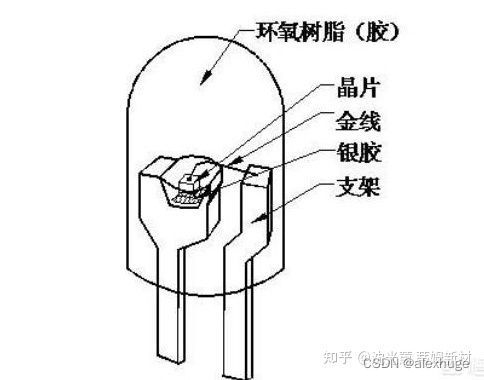
You know how led glows, let's take a look at the composition of leds, pick up the led lights at your hands (the most common ones). Led lights are mainly made of chips, gold wires, silver glue. The colour of the led is then changed by incorporating fluorescent powder。
By the way: blue led is a very young invention。
The blue luminous diode, the blue light led, is a blue lighted diode, whose invention has been dubbed “second light revolution after edison”. The invention of the blue light led allows humans to come together and give three-generic light, and to come up with enough white light with led. The invention of white light led lamps has significantly increased the efficiency of human lighting。
In 2014, akaki yong, professor at nagoya university, japan, and yukio amano, professor at nagoya university, and shuji nakamura, professor at the university of california, united states of america, jointly received the nobel prize in physics for the year, “inventing a bright blue-luminous diode tube with a bright white source of energy-efficient light”。
Here's how it works:
Part 2: rationale
The led core is the hollow and electrons of the diodes that flow from the electrodes to the pn knots with voltage. When hollows and electrons come together to compound, electrons fall to lower energy levels and release energy in light. As follows:
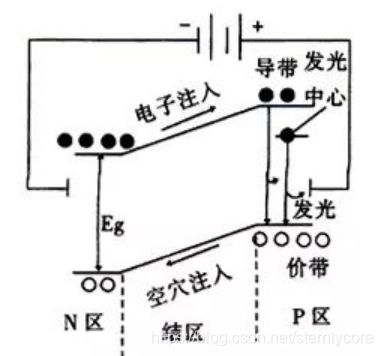
Physically, due to the release of photons from empty holes and electron collisions, there are different wavelengths of electromagnetic waves at the macro level, and if it's in the visible range, it's the led we know well. It is possible to calculate the energy of the photon by symmetry and constant kinetic energy by reference to the physical model of collision, and to calculate the wavelength of the photon by the photon energy formula, bearing in mind that it is important to consider here the relativity effect, which is very fast in the electron as well as in the hollow。
There's a nice science video here, but it's not too strict, but it's common: it's more than 10 times more efficient than incandescent lights! How does led work? How does leds actually glow? Bilibili
So have you thought about why it's called a luminous diode
Because it's also bipolar。
Then again, what's the difference between this and a normal diode
The difference between the two diodes is that the material is different。
The diode consists of a p-n knot of a p- and n-conductor, forming a space charge layer on both sides of its interface, and establishing a self-built electric field. When additional voltage does not exist, diffuse and drifting currents due to the difference in p-n concentration between the two sides of the stream are equally balanced. When there is a positive voltage bias from the outside, the mutually inhibition of external and self-built power fields has led to a positive current due to the proliferation of currents. When there is a reverse voltage bias from the outside, the external and self-built fields are further strengthened to form a reverse saturation i0 that is not related to the reverse bias voltage values within a given reverse voltage range。
At a more micro level, the materials used for the diodes are silicon, while the outermost layer of pure silicon crystals is able to form a stable eight-electronic structure, while the diodes are five-priced phosphorus in area n, so the outermost layer comes out with one free electron, while in area p they are three-priced boron, creating an empty hole, so when free electrons receive a reverse effect from the outside field, they move to the empty space and generate heat, which is what we normally call the two-tier tube。
Unlike leds, materials of different colours vary, such as red leds that use phosphorus as a replacement for silicon, pure electrons that collide with empty holes, which is how leds glow。
Here i also wonder why the electrons should be able to leap at the same level without light in silicon and in phosphorus
Part 3: diodes of different colours
So how does it send out all kinds of light? It is possible to do so either through a combination of three original colours or by supersing different fluorescent layers on three original colours。
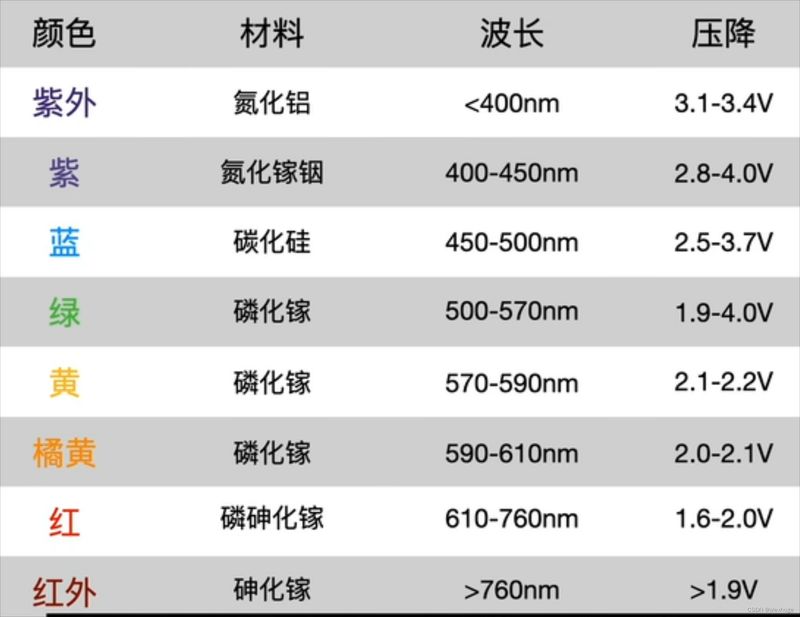
More specifically, a blogger's summary was reproduced
I. Blue led
It means the blue luminous diode. The blue led material is commonly used as a semiconductor for the gan class. The development of blue leds with a zinc selenide (znse) class semiconductor has been widespread in the past, but since december 1993, when high-light blue leds with a zenide (znse) class were developed, the mainstream of blue leds has become products with a zenium nitride semiconductor。
The centre of the blue luminescence diode wavelength of the acetate type gan is around 470 nm. Light sources for blue displays such as lighting devices and indicators, blue light sources for led screens and backlight sources for lcd panels, etc. White light is available in combination with fluorescent material. Current white leds are typically constructed with blue leds and fluorescent materials。
Ii. Red led
Red-ray diodes. Currently, red leds are commonly used as aluminium phosphorous or phosphorous aluminium (alingap) compounds semiconductors. In the led area, the four-dollar material generally refers to alingap, alingap for the use of aluminium (al), thallium (ga), thallium (in) and phosphorus (p) four elements, known as 4-dollar material. Alingap does not just mean red, but also covers wavelengths from red to yellow。
The gaas semiconductor was the dominant material until alingap was born. The technology is used to extend growth in the liquid phase. Alingap's brightness increased rapidly as a result of the improvement in the quality of the crystallines as a result of advances in growth technology in the later 1990s represented by the mocvd method。
The red led light centre is about 620-630 nm. The applications are wide-ranging and are mainly used for the light sources of the red displays in neon lamps, indicators, car taillights and transmitters, the red light sources for led monitors and the backlight sources for lcd panels。
Iii. Green led
Launching green light diodes. The main use of green leds is a semiconductor material of the nitrogen oxides (gan) type that is less efficient than when used in blue leds, input the same current and have lower light output power. Green leds, a semiconductor of the gan type, currently sold, are largely inefficient because of voltage fields. The voltage field is an electric field resulting from voltage electrodes due to the stress of the crystal structure. Universities and led chip manufacturers, both in japan and abroad, have begun to study significant efficiency gains through changes in the growth of the gan crystals, which, if changed, could increase the efficiency of green leds more than twice the current level。
The distribution of rgb3 led light, in combination with red leds, green leds and blue leds, when the backlight source for led monitors or liquid crystal panels is required to be approximately 3. 6:1 or about 3. 7:1. Because green leds are not bright enough, multiple green leds have to be used to increase output power. Green leds are considered to have much room for improvement compared to red leds and blue leds。
Green led, light centre wavelength around 560 nm. Light sources for green displays, such as neon lamps and indicators, led monitors and backlight sources for liquid crystal panels, etc。
Iv. Infrared led
By definition, the diodes that fire infrared light. Semiconductor materials of the gaas type, such as algaasp, are commonly used. Infrared leds have a long history, and in 1962 an electromagnetic wave equivalent to infrared light was detected using pn knots of tri-v compounds represented by gaas。
Infrared leds have a positive voltage of approximately 1. 5 v, which is lower than the red leds of more than 2 v and blue leds of more than 3 v。
Infrared leds with a light wavelength greater than 700 nm are used mostly as light sources for infrared remote control (irv) line communication, ranging sensor light sources, light sources for pv coupons and light sources for printer heads。
V. Uv led
A diode with ultraviolet light. Ultraviolet leds are also used mainly as semiconductors for the nitrogenized radon (gan) class. Often refers to leds with light wavelengths below 400 nm, but sometimes leds are called near uvs when they grow up to 380 nm, and leds are called deep uvs when less than 300 nm. Short-wave long-light microbicide works well, so uv leds are often used for fungicide and deodorant purposes such as refrigerators and home appliances, as well as for visual leds with fluorescent combinations. For example, white leds can be obtained by combining red, green and blue fluorescent with ultraviolet leds。
The above is the sharing of led knowledge between shenzhen city's yin kaylon technology ltd
Original link: https://blog. Csdn. Net/mr chen z/article/data/120716277
Part 4: various types of leds
Classification by appearance: the general cylindrical appearance is 3mm, 5mm, 8mm, etc。
In general, positive and negative extremes (long and short) are distinguished according to the length of the quotation。
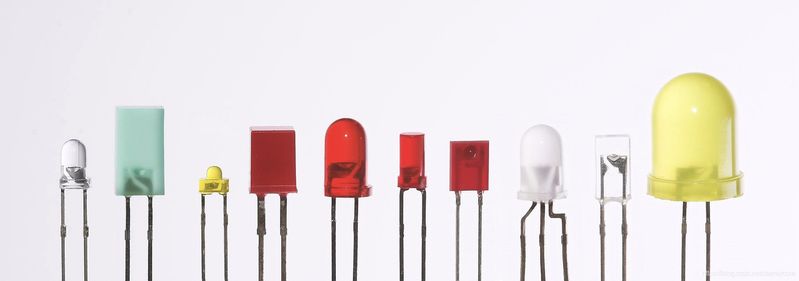
By appearance: 0402, 0603, 0805, 1206, 3030, 3528, 5050, etc。
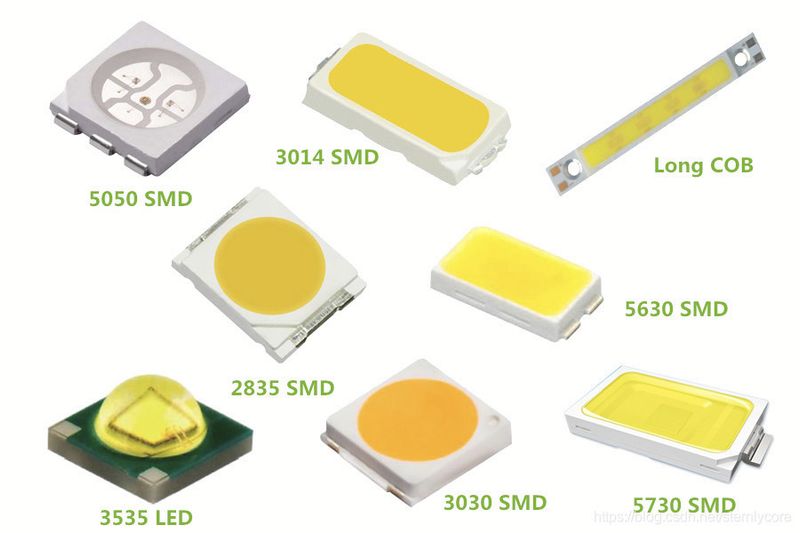
Part 5: circuit characteristics
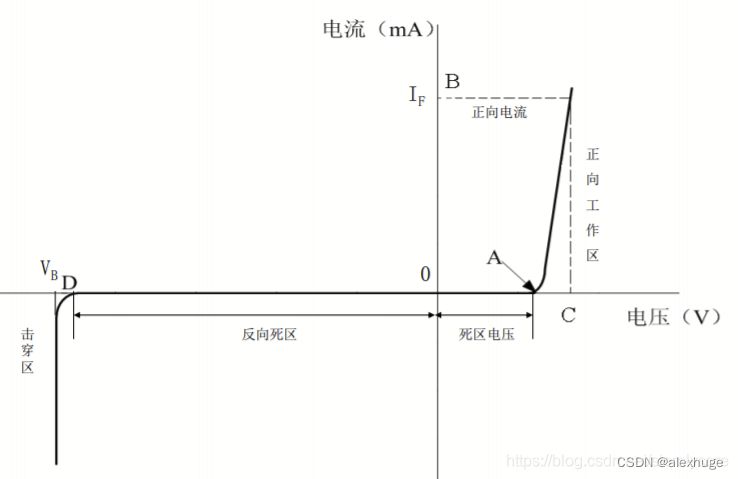
Point a is to turn on the voltage, which was closed before the opening point. The current has increased exponentially since point a as the voltage rises. The ac section is a positive workspace, and leds and ordinary diodes are expected to have a positive guidance voltage of > 1v. Positively channeled currents: should normally not exceed 60% of the maximum value. Maximum reverse voltage: leds will burn when the reverse voltage is loaded above a certain value. Inverted leakage: the reverse leakage of liu is small, usually at <10ua, under electric pressure. The smaller the reverse leak, the smaller the one-way led. Function: the positive-director current* positive-conductor-through voltage is the power consumption. It should be guaranteed to be less than the maximum allowable power。
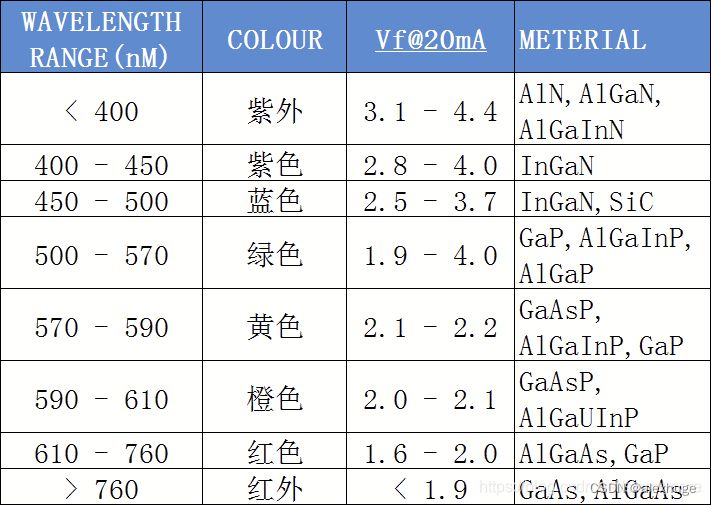
Part 6: optical properties
Indicates the brightness observed in a given direction. The unit is cd (kendra)。
When comparing light strength, special attention needs to be paid to pointing towards the angle, which means the amount of light flux within a unit stereo angle. The lens, as part of the led envelope, can concentrate the light output in a given direction (with lenses), even if the light output is small, and the light becomes strong. Comparative technical information needs to be judged on the basis of pointing angles and light。
It means the full amount of light from the source. The unit is mem。
Is the maximum wavelength of the spectrum output from led in nm (nami)。
Leds are designed using peak wavelengths, but are actually compared with main wavelengths when wavelengths are compared with human eyes。
Leds are typically coloured with wavelengths. The main wavelength corresponds to the wavelength corresponding to the colour seen in the eyes and differs from the peak wavelength of the light wavelength。
L is the irritant of led luminous colours expressed in a two-dimensional orthogonal coordinate system, generally using x y-coordinates。
Indicates the range of light led radiation. The "degree" is used to determine the angle from which an output can be observed at the point of the output 's limit. Multiply the angle at which the output reaches its peak by two times (equivalent to the right and left in the front) by the pointer。
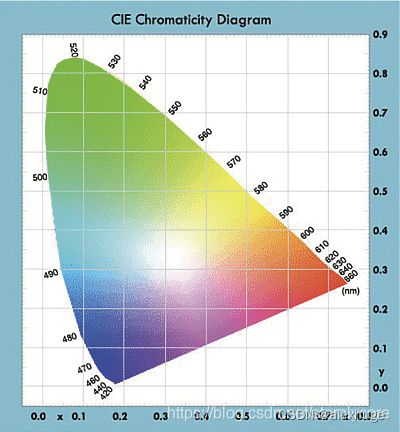
Future replenishment
Nakamura's second prize winner. Search the fox