The bits are a variable resistor that allows the user to adjust the resistance value by rotating or sliding, thereby altering the voltage or current in the circuit. The bits are used extensively in electronic circuits, including volume control, lighting, gain adjustment, etc。
Fundamentals of the electrons
It consists of an electrical resistor, an active contact (usually called a brush or slider) and a mechanism for moving or sliding. When the switch button or slider of the power station moves, the active contact point moves along the electrical barrier, changing the position of the exposure to the electrical barrier and thus changing the resistance value。
Electrical resistors
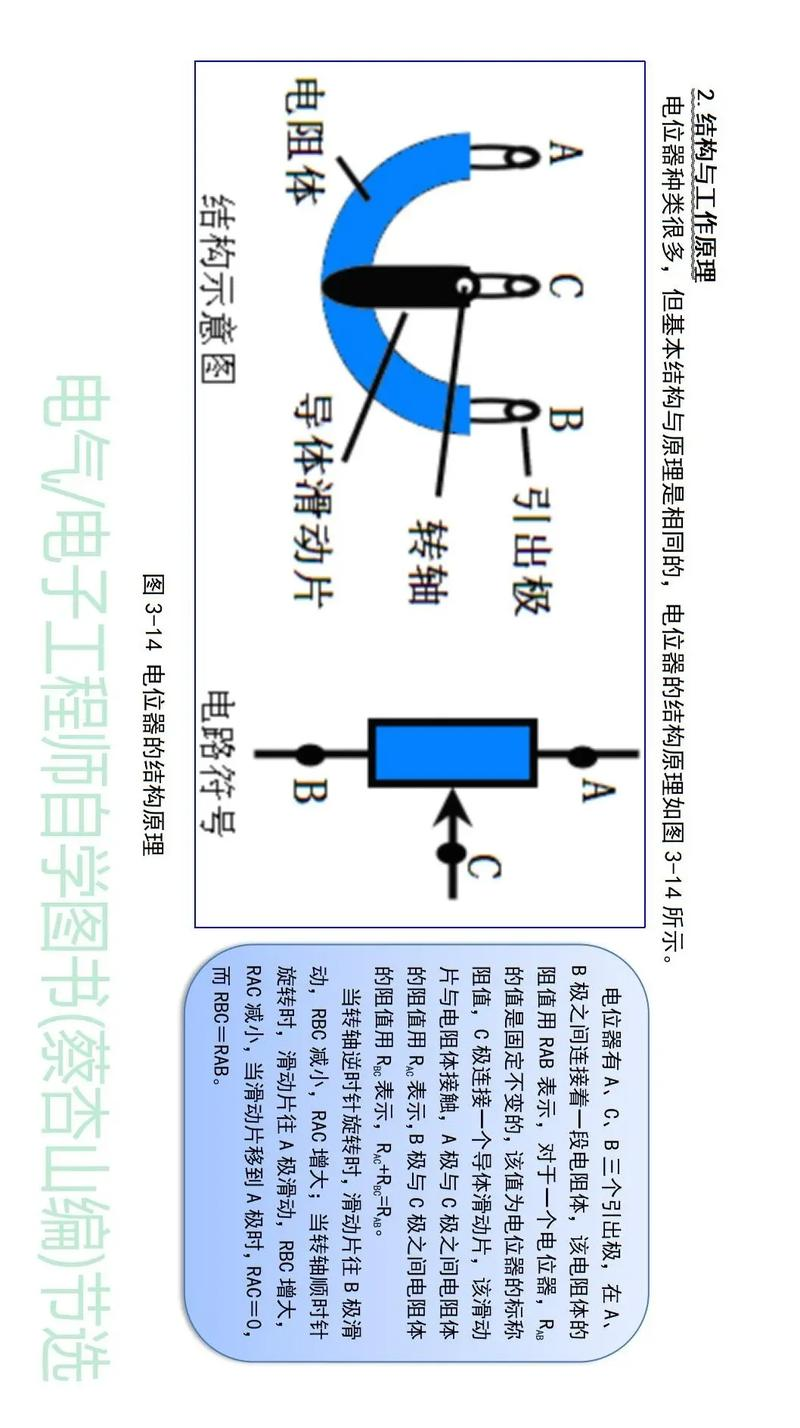
The resistor is a component of the level device that provides the resistance, usually made of carbon membranes, metallic membranes or wire-backed resistance material。
Active contacts
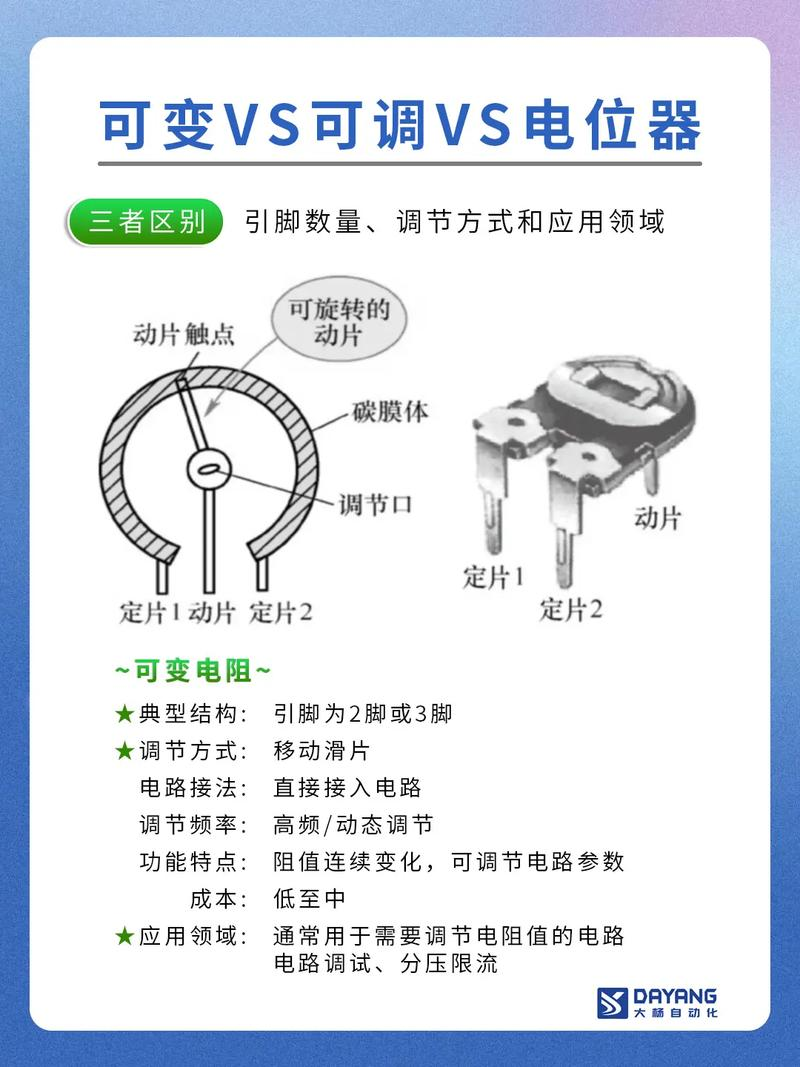
Active contact points are connected to the output end of the electrical level and move with the rotation or slide of the electrical level to change the point of contact with the electrical barrier。
Turn or slide mechanisms
This is part of the user operation, which can take the form of a knob, slider or leverage。
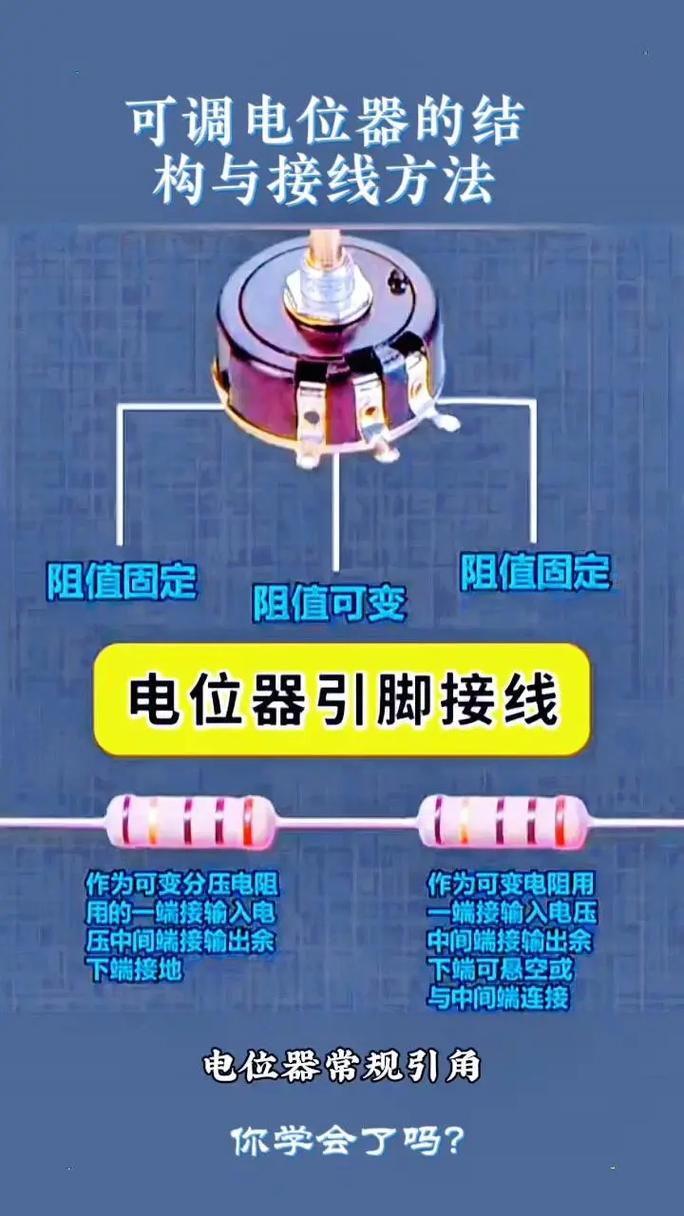
Type of carbon membrane electrons: using a carbon membrane as a resistance material with low cost and simple manufacturing characteristics. Metallic membrane bits: the use of metal oxide as a resistance material provides better temperature stability and precision. Wire-wire-wire-wire-wirers: made of electrical resistance threads around ceramics or plastic cores, providing high accuracy and low noise properties. Pv bits: the use of pv sensors instead of mechanical contact applies to no contact regulation. (b) the method used to determine the range of resistance values: it should provide sufficient range of resistance values to select the appropriate level units according to the circuit needs. Select type: select the appropriate levelr type according to the application environment and performance requirements. Installation of bits: hold the bits in the right place and ensure smooth operation of the rotation or slide mechanism. Connecting circuits: connecting three endpoints to the circuit. The two fixed end points are connected to the power source and the ground or signal source and the active contact points are connected to the output. Adjusting the bits: rotate or slide the bits, adjust the resistance value until the required voltage or current level is reached. Locking the level: in some applications, locking the position of the leveler may be necessary to prevent accidental adjustments. Application of volume control in the electrical circuit: in the audio device, the level is used to adjust the volume size. Lighting: in the light control system, the bits are used to regulate the light. Gain reconciliation: in amplifier circuits, the bits are used to regulate signal gain. Calibration and testing: in the test equipment, the electrons are used to calibrate measurements or simulate different conditions. Designs to consider power capacity: select the level that can withstand the expected power in the circuit. Resolution: select the appropriate resolution according to the precision adjusted as required. Persistence: for applications with frequent adjustments, select a durable level. Environmental factors: take into account the effects of temperature, humidity and mechanical shocks on the performance of the electrons. Conclusions
The biting device is a multifunctional electronic component that changes the electrical resistance value of the circuit through mechanical adjustments. Different types of electrons apply to different application environments and performance requirements。