Little lee, who just got her driver's license, recently had an awkward situation: visiting a friend at the mall on the weekends and finding a parking space was difficult, but the steering wheel went in the opposite direction when the side stopped, and the tail of the car hit the road teeth. In the rear-view mirrors, the faces of the crowd were filled with smiles, and he hated to swallow the wheel down. This dilemma is familiar to every new driver. In fact, it's like playing blocks in the side of the car, and it's as easy as a jigsaw puzzle if you've got the four-step song. Today, in the most living language, we break down this seemingly complex parking problem。
I. Side-to-side entry: five actions to unlock the perfect position
Many newcomers feel that the side of the library is doing mathematical questions, counting angles and distances. It's easy to break the five steps of "one stop, three go, four go, five go."。

First, the car is driven to the right side of the space, at a distance of 30 to 50 centimetres, which is equivalent to one and a half steps for adults. Through the right rear-view mirror, when the right back door handle overlaps with the road teeth (as in the position where the peanut rice is caught with chopsticks), the right-hand steering wheel is immediately filled, and this move is as decisive as the twisting of the mineral water bottle cap。
In the back-up, close to the left rear-view mirror, when the left back wheel is pressed to the dotted line of the car space (imagining a chalk line on the middle ground on the wheel), quickly returns to the right wheel. At that point, the car would be like a slider, and it would continue to roll back to parallel with the road teeth, and the whole process would be easier than cooking bubble noodles。

Coach wang of shenzhen driving school shared a case in which the student zhang was at the end of the line and later found that the lack of a seat was causing a misperception. After adjusting the seat, he was able to observe the position of the tyre and the dotted line in the left rear-view mirror, and each time he entered the library, he was able to park precisely in the middle of the car, with an error of not more than one cell phone length。
Ii. Side exit: three key points to bid farewell
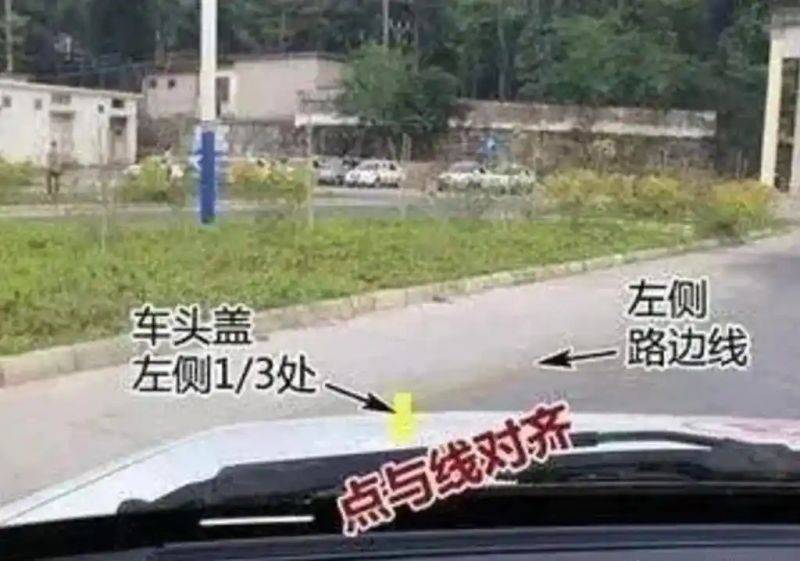
It's easy for a lot of rookies to make a mistake when they're out. Remember the golden rule of "see the light before the corner of the line," so you can look like an old driver。
The first step must be a left turn light, which is not only about examination scores, but also about security consciousness. The steering wheel remained left-to-left and returned immediately to the right direction when the rain-shaving node coincided with the left side line (like drawing parallel lines by straight feet). At this point, the front wheel of the vehicle will be as natural as a clock pointer。
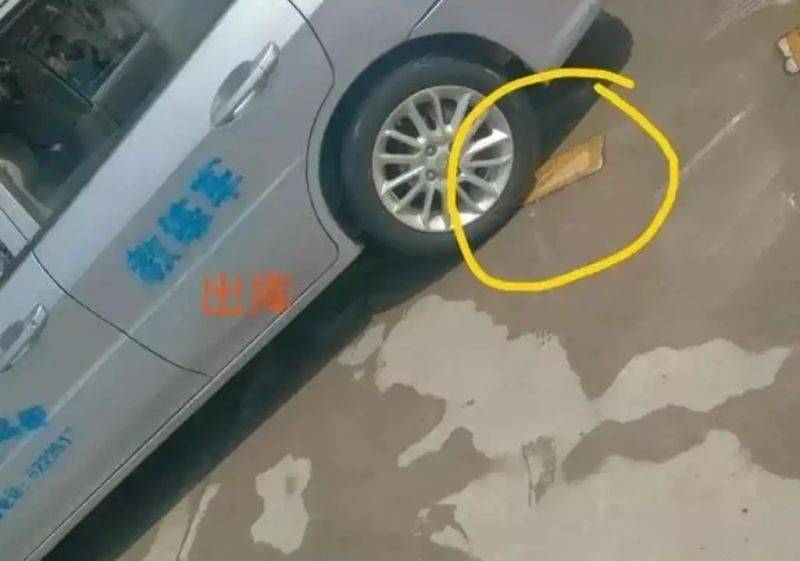
The right rear-view mirror is then observed, and when the doorknob and the road teeth form a 45-degree junction (equivalent to the angle of the crease of the paper plane), a turn in the right direction. This move is to be as soft as a key lock and to keep the speed of the car slower than the pace of the walk so that it can move smoothly out of the parking space without scratching。
The kodaks @the wheellord demonstrated in the video that if the head was too close to the front car when out of the garage, it could go back half a metre in the right direction and re-engineer the angle. This way helps millions of fans avoid the dilemma of dilemma。
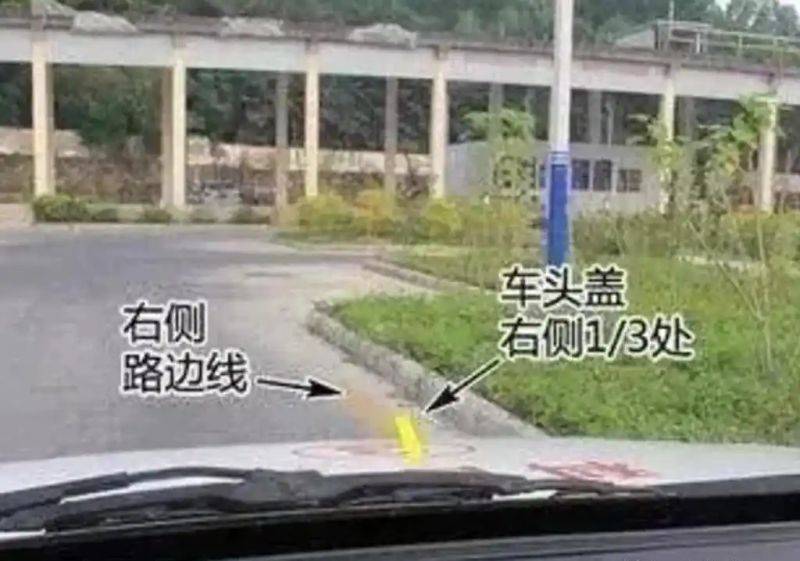
Iii. Guidelines for application of real side
Non-standard parking spaces are frequently encountered when actual parking takes place. Remember the 20-centimeter safety rule: when the space is 20 centimeters longer than the body size (about the width of the laptop), it stops safely. For compact spaces, a "slash-plug-in library" could be used, as it would be a book-sliding into the bookshelve, allowing the head to reach a third and then the parking to be done by fine-tuning。

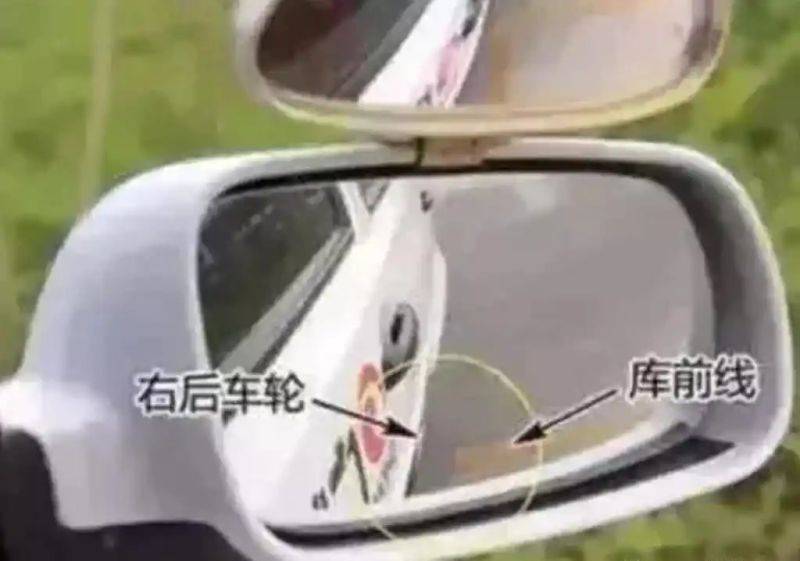
When there's an obstacle in the back, learn to use the "back-view mirror folding" method: the rear-vision mirror is adjusted downwards to the position where the rear wheel can be seen, so that the distance of the tyre from the road teeth can be clearly determined. This method was rated by beijing driving school as "the most practical behind-the-sight technique."。
Of the common error zone, 90 per cent of the newcomers return to the wheel prematurely. Remember the saying, "go in the right direction and be patient." it's like cooking soup to regulate the fire, and every move on the steering wheel to keep the pace of the car moving and stopping。
Iv. Operational skills
In the second exam, the side parking period was 90 seconds, which was equivalent to the time of the completion of a song called " lonely man " . The secret book is "three seconds to turn the light": to move the wheel three times silently after turning on the light, meeting the test requirements and creating a security awareness. The data from the hangzhou examination show a 37 per cent increase in the pass rate for candidates who strictly implement this step。
The day-to-day training suggested "marking": drawing lines with chalk in their own spaces, practiced five times a day to form muscle memories for two weeks in a row. The method, measured by drivers in guangzhou, increased the side parking pass rate from 58 per cent to 92 per cent。
There are good ways to deal with special weather. In the event of a mist in the windows of the rain-drive, the air conditioner defusing function can be activated, while the rear-vision mirror can be moved to the "house view", i. E. The position of the two door handles in the back. This technique has enabled trainees in the rain-fed area of chongqing to avoid many sight-blind zone accidents。
With these skills, parking is no longer a problem but a pleasure. It's like jigsaw, every step of the way, with an elegant parking space as long as you press tuso. Next time you meet the side stop, breathe deeply, imagine the wheel as a game handle, step by step with this paper, and soon you can become the parking god in the eyes of your friends。