According to the authors: “the party's central government attaches great importance to combating desertification and has made combating desertification the main task of combating sand and sand, and has successively carried out a number of priority ecological projects such as the construction of a three-north-safe forest system, the restoration of trees, and the management of wind and sand sources in kyoto.” general secretary xi emphasized that “the country has come out of a chinese path to combat sand and sand that is consistent with the laws and conditions of nature”
After more than 40 years of tireless efforts, my national defence efforts to combat the sand have achieved remarkable achievements worldwide, with a historic shift in the focus on governance zones, from a “silent retreat” to a “green retreat”. Our desertification, sanded land management has shown a good “overall improvement and acceleration”. The present edition has been launched with a special plan to demonstrate the practical effects of desertification and land sanding “two-declining” from the perspective of satellite remote sensing monitoring, bringing together confidence and strength in an effort to create a new miracle for national defence in the new era。
Since the 18th anniversary of the party, my national defence has made remarkable achievements in the field of sand control, with the cumulative completion of the sand control mission of 2,033 million hectares, the governance of 53 per cent of the regulable land, and the historic transformation of the governance area from a “sand-in” to a “green-in-the-silver” shift. A system of rule of law, engineering, appraisal, policy, scientific and technological promotion, and investigation and monitoring was initially established, and a chinese path to combat sand and sand, adapted to natural laws and circumstances。
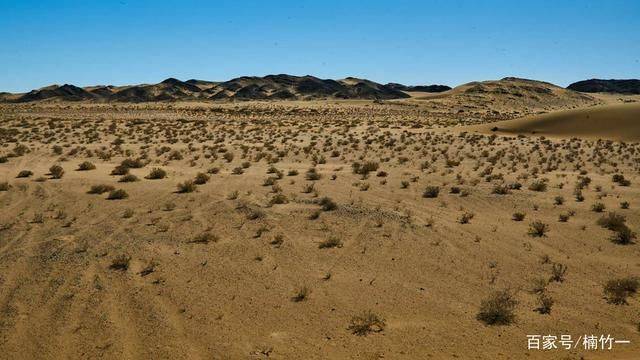
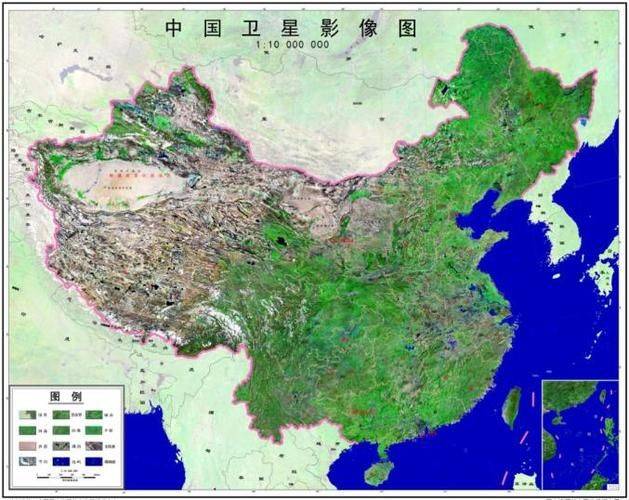
Our country is one of the most severely affected countries in the world, with a total land area of 2,573 million square kilometres, or 26. 81 per cent of the national territory. Of these, 1. 874 million km2 of wind erosion desertification, 245. 5 million km2 of water erosion desertification, 160. 4 million km2 of saline desertification and 360. 4 km2 of frozen desertification. The sanded land covers 1. 6878 million square kilometres, or 17. 58 per cent of the national territory。
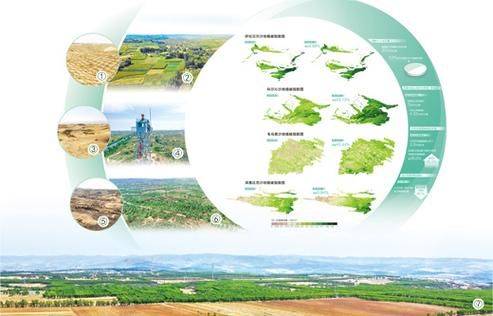
The country has four major sands in the fields of mausoshad, koryoshad, moo-dakshad and harun bershad. Data from the satellite remote sensing monitoring of the national forest and grass office show an increasing trend between 2002 and 2022 in the country's four largest sandlands, the ndvi, which is the larger, representing the better vegetation cover, reflecting a positive trend towards “overall improvement and acceleration” in desertification and salinization。
“the ndvi is widely used both qualitatively and quantitatively to reflect vegetation cover and its growth dynamics. Of these, the largest increase was in the maususa field, at 43. 44 per cent; in the kolsa area, at 43. 13 per cent; in the khoren belshad and psychic dakshad, at 4. 88 per cent and 0. 84 per cent, respectively.” according to experts from the national forest and grass survey and planning institute, the national forest and grass office。
Experts described the promotion of drought-resistant afforestation techniques such as front-and-back zipping, membrane water retention and shrub-plant cut-off, in particular the application of sorghum pine afforestation techniques, in the context of the mausula field management process, which resulted in an average survival rate of over 85 per cent. Technical models such as mechanical sand barrier sand management, compound sand barrier management, and artificial promotion of natural restoration based on containment were promoted in the process of governance in koljshah。
Our desertification and land salation continue to be “dualized” through sustained and systematic governance. There has been a net decrease in the area of desertification and desertification in the country for four consecutive monitoring periods. Compared to 2009, there was a net decrease of 50,000 square kilometres in desertification land and a net decrease of 4. 33 million square kilometres in sanded land。
There has been a marked improvement in vegetation vegetation in sandy areas. Compared to 2009, the average vegetation cover in sandy areas has increased by 2. 6 percentage points, the total vegetation cover in forest grassland has increased from 39. 8 per cent to 45. 5 per cent in 20 years in the kyeong jinxi sand supply project and the forest cover in the three north project area has increased from 5. 05 per cent in 1978 to 13. 84 per cent。
Wind and sand hazards are contained. Total soil wind erosion in the eight deserts and four sands decreased by about 40 per cent in 2019 compared to 2000。
At present, the basics of the country's sanded land area, which is large, widely distributed, heavy and difficult to manage, have not fundamentally changed, and desertification control and desertification control remain critical。
In 2021, the annual monitoring of desertification, desertification, desertification and desertification was included in the integrated ecological monitoring of forest grassland, with the macro-survey as the subject of annual monitoring, thematic monitoring and positioning monitoring complemented by an integrated “empty-terrestrial” monitoring system for desertification, desertification and petro-desertification, the results of which provide a scientifically sound basis for macro-level decision-making for national ecological construction。
In december 2022, the national forestry and grass office, in collaboration with the national development and reform commission, the ministries of finance, natural resources, ecology, water and rural development, issued the national plan for the prevention and control of sand (2021-2030), which provides for the planning of 100 million acres of sanded land by 2025 and 300 million acres of sanded land by 2030; and 186 million acres of sanded land by 2030 and 90 million hectares of sanded land by 2030。
The strengthening of the integrated desertification control process has been successful in modern times. The forest grass system will work for a new era of national defence, a new miracle of sand and sand, with greater success in building a beautiful china。