The news of january 29th from the south china sea network, new sea nan client (journalist rich) south silicon valley gives new fruit! The reporter learned from a joint contract for the production season of san yagua (2026-2027), held on 29 january, that the country's first edible papaya species, hot one, which had obtained a certificate of bioculture safety from the ministry of agriculture and rural development, had grown on a modest scale. This marks a further acceleration of the in situ transformation of results from “laboratories” to “fields” and injects strong new qualitative productivity into tropical and efficient agriculture。

On 29 january, the signing ceremony for the production season of san yagua (2026-2027), “middle hot one”, was held at the agricultural rural department of sanya. Journalists
As a groundbreaking species selected by the chinese academy of tropical agriculture in the silicon valley of tonan, the “chot one” can carry many technological innovations. Mr. Huang kai-sung, member of the sanya institute of the chinese academy of tropical agriculture, explained that the species was developed through hybrid breeding techniques and adapted to the sub-sea climate and geography, not only to combat the sub-sea cycling virus and to withstand malformational foliage, but also to address the pains of traditional papaya cultivation, with the advantages of early, productive and adaptive. It has a soft, fragrance and fragrance of deep orange fruit, with single fruit in the range of 0. 5 to 1. 5 kg, which is a high-end fruit type and is fully in line with market demand for high-quality tropical fruit and vegetables。
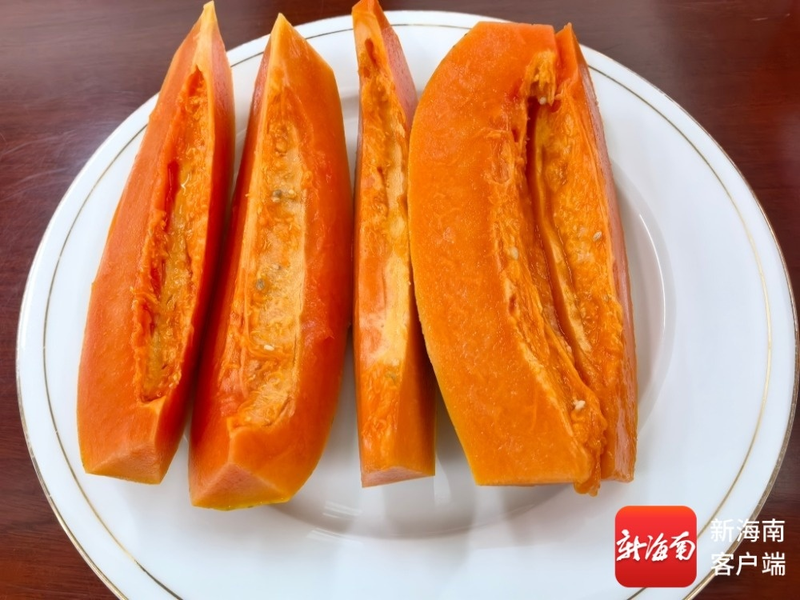
"choose one" papaya. Journalists
The process of cultivation and extension of the meso-heat 1 papaya, the country's first edible papaya species to receive a certificate of safety in biological breeding, fully reflects the advantages of breeding in the rich “natural greenhouse”. The data show that hainan's excellent light-hot conditions can reduce the breeding cycle by one third to one half, and the success of the growth of the medium heat 1 papaya is an example of the shift from “seasonal and intergenerational breeding” to “perennial seed development”。
In order to take full advantage of the climate advantages of the sancho tropics and to promote new approaches to optimize the upgrading of tropical features and efficient agro-industries, the institute of tropical biotechnology of the chinese academy of tropical agriculture has authorized the technical results of the production of the “chot one” papaya in suitable ecological areas of south china to be used by the rural department of sanya and the mugua association of sanya。
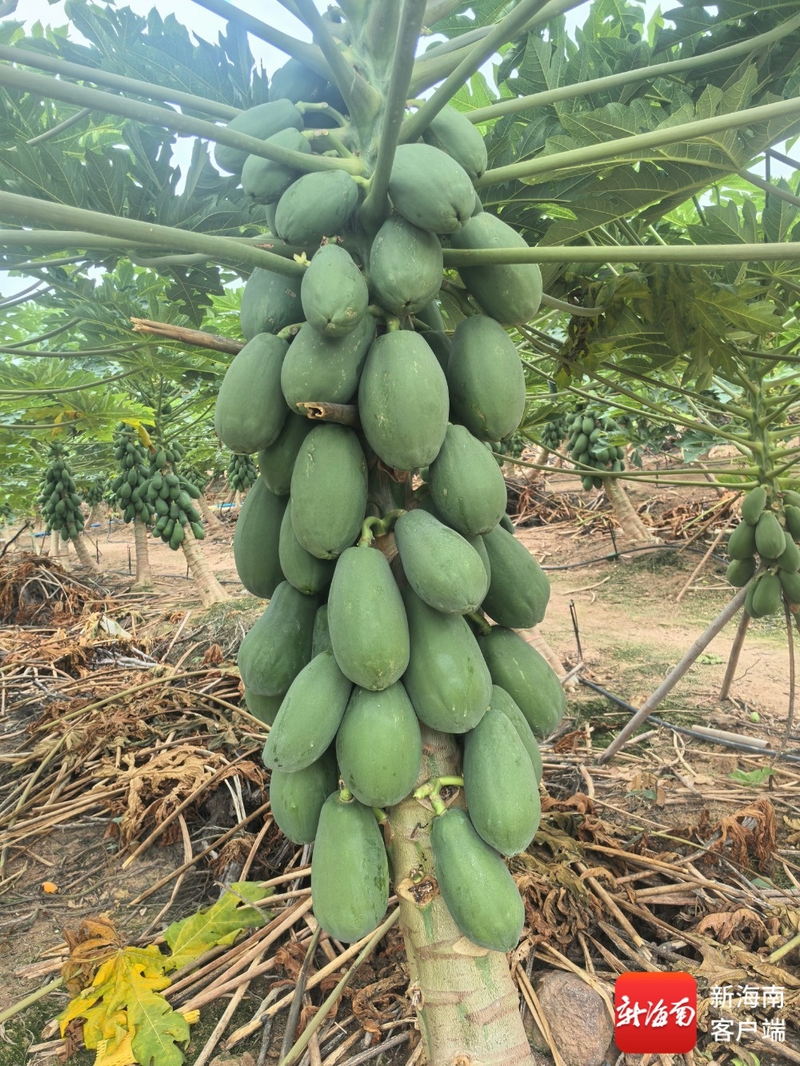
"choose one" papaya. Journalists
“strategic scale cultivation is the first step towards the normative development of industry.” the relevant director of the department of agriculture and rural development of sanya stated that concentrated cultivation could be effective in reducing sporadic competition and improving the consistency of fruit products, and in laying the quality foundation for the promotion of the middle hot one into high-end markets and deep processing. In follow-up, sanya will strictly pursue the “five uniform” model of “uniform varieties, uniform management, uniform standards, uniform procurement, harmonization of brands” and establish a high-quality woodmelon industrial system with retroactive links. At the same time, the extension of the industrial chain and the development of a series of deep-processed products such as papaya juice, fruit drying and sauce continue to add value to the product. In order to achieve “breeder growth, business profitability, industrial upgrading” the three-party win-win process, the results of the south’s scientific research will truly benefit the people。
In recent years, sanya has continued its efforts in the field of local transformation of the achievements of the south, promoting the rooting of a group of “new and exceptional” tropical fruit and vegetable varieties through a four-dimensional effort of “prime, birth, birth and birth”. The modest scale of the “middle heat one” cultivation not only enriches the high-end tropical fruits of the sea and highlights the success of the transformation of the silicon valley from an innovative source of scientific research to an industrial cluster of highlands, contributing to national crop renewal and high-quality agricultural development。