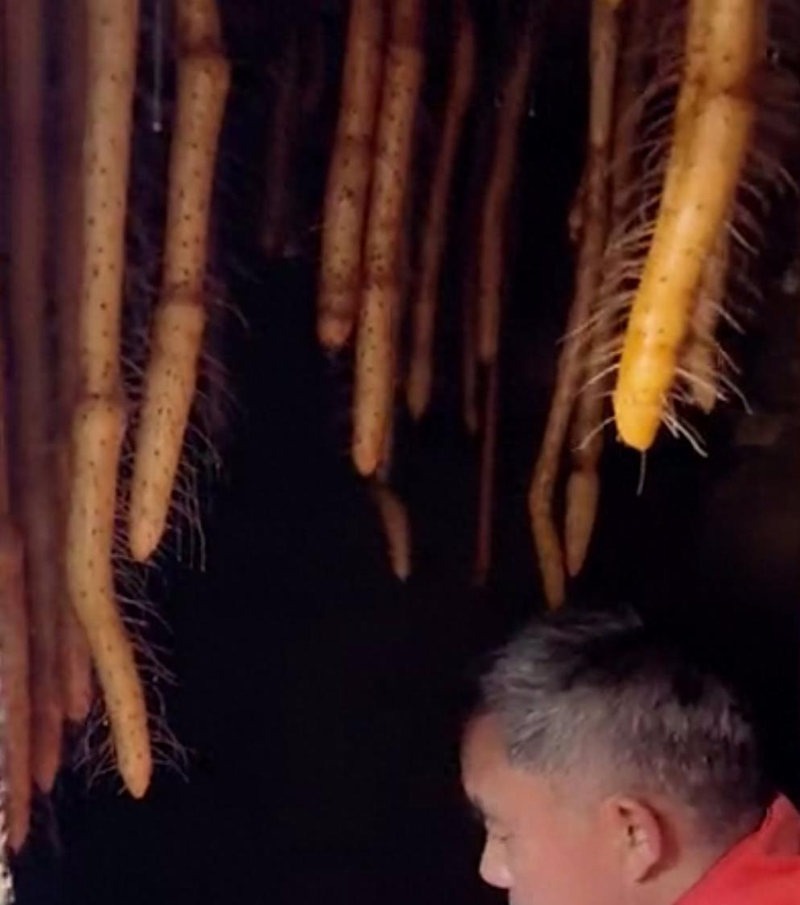
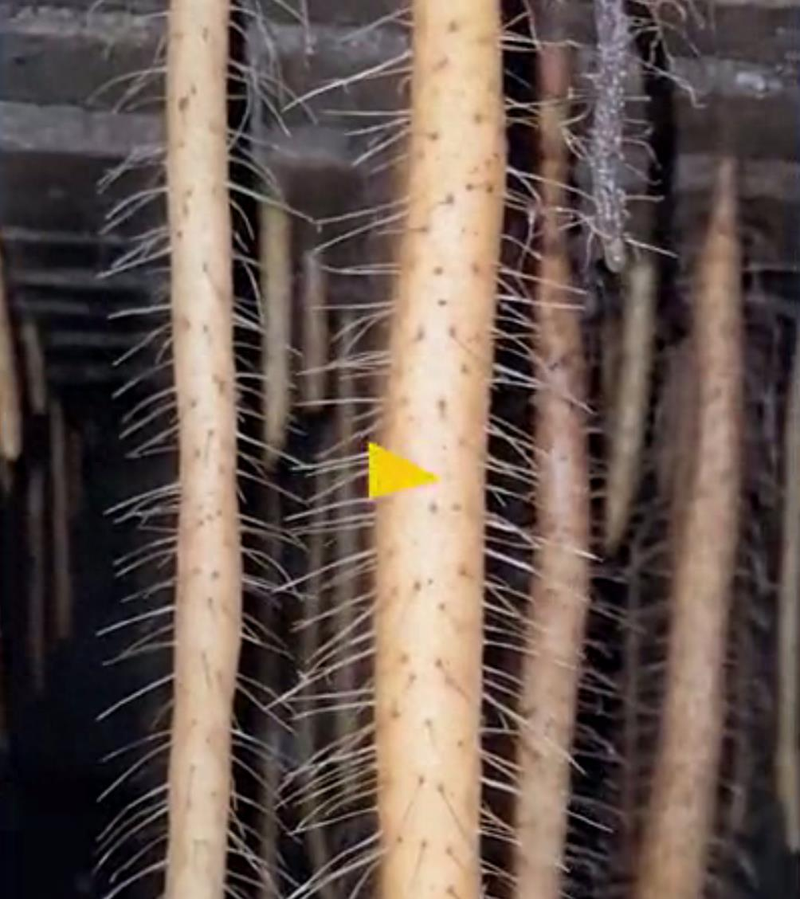
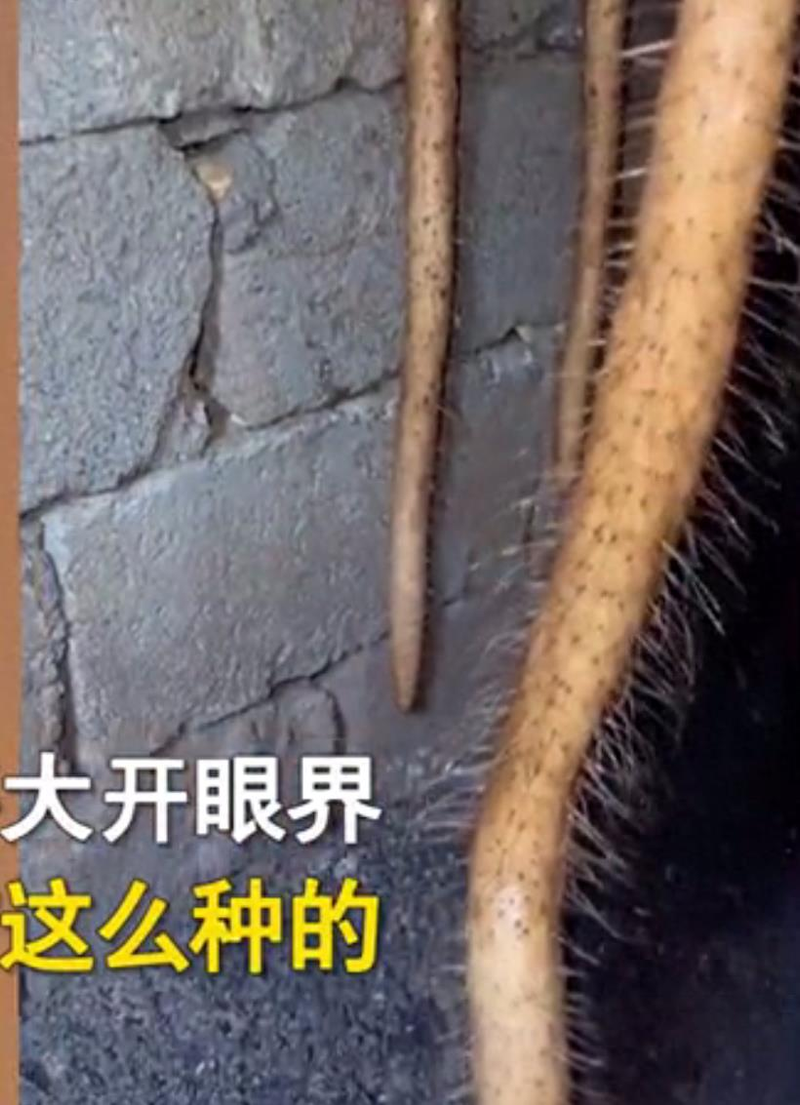
In this video, the hostess first opened the cellar door with a hoe, then put on appropriate clothes and stepped into the cellar. And the mountain medicine in the cellar is very different from the one we usually see, and they grow straight and smooth, without any mud contamination, and they look attractive。
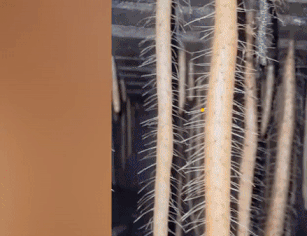
Mountain medicine has always been a plant that is deeply rooted in the soil, and therefore typically requires considerable human and material resources for its collection. Traditional harvesting methods often damage the seedlings of mountain medicines and are time-consuming and laborious. However, this scaffolding technique takes full advantage of the multi-year and vertical growth of the mountain medicine, which allows for one-time cultivation and multiple collections, usually sustaining a two- to three-year harvest cycle. There are, of course, some shortcomings in the technology of pottery, which we will describe at the end。
This can be done in 20 square metres of courtyards, and the following steps are briefly described:
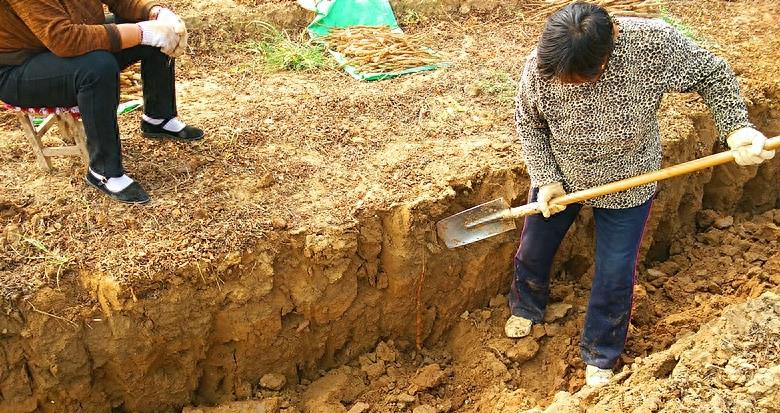
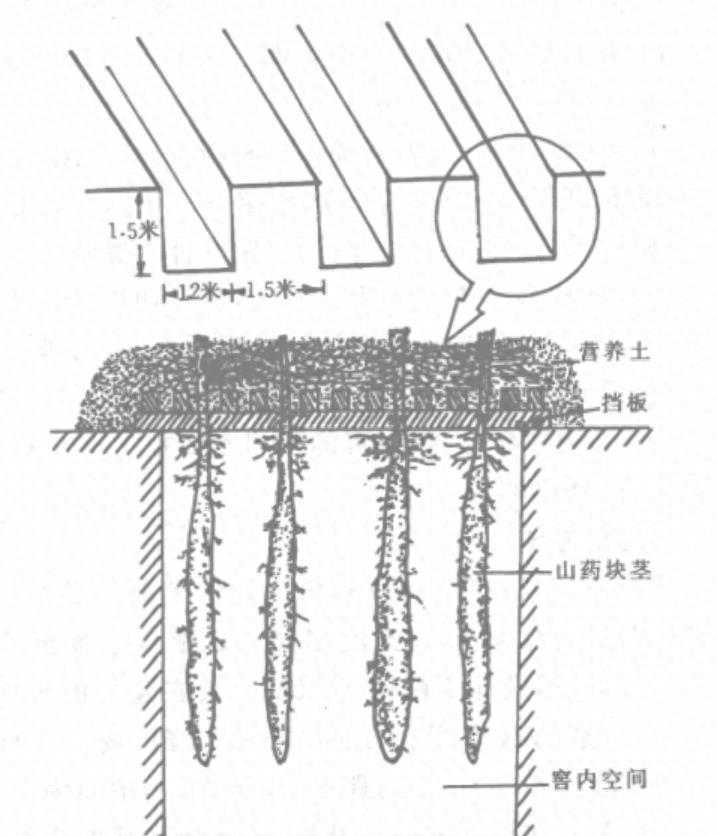
The courtyard must first dig a pit 10 metres long, two metres deep and two metres deep, with bricks built around it, a concrete bar to the top of the pit, and a three centimetre gap between the concrete bars so that the mountain medicine can grow. Do not forget to leave a door open on the side of the cellar and close it with a concrete sheet。
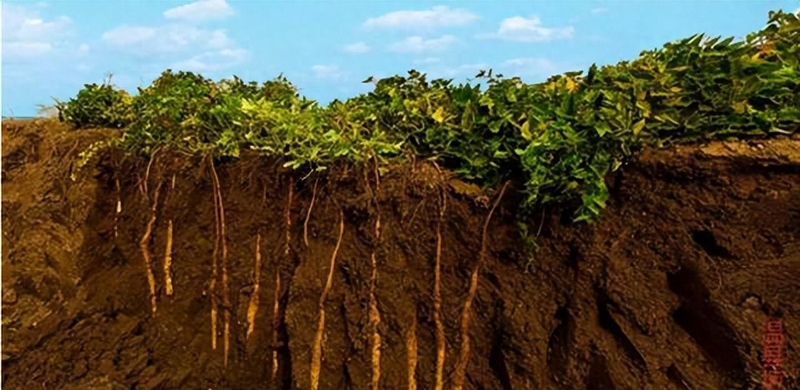
Building seeding beds: a barbed bar on concrete bars to prevent soil leakage. Then the soil is laid on the straw, usually mixed with rotting horse dung and earth. Finally, with an additional layer of straw, the seeding bed will be established, with a total thickness of about 26 to 33 cm。
Cultivation of mountain medicine: the meds grow from approximately 3. 3 to 6. 6 centimetres, and are dried up slightly. Then, on the nutrients, the gutter should be located directly above the gap between the concrete bars and set at the normal line spacing. After seeding, the soil is covered by approximately 3. 3 cm。
Breathing: when the pharmacist is sprouts in the trophic soil, as the plant grows, the roots pass through the soil layer, through the cracks of the concrete strip and into the cellar. In mountain seedlings, care needs to be taken about the frame setting, while in the growing season, one to two times of potassium phosphorus fertilizer is required。
(b) taking mountain medicine: when the mountain medicine grows in the autumn, the leaves on the ground are dried up. At this point, open the side of the cellar and enter through the people's entrance and exit, you will see a smooth and smooth mountain medicine。
Despite the many advantages of mountain cellar cultivation techniques, there are also significant shortcomings. First, it had a higher initial investment than traditional methods because of the need to excavate soil and use concrete bars. However, improvements have been made in a number of areas to reduce costs by moving away from concrete bars or concrete blocks and using lower-priced materials such as wooden sticks, sorghum poles and maize straw. However, these materials are perishable and usually have a useful life of only one year, and are susceptible to leakage and may even lead to the collapse of cellars due to overburdening, so that they must be used safely。
In addition, because the cellars are in a dark and closed environment throughout the time the mountain medicine grows, it is inevitable that toxic and harmful gases will be generated. This situation can be exacerbated, in particular, in the absence of drainage facilities around the cellars or when they are poorly installed. Therefore, during harvesting, two to three hours of ventilation must be carried out after opening the side door of the cellar to ensure that air flows within the cellar before entering and carrying lighting equipment such as hand power. In the video, it is not advisable to open the side door directly into the cellar。
In general, although mountain cellar cultivation has existed for many years, it has not been widely disseminated and applied. This may be related to higher mountain drug varieties and one-time investments. Whatever it is
The modalities represent the hard work and wisdom of farmers. We must keep in mind the logic of “hard grains” and cherish food and agricultural products。
Looking back at this innovation, known as the mountain pill cultivation technology, it has not only brought new approaches to mountain medicine cultivation, but has also provided greater possibilities for yard farming in rural areas. Through this technology, farmers are able to grow mountain medicine efficiently within limited space, without fear of destroying mountain seedlings and reducing labour intensity. Although initially investments were relatively high, in the long run, such technologies could improve production and efficiency and thus remain attractive。
However, we should not lose sight of its shortcomings and potential risks. First, higher investment may limit the diffusion of the technology in some rural areas. In some places, in order to reduce costs, farmers have tried to replace concrete strips with cheap materials, but this has also led to short-lived, perishable and security hazards. Therefore, the diffusion of the technology needs to be adapted to the realities of different regions。
Secondly, the gas problem in the cellar needs adequate attention. The cellars are usually closed environments during the growth of the pharmacists and are prone to accumulation of toxic gases. In order to ensure the safety of harvesting, farmers must take appropriate ventilation measures and take care to carry the necessary safety equipment. Education and training farmers in the right way of doing business is also essential to reduce potential risks。
In sum, this “mountain pottery cultivation” has injected new energy into rural garden agriculture and has provided an innovative way to grow mountain medicine. While it is not without shortcomings, while overcoming these problems, we can continuously refine and improve this technology to promote sustainable rural agriculture. As we know, the hard work of farmers is a source of food and agricultural products, and each and every one of us should respect and cherish that labour. Through sound planting techniques and sustained efforts, we can ensure that future grains are not easy to obtain。