How do yam grow? Potatoes are highly nutritious and yielding, and are important food, feed and industrially processed raw materials. With the improvement of living standards and the widespread social acceptance of the potato as a nutritious health-care food, today the mini-editor is studying with you the key measures for high-yield production of spring sweet potatoes in the northern region。
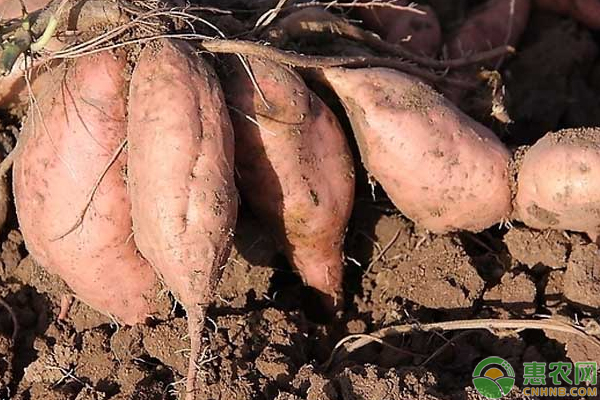
1 cultivated seedlings
Cultivation is the primary component in the production of sweet potatoes, the quality of which is highly correlated with production, and the cultivation of seedlings is the basis for high-yielding cultivation。
1. 1 picked potatoes. High-quality, high-yielding, insect-resistant and adaptable varieties are selected according to local natural conditions, cultivation conditions and production purposes. Potatoes should be free of disease, injury, cold and wet, 100 ~ 250 g. No seed can be planted if the chips are soft, their skins are dented, they are diseased, they are not colourful, they have no juice or they have black bands or hairs. Acres with one or two seedlings require 50 ~ 75 kg of potatoes。
1. 2 potato disinfection. Potato disinfection is simple, low-cost and can kill potato worms. Precinct cassava is impregnated with 51 °c ~ 54 °c warm water 10 min, or 70 per cent methyl tobuzin (or 50 per cent more fungus) 500 times impregnated with 5 ~ 10 min, effectively preventing macabre and mole disease。
1. 3 qualitative potatoes. Large huts are used to produce seedlings with warmer or hotbeds, 30 ~ 35 d before planting, and large sheds with membranes or cold beds with two membranes before planting 40 ~ 45 d d the seedbeds are chosen for fertile farm topsoils and cannot be replanted year after year on a single plot. The potatoes must be flat, the sun must rise, the potatoes must be kept on top and down, the sizes must be kept apart, the tails must be kept apart, the cassava density must not be too high, the usual potato should leave a gap of 1 ~ 2 cm, and the amount of potatoes must be around 20 kg per square metre. The seeding of potatoes is then covered with sewn soil and water, unscathed, so that when the water is fully permeable, the medicine is spilled on the bed and covered with 3 cm thick topsoil。
1. 4 bed temperature control. The principles of high-temperature seedlings, flat-temperature seedlings, low-temperature seedlings, which promote multi-breeding, early seedlings, are effective in preventing black spots, nematodes and moles. The temperature of the cassava is controlled at 35 °c ~ 38 °c, the temperature of the seedlings is reduced to 30 °c ~ 32 °c, the temperature of the seedlings is controlled at 25 °c ~ 28 °c, and the temperature of the nursery is gradually ventilated at 5 ~ 7 d before the seedlings, bringing the temperature of the nursery nears the atmospheric temperature。
1. 5 timely seeding. Potato seed grows to 25 cm height and is collected in time. The criteria for selecting a seedling are that it is green, large and thick, with three leaves flat; that it is 25 ~ 30 cm tall, not less than 8 knots, that it is short and unbreakable, and that it is thick and thick when it breaks its truncheon; and that it is large, large, non-gas-free, all disease-free and insect-free. In order to better combat such diseases as glycerine nematodes and rodents, seedlings promote high-precipitation seedlings, i. E. Cutting the seedlings down from their beds at a distance of 3 ~ 5 cm from their base, or cutting the seedlings from 3 ~ 5 cm after their extraction。
2 deep till
Potatoes are suitable for growing in the dysentery, well drained, organically rich, deep sandy and bordered soil, so that the whole land is ploughed to 25 ~ 30 cm. Earlier in the autumn or early in the year, tanning was used to defusing the soil and to freeze some of the pests. Preplant rises, typically 20-30 cm, small twig monoculture, 60 ~ 80 cm, large twig, 90 ~ 100 cm, wide 60 ~ 80 cm. When they rise, they are as tall and fat as possible, they are deep and narrow, they are flat, they are flat, they are free of big and hard hearts, they are conducive to drainage and drought prevention and later growth。
3. Scientific fertilization
Based on soil strength, the fertilization properties of sweet potatoes and the target production, a reasonable mix of potassium nitrous phosphorus fertilizer is applied, in accordance with the principle of “bottom-based fertilizer, supported by fattening”, and on the basis of the application of bottom-level fattening, in accordance with the appropriate levels of seedlings, in the early stages of seeding, in the medium term to keep them strong, and in the latter periods to prevent early decay。
3. 1 flow bottom fertilization. A combination of high-quality co-fertilizers of 2,000 ~4,000 kg (or bio-organic fertilizer of 50 ~ 100 kg), potassium sulphate-type compound fat or potato-specific fatty of 40 ~ 50 kg, co-fertilizers in front of the rise, bio-organium fertilizer and fertilizer concentrated in ditches at the rise。
3. 2 reasonable pursuit of fat. Determines whether or not to pursue fat or the size of fat, based on the application of bottom fertilizers and seedlings. Shrimp fattening: urea ~ 3 ~ 5 kg, urea ~ 3 ~ 5 kg, urea ~ 3 ~ 5 kg, or high nitrogen compound ~ 5 ~ 8 kg, urea ~ 5 ~ 10 kg, urea ~ 5 ~ 10 kg, vasectomy ~ ~ 5 ~ 10 kg. Potato repo, with 0. 2 per cent of phosphate potassium water soluble leaves sprayed 2. 3 times, to prevent the premature decay of the plant and promote the growth of the root of the subsurface。
4 early planting
Early harvests are expected to grow early, with more potatoes, and higher production during the period. At the end of the evening frost, 10 cm and above 15 °c can be planted, with the choice of one or two seedlings being planted horizontally, with sufficient water being poured into the plant to ensure a plant protection. Cultivation density is determined on the basis of the strength and variety of the ground, with ordinary acre-planting of 3,000 ~ 5,000 units, low fertility, dense mountains, rare chicken varieties and dense chicken varieties。
Five, zero control
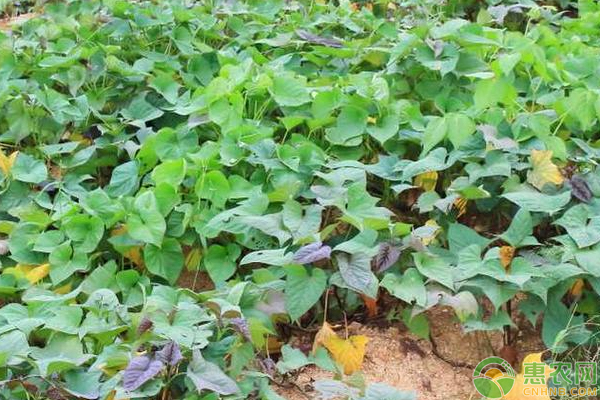
Potato roots are well developed and the upper part of the ground is strongly growing, and the upper part of the ground tends to grow when exposed to high levels of nitrogen fertilizer, high density, insufficient light or abundant rainfall. The masters of muscular leaves consume large amounts of nutrients, which seriously affect the expansion of the roots and should be controlled accordingly。
5. 1 control. Acres were sprayed with 50 ~ 100 g, or acetamine 7 ~ 15 g in water, 50 kg leaf, 2 ~ 3 times, with better effects。
5. 2 chicken. Roast chickens are produced on a permanent basis at the end of the seal, and they are used in a long period of two to three times to prevent the growth of volatile roots and long leaves。
5. 3 caution. When the main penis stretches to 30 cm or more, removes the sprouts of 2 cm, and then removes the swirling of the penis in the same way, inhibiting the growing of the penis, while increasing the number of branches, reducing the distance between the roots, the tubers and the leaves to deliver nutrients, thereby contributing to the expansion of the tuber。
6. Combating drought and flooding
The sweet potatoes are resistant to drought and flooding, but drought in the later stages of growth can have an impact on the expansion of the chips, so attention should be paid to the timely watering and drought resistance required to ensure their development. In the event of heavy rainfall, water in the field and in the low-lying areas should be drained, so as to prevent water from being stained in the field from causing the chips to be overwatered, generating hard hearts and decay, affecting the quality of the chips and the safety of their storage。
7 prevention of pests
Prevention is the main focus of comprehensive response. In addition to anti-disease varieties and rational rotations, detoxification seedlings are selected for diseases for which there are no effective agents, such as viral diseases, root diseases, etc.; for black spots, nematodes and nematodes, effective seedlings are introduced from healthy seedlings, which can be effectively prevented; for underground pests such as thorium, gold needle insects, etc., soil treatment can be carried out using granular agents such as thionphos, venomium, etc., at the time of planting or planting。
8. Collect in due course
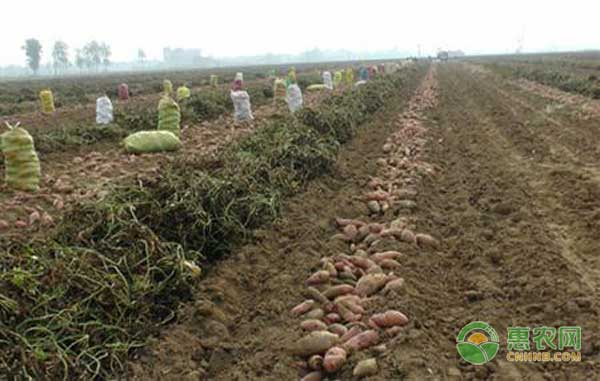
The roots of the sweet potatoes are non-sexual nutrients, with no clear maturity criteria and harvest period, but the harvest is closely linked to the production, storage and processing of the sweet potatoes at an early age, which reduces yields and is affected by cold and cold temperatures. The harvest of sweet potatoes, usually starting at 15 °c, begins before the frost。