I. Deep tillage
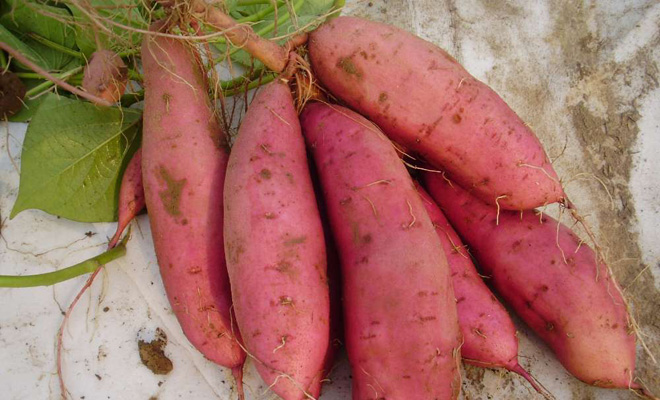
Deep tilling: potatoes are root crops, “dwelling in the earth”, the expansion of roots requires deep, thin, nutrient-rich and well-protected soil conditions, with soil depths generally ranging from 25 to 30 cm, so that high yields require deep tillage. After deep tillage, the earth is torn to pieces, torn to the ground, combined with organic fertilisers of 3,000 kg, calcium 50 kg and 45 per cent of the compound fertilizers of 25 kg, and 3 per cent of the particulate insecticides of thionate 4kg。
2. Cultivation: potato cultivation consists of both flat and culinary cultivation, but with the best. Cultivation increases the size of the earth, expands the range of root systems, defusing the soil, expands the area of surfaces in contact with the air and sunlight, and creates a good soil environment for the growth of the roots of the cassava. The size of the swarm should be determined by factors such as the size of the field, the soil, the planting season, the manner in which it is grown, the long-term and the variety. It is generally held that the soil is dry and wet, that the ploughs are ploughed, and that the ploughing requires a straight, deep, wide (not a triangle)。
Ii. Putting
1. Cultivation period: the larger the roots of the yams, the longer they grow and the higher the yield, within the limits suitable for the growth of the roots. The cassava planting period was determined mainly on the basis of temperature, rain and farming systems, with planting occurring after 20 april, in accordance with local production and climatic conditions in hebei。
2. Cultivation methods: potato planting methods are numerous, including direct interpolation, tilting, horizontal shallow interpolation, bottom planting, etc。
(1) it is more appropriate to use the horizontal shallow interpolation method where the seedling is 25 cm or more. The soil sections are flattened into three centimetres of shallow earth, with the advantage that the number of potatoes is large and even, but less drought-resistant. Poorly fertilized water, high amounts of potatoes and poor nutrition also affect yields。
(2) the advantages of oscillation are that it is easy to operate, drought-resistant, wind-resistant, early to live, large single chips, etc., suitable for short-plant planting, with the disadvantage that the amount of chips planted is low。
(3) the base of the seedling is in the french tectonic zone (2-3 cm), with a slightly deeper section (4-6 cm) and a slightly deeper sandy and leaner soil. It's good for fertile, deep, water-rich plots. There are advantages of horizontal and oblique interpolation due to the high level of soil occupancy. The disadvantage is that a deeper part of the earth can easily become empty if poorly managed。
(4) directly plugged in the soil with more than two to four nodes. The advantages are high potato rates, drought-resistant and fast-growing, suitable for use on hill slopes and arid plots. The disadvantage is that the number of potatoes is low and yields should be secured by dense planting。
Reasonable re-insertion based on climatic conditions and species and listing times
3. Cultivation density: rationalally dense cultivation is central to increasing the production of potatoes. Cultivation density is determined by soil fertility, planting season, long-term, planting methods and varieties
Iii. Field management
1. Shrimp replantation: 5-7 days after seedlings of red potatoes should be detected in a timely manner, and if seedlings are detected, they must be filled to ensure full seedlings. It is desirable that the seedlings be filled early and selected for use in the rain or at noon, after which the water will be poured in time for the early roots to replant and the early chickens to balance the growth。
2- chinese tillage: before mascara is planted, weeds may be closed with thiram or ethylachlor, depending on soil moisture. During growth, weeding is done in a timely manner, usually 15 days after planting, and every 15 to 20 days thereafter, depending on the level of soil sheeting and the number of weeds. The depth of the cultivation needs to be flexible in the light of the growth of the red potato root system. In principle, it is desirable to be deep at an early stage (in the early stages of root formation) and to be shallow at a later stage (in the post-chip season); to have a shallow surface, to have a deep waist and to have loose feet, which is known as “the shallow, deep and broken ground”。
Fertilizers: depending on the demand for the three elements of manure, the principle of “nitrogen, phosphorus, potassium, predominantly phosphorus and potassium” must be applied. On the basis of the application of base weights, and based on appropriate weights of the seedlings, it is necessary to master the principle of “twice and middle weight”, i. E., before the branching period and during the rapid expansion of the root, which is repeated when it starts to expand。
(1) fertilisation of seedlings: the application of fertilizers can facilitate the recovery of seedlings from red potatoes, make the branches fast and the potatoes abundant, especially in cases of low base fats, low temperatures or drought, and should be applied in a timely manner. It is usually combined with 10 kg of urea on acreage, which is poured into water or used in the rain。
(2) potato fertilizers are produced: normally, within 30 to 45 days of the transplantation, in combination with a second-time crop of 30-kg calcium urea, 15-kg urea, and potassium sulphate, 15-kg, to be poured into water or used in the rain。
(3) large-scale fattening of the roots: potato enters the leaves for a long time, the upper part of the ground is growing rapidly, and the subsurface roots are growing, requiring more fattening and timely provision of sufficient nutrients, both to boost the growth of the leaves, to reach their early growth peaks and to increase the photocolumn, and to promote the expansion of the roots, thus re-energizing the fat. It is usually combined with 20-25 kg of fertilizer in acre, 15 kg of potassium sulphate and 10 kg of urea to be poured in or used in the rain. Chrysophate fertilises in the later stages of its growth due to weak absorption capacity of the root system, usually with 1 per cent urea + 2-3 doses of potassium phosphate sprayed 30-50 days before harvest。
4- planting soil: each planting shall be combined with the field, the purpose of which shall be to widen the face and prevent the appearance of the chips from becoming “white” or from being affected by the insects of the elephants, so that the requirements for it vary from time to time。
(1) pre-dumpture: the soil can be bred only in width and not in height, and the pine soil can be bred on both sides of the plume, and the soil washed out by water will be replenished to ensure that it is smooth and wide。
(ii) the size of the mass of the chips: due to the expansion of the roots and the beginning of the cracks on the cheeks, the potatoes will be constantly exposed to the soil, and it will be necessary to carry out a high-yielding soil in conjunction with the tan, covering the potatoes with fine soil, so that they will not be exposed。
(iii) later: as the chips expand rapidly, the face will continue to crack, so as to combine the cropping of grass, so as to avoid the presence of the chips and prevent the pests。
5. Tissing chickens (for vines): in order to prevent the creation of non-stable roots and the formation of small chips, they are to be given during their growth. Chickens must be adapted to breeds, saplings, chickens, festers, poorly grown parts of the ground and not fit in when the climate is dry. The chicken should be raised in such a way as to avoid damage to the leaves and to keep them in line so that they can continue to grow. Make sure the chickens don't fall and the roots don't change。
6. Water management: potatoes are more drought-resistant, but if drought is severe, their growth is inhibited and must be irrigated in a timely manner. Potatoes require less water for the entire growing process, less water for the pre-growing period, more water for the medium term and less for the later period, so that water management should be guided by the principle of proper irrigation for the preceding period, followed by intermittent irrigation。
Biohormonal applications: 40 to 50 days after the seeding of the potato, once when it enters the formative phase, the special “inflator” of the potato is sprayed; 50 to 70 days after the planting of the plant, once again when it enters the swelling period. In the event of excessive growth of the brocade, the application of “depreciated feminin” (shrimpamine) and control of the magma masters, usually once in 10 days, is repeated three times。
Insects and pests control: cassava pests are relatively small and tend to be treated mainly during their growth (grave tigers, elephant insects); ground pests are dominated by aphids and osteoporus, usually one or two times during their growth。
Iv. Access
The harvest must be based on the principle of first-come, first-served harvests of potatoes and insects, and then on the other. If the soil is damp, the penis should be cut off and exposed for a period of one to two days before digging. The harvests are made with light digging, light dressing, light transport, light discharge, so as to avoid damage to chips and adverse storage。