I. Facilities for vegetable protection against severe winter weather
1. Snow and snow disaster preparedness. Prior to snow and snow disasters, rusted taring and ageing membrane lines should be replaced in a timely manner in the greenhouse shed, reinforced by additional support poles in the steel hanger, heating winders on the top of the room and melted snow pipes on the top or below of the greenhouse ditch (smelling pipes on the outside of the ditch, which require freezing fluid). In case of catastrophic weather such as snow and snow, the air is kept closed in time. When wind warnings exceed the wind-proof design capabilities of greenhouses, membranes should be removed in a timely manner and transferable crops should be transferred to a safe location. In the event of snow accumulation, snow should be removed from the top of the shed in a timely manner. In the absence of support pillars, emergency measures, such as membranes, need to be undertaken in a timely manner to prevent snow from crushing steel sheds when snow is thicker than 15 cm and cannot be removed。
2. Drought preparedness. When the temperature in the facility is reduced to a greater extent, outdoor roll-blowing machines are covered to protect the temperature, and interior heating equipment such as water heat, wind heat, etc., such as electric heaters, heat winders, electric heat dryers, heating fuel blocks, fuel hot stoves, etc., are opened, with particular attention to fire and electricity safety. Reduce ventilation time and maintain the temperature inside the facility。
3. Even dark or mist weather response. Add plants to light, carbon dioxide supplementation, ozone sterilisation equipment, etc., to supplement light, increase photoco-operation, and sterilize. Plant light is installed in the shed to provide artificial light, allowing vegetables to be lighted for not less than 10 hours a day. In the event of a solar presence, the temperature in the shed is not reduced and part of the temperature is lifted in a timely manner using a roller machine, increasing the light in the shed。
Ii. Policies of own vegans and resources in the winter
4. Increasing the resistance of plants to cold. For suitable varieties, seedlings and mechanical implantation are used as far as possible to reduce the slow-growing period, increase the rate of survival and, where appropriate, improve cold resistance of plants。
5. Increasing resistance to plant cultivation. Improved resilience through the application of efficient mechanical applications such as jet sprayers, and plant growth regulators。
6. Prevent the mitigation of the impact of flooding. (c) the timely drainage of flood fields, the clearing of trenches and the drainage and wetting of water to prevent the mitigation of the impact of flooding, including through the use of ditches and drainage machinery。
7. Cold-proof harvests. Before the onset of cold weather, cold cover was used, such as rollers and straws, and harvest equipment was used to collect cold vegetables during the harvest。
Iii. Technical requirements for mechanization of the various stages of vegetable production in winter
8. Intersection. The removal or treatment of front-stretch residues is carried out on the basis of facility and field conditions, the type of front-stamp crop and the manner in which it is treated, etc., with a straw crusher, a membrane recycling machine, etc. (c) rationalize the structure of varieties and the scale of planting, select suitable vegetable precision sowing machines or vegetable seeding machines, and expand the production of fast-leaf and sprouts。
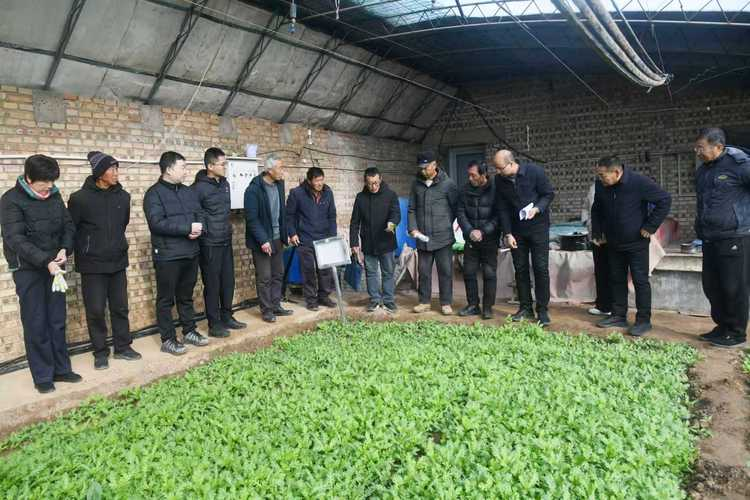
9. Fertilizing. Based on the conditions of the facility and field, the type of fertilizer and the manner in which it is distributed, the fertilizers are selected to travel at a smooth pace, evenly applied, and to apply base fertilizers before planting, with a normal acre application of 2-4 tons of base fertilizer。
10. Cropland. A variety of farming needs are met through the use of tractors, supported primarily by tillage machines and microcropping machines. The depth of the operation is 15-20 cm, with more than 90 per cent of the earth torn and the land torn apart. For viscous soils, two operations are possible。
11. Land as a whole. Based on vegetable varieties, planting patterns, agronomic requirements and soil types, ditch-opening machines, pick-up machines, etc. Are selected to perform guttering, pick-up (and-punching) and compaction. The surface is 50-80cm wide and 15-25cm tall, the length of the ditch is more than 20 cm wide, the surface is flat and the line is organized. In the case of field vegetables, membrane work is selected with a membrane machine, a membrane double machine, with a membrane cover width of 5-10 cm and a membrane thickness of 3-5 cm。
12. Live. Vegetable live broadcasting is carried out using electric (human-driven) vegetable precision radios, mobile vegetable precision televisions or tractors with vegetable precisions on board, depending on the size of the vegetable seed form and agronomic requirements. For field vegetables, a vegetable sowing machine with membrane functions is chosen. Prior to the operation, the distance and sowing depth are adjusted as required, and during the operation, the seeding is observed at all times, and there are problems with the timely decommissioning. The particle range calibration index for machinery is 60 per cent, the playback index 30 per cent and the leakage index 25 per cent。
13. Cultivation. The timing of seedling planting is determined on the basis of the age of seedling required for mechanical planting. Seeding operations are carried out using equipment such as a semi-autonomous cavity seedling machine, a fully automated cavity seedling machine or a fully automated cavity seeding line, depending on the size of the seed shape, lavender specifications and agronomic requirements。
14. Deplantation. Based on the condition of the field and the size of the plant, an all-automatic, semi-automated vegetable migration machine was selected for field planting, prior to which the range, spacing and depth of the plant were adjusted to local agronomic requirements. Production efficiency is generally required for 3,000 units/hours/lines, with a 90 per cent success rate for planting and a 90 per cent distance rate. For field vegetables, the use of a vegetable transplanter with membrane functions is optional。
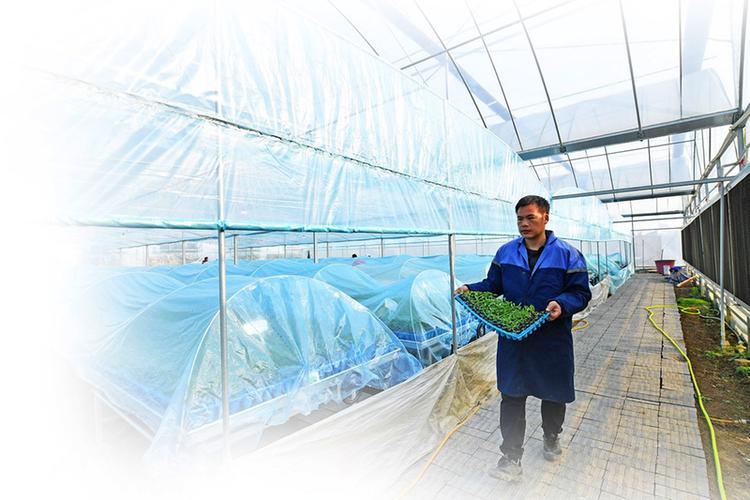
15. Environmental regulation of facilities. The main target is the plant vegetables, which, in combination with weather changes, regulate the greenhouse environment in a timely manner to ensure that conditions such as temperature, humidity, light, etc. Meet the requirements of vegetable production. Environmental regulation facility equipment such as roll-separators, membranes, ventilators, heat furnaces, heat pumps, wet curtains, carbon dioxide generators, microjet systems, and photo-remediation systems are selected according to the conditions。
16. Fertilizer management. Strengthening the management of vegetable and vegetable fertilizers in the field, where appropriate and appropriate for fast-growing vegetables, recommends the selection of stationary, mobile drip irrigation equipment, water-saving irrigation (water fertilization) systems to measure the exact application of fertilizers in accordance with the condition and demand for plantations. In the case of vegetables in the facility, dripping under the suitable membrane, deep dripping, cutting ditches and flooding, and maintaining reasonable air and soil moisture in the shed。
17. Pest management. Vegetables are mainly targeted at the facilities, and vasectomy treatment is carried out through physical, chemical and bio-combination measures before vegetable planting. Pre-eating and de-wetting and taking technical measures such as ventilation to prevent the occurrence of diseases. Chemical control in the shed recommends the distribution of electric (static) sprayers, power (static) sprayers, heat smokers or hot smokers (systems), etc.; physical control recommends the selection of ozone generators, insecticidal lamps, insects, sex traps, booby traps, etc。
18. Plantation adjustment. Vegetables, such as tomatoes, cucumbers and peppers, are grown in the form of whole stingings, chickens tied to staves, leaf-picking, vermin and chickens. The condensed vegetables, such as kale, should be folded in later stages of growth. Vegetables of all kinds must be cleared of old, sick and sick leaves in a timely manner. Equipment such as chowders, shearers and mobile lift and landing platforms are selected according to the conditions。
19. Harvest and transport. In winter, the field is operating under difficult conditions, with a high intensity of vegetable harvesting and transport labour, making maximum use of machinery for harvesting and transportation. Vegetables generally require a single-time mechanical harvest of 85 per cent of maturity at the time of maturity and can be cut, delivered and packed with a knife cuter to complete the harvest; vegetable vegetables can be harvested in a semi-mechanical manner using a harvesting platform, artificially harvested, and the fruit delivered through a delivery unit to the harvest box. It is recommended that special vegetable pickers, electric bottlers, vans, refrigerated transport vehicles, etc. Be selected。