The viewing of the sea beams, which have a share of leaves, flowers and fruits and are visible, is highly valued by horticultural workers. So how do we grow seagulls
1. Plantation techniques
1. 1 reasonable secrecy
Rational planting is an important means of observing the efficient cultivation of seagulls, which can significantly increase the efficiency of the area and facilitate intensive operation, with 0. 8 m x 1. 5 m range and 640 plants per acre. Four to five years later, one of the pieces was dug off for sale and the density became 320 per acre. It can be planted in the spring as soon as the soil thaws to 45 cm; it is better in the autumn when leaves fall. The planting is preceded by the digging of a ditch of 1 m wide and 0. 8 m deep at a specified range, which is fertilized at the standard of 2. 5 to 4. 0 kg organic fertilizer per plant, and which is even with topsoil and filled in the middle of the tree. Post-plant fillings are carried out in layers to prevent rain or irrigation from causing deep-sinking of the soil resulting in fractures of the roots or subdued roots, which affect the growth and effects of the trees。
1. 2 fertilizer water management
The best application was made in the autumn, mostly between late september and early october. At this time, the accumulation of nutrients in the tree is taking place, the underground roots are growing and the absorptive capacity is strong, the application of fertilization is helping to increase the accumulation of nutrients in the tree, improve the nutritional level of the tree, and the root causes are susceptible to healing and contribute to the emergence of new roots, which are extremely beneficial for growth and development in the following year. It is based mainly on organic fertilizers, supported by an appropriate quantity of quick-effect fertilizers, with an acre application of 2,000 to 3,000 kg of base fertilizer, and can be used to sow shallow earth across the garden。
The pursuit of fertilisation is suitable for the tree growth season, with a small dose of nitrogen fertilizer applied in early spring to promote the growth of tree buds and branches; a small amount of phosphate fertilizer can be applied to fruit production in the long term; and an appropriate amount of organic fertilizer is applied in the field after fall leaves and water is required for each application。
Depending on weather conditions and the demand for tree growth, water must be pumped during the bud and before the land is frozen。
1. 3 integrative shearing
Intangible cutting of seagulls is mainly done without prejudice to tree positions and in a manner conducive to the growth of the tree body, and may be performed in accordance with the purpose, manner of planting and main visual organs. 1 based on use: seagulls can be trimmed into hammered, conical, happy, etc., for use in walking trees, garden greening, large green areas etc. 2 based on planting methods: appropriate cuttings are performed according to different planting methods, such as orphaning, planting, bushing, film planting, etc. 3 on the basis of the visual organs: on the basis of the characteristics of the species, various visual organs, such as leaves, flowers and fruit, are trimmed and regulated. Cutting periods: hibernation (winter) and long-term (spring, fall). 5 cutting methods: mainly slow-down, wiring, short-cuting, retrenchment. The failure to cut branches that are more robustly grown can help to ease the growth of trees and promote fruit; the removal of diseased branches, dry branches, useless long branches and over-stretch branches can improve ventilation and lighting, increase foliage co-operation, increase nutrient accumulation and contribute to plant growth and the splitting of buds; short-term amputations can stimulate the growth of the sprouts under the cutting, form branches, and contribute to the growth and expansion of the tree canopy; and retrenchment is part of the cutting of long-born branches, which reduces the apex advantage and contributes to the rehabilitation of long-lived branches。
1. 4 pest management
There have been relatively few cases of seagull pests. In the early stages of the disease, 75 per cent of the bacterial wettable powder can be sprayed with 500 times the fluid, 1:1,200 the bordeaux fluid, 15 per cent the rusty humid powder 1,000 times the fluid, and 0. 2 per cent of the adhesives, such as laundry powder, are added to the spray. Insect pests are mainly aphids (which can be treated with an aphid of 2,500 to 3,000 times liquid chemistry), red spiders (which can be treated with a chemical control of 40 per cent of dicofol milk of 1,000 to 1,500 times liquid, and 20 per cent of mites die with a net wettable powder of 2,000 times liquid)。
2. Gardening applications
2. 1 applications on landscape roads
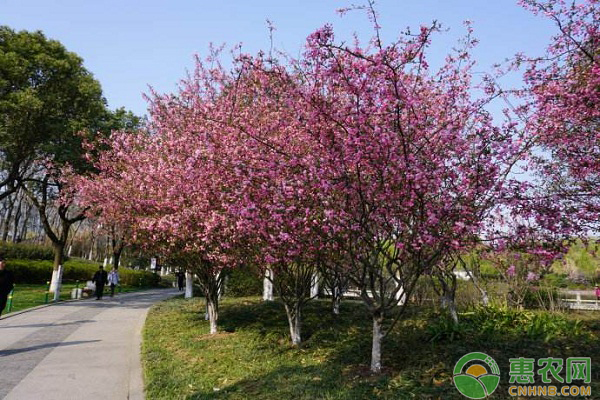
Most of the trees that watch the seagulls are standing and their crowns are compact, and they are well suited for mid-level viewing tree planting as a landscape road. Deeper-coloured foliage, combined with light-coloured, high-sized wood species, and a few more colored, contrasting bushes in the lower layer, can form a layered road view。
2. 2 application in courtyards, subdistricts
In gardens and sub-districts, sea beads are suitable for use as central landscape trees and sidewalk trees. It can be combined with surrounding buildings, rocks, fountains, etc., or it can be planted in large groups to form strong groups of beauty。
2. 3 applications in parks and squares
Parks can observe seaweed varieties in the lawn on their own, or they can be planted on slopes, or in several piles, creating a relative space. When applied in the square, it is possible to plant it at the entrance in the form of an implant and to decorate the square green ground in the form of an isolated, shrouded plant。
2. 4 applications in the greening of the riparian river
The viewing points of the seagulls are reflected in the four seasons, and its beauty is perfectly integrated with the water body. They are planted with almonds and peaches, etc., later than almonds, peaches, and so forth, to prolong the bouquets of riparian plants and enrich their flowers. There are also adjoining species of seagulls that are suitable for planting by water, rocks and unique landscapes。
2. 5 applications in villas, clubs
Seaweeds are well designed to be landscaped in high-level places such as villas, conference halls, etc., and are used mostly in the form of isolated, ploughing, with a high-quality and elegant atmosphere。
2. 6 applications in special parks
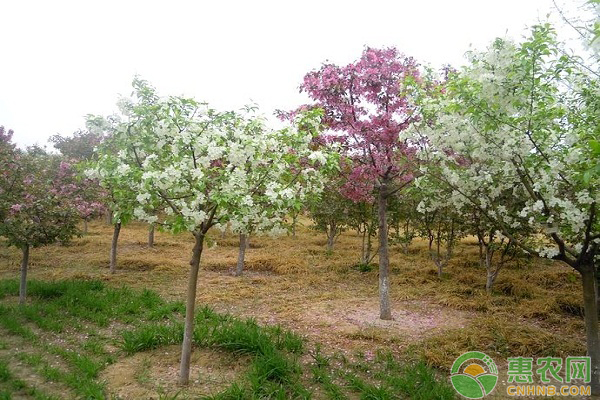
A seagull viewing park has been set up according to the characteristics of different seagull species. Watching the combination of the different species of seagulls can prolong the flowering period and improve the impact of the viewing. The combination of sea beams and other regular green tree species is seen to reflect the diversity of colours during seasons and to achieve different landscape effects。
The viewing of the seagulls, with their unique values and charms of leaves, flowers and fruits, has been effective in increasing the diversity of forest species and the sustainability of landscapes; it has provided good ecological benefits as well as better economic values; thus, the viewing of the seagulls has become a beautiful landscape in the landscape。