The chili is widely grown in various parts of the country for fresh food and processing and is widely used in daily food use, food processing, pharmaceutical and military applications. The high value of the economy and the high market prospects are important vegetables for securing supplies, as well as essential spices and raw materials for many industries. In recent years, peppers have become one of the major crops of industrial development in the restructuring of our agricultural industries and the revitalization of our villages, playing an important role in agricultural rural economic development and farmer efficiency. Based on the conditions, habits, etc. Of pepper cultivation in the yangtze river basin, the technical aspects of pepper cultivation have been consolidated and shared with you。
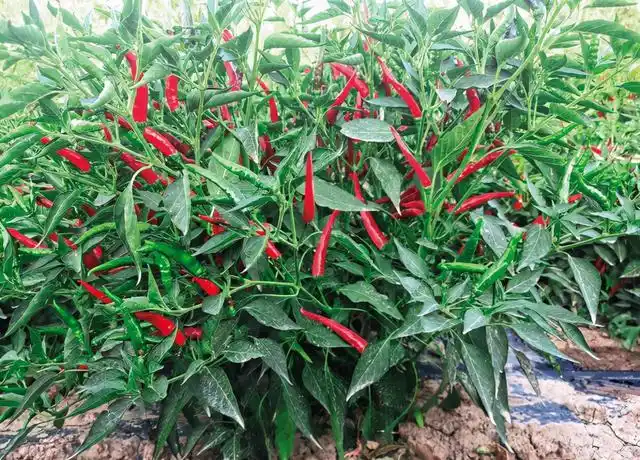
I. Selection of varieties
1. Major types of cultivation. Paprika can be classified into two broad categories, depending on the mode of consumption and its use. Fresh peppers: directly for vegetable consumption, mainly for pick-up; processed peppers: mainly for pick-up, processed into a variety of chili products, or used for pick-up of chili, pepper, etc。
2. The main varieties of excellence suitable for promotion in the yangtze basin。
1 fresh chili. Pre-literate species: piper king, skin, 117, skin, 127, ceremony no. 7, prey no. 13, sopra no. 5, heung boeng no. 5 and point no. 206. Premature and premature varieties: pepper 128, pepper 118, pepper 5, pepper 15, research 15, red thai 336, etc。
2 processed peppers. Precious pepper varieties: queer pepper 128, pepper 11, pepper 13, pepper 417, pepper 132, chili fiery 3, chili chili 4, chimpanzee 109, gold bar, gold bar, etc. Pyramid varieties: cedar 664, cedar 668, cedar 336, pepper 425, pepper 435, pepper 465, pepper 485, pepper 426, pepper 364, chili 148, spicy 1, premature 315, pepper 6。
Ii. Employment
Time of seeding. Areas along river valleys and shallow hill flats: large (small) shed cold-bed seedlings suitable for early october; low-middle mountain areas: hot peppers suitable for hot (small) bed cold-bed seedlings suitable for mid-october or mid-february of the following year, processed peppers generally spring seedlings and large (small) sheds cold bed breeding, suitable for late february; high mountain areas: large (small) shed cold bed breeding, suitable for mid-march。
2. Cultivation of seedlings. The nursery sites are built on high ground, open, sunward, dry, water-free, water-inundated, close to water sources and easily accessible plots. In the case of seedlings, home-grown seedlings should be used; in the case of plastic domes, nutrients or floats, the commercial seedling base would need to be purchased in advance, and it could also be home-grown。
Base formula 1: 6 herbs, 3 pearl rocks and 1 cylindrical stone; formula 2: 1 decomposed organic fattening, 2 on the ground, 1 on the ground and 1 on the end of the scavenging sawry, all of which should be added to the compound fertilizer at 3 to 4 kg/m3 standards; seeds should be sown before seeding, immersed for 2 hours and disinfected with warm soup, by: 2 open water with 1 cold water to warm water, impregnated for 15 to 20 minutes, impregnated seeds 12 to 24 hours, placed on a stove, a thermostat or an electric heat blanket, and sprung at 28 to 30°c; seeds should be sown with a daily wash of 1 to 2 times during the sprouts, when 60% of the seeds are exposed。
There are two ways to plant chongqing peppers: sowing and dens, sowing pepper seeds evenly on seedbeds, usually four to six grams per square metre; and sowing seeds in nutrients or dens, usually one to two particles per den. In winter, seedlings are grown until “winter-to-winter”, when temperatures are high and the sheds are wet with open wind; in winter to spring, when temperatures are low, the sheds are warm and properly open with wet wind; and before the spring spring, the temperature rises, combining the nursery, should gradually increase the ventilation. In the winter seasons, which are prone to sudden fallout, deadness, disease, asymptomosis, aphids, snails and other pests, pesticides should be sprayed in a timely manner, with primary emphasis on prevention。
Iii. Field management
1. Land parcel selection, ground consolidation and fertilization. Grounds planted with peppers have been selected with fewer pests and pests over the years, with a good ecological environment, good external conditions, sufficient water sources, ease of drainage, low groundwater levels, deep layers of soil, high temperature recovery, clean land or sandy soil。
In the spring before planting, the soil should be ploughed to the ground for 10 to 15 days to remove the residues and other impurities from the ground, and the soil should be sufficiently fined and levelled by the wide lifts planted. Early fertilization of the groceries and covering the membranes after spring. Conditional soil disinfection (about 150 kg of lime per acre of acidic soil) is required。
The average acre is 2500 to 3000 kg of manure for decomposition farmers and 75 kg of complex manure (15:15:15:15), of which 70% are applied in a single-time application for compound and farm fertilizer, 30% are applied in front of the covering of the membranes, and 30% are applied in the fertilization period。
2. Plantation. Fresh pepper membranes are grown early, before mid-march; processed pepper membranes are planted around mid-april. Fresh peppers are grown from 2600 to 3000 acres, processed from 2000 to 2,400 acres, and monocultured。
Field management. After planting, 15 to 20 days were spent cutting up the ditches and removing weeds in a timely manner, so that the fields were drained and without stains, and there was ventilation to reduce the incidence of pests and diseases. The whole branch is carried out 20 days after planting and during the flowering period, i. E., the removal of all branches growing under the first fruit. In a timely manner, during the period of the poignant fruit, poles are placed to draw ropes and raise seedlings to prevent the planting of revegetation and keep the fields ventilated. Rationally pursued fattening, slowing down the seedlings until the beginning of the flowering period, with one application of a pesticide combined with 0. 2% - 0. 3% potassium phosphate and 0. 5% - 1% urea and 2 - 3 out-of-house fatting。
Iv. Pest management
1. Diseases. The main foetal diseases of peppers are sudden-onset diseases, orange diseases, chronic diseases such as viral diseases, diseases, ashilosis and anthrax. Disease control is based on the principle of “preventive and integrated management”, the combination of agricultural, physical, biological and chemical control, and science, safety and culture. Virus disease is treated with 5 per cent of the filamental agent 300 times the fluid, or 20 per cent of the virus a-wettable powder 400 to 500 times the fluid, or with sprays such as the weakly virus vaccine n14, satellite viruses s52 and ns-83, or 75 per cent of the disease is treated with 600 times the humid powder, or 64 per cent with 500 times the venomous powder, or with 25 per cent of the venomous powder, 750 times the acid, or 58 per cent with the redomir-wet agent 500 times the spray, 40 per cent with 40 per cent with the zealant suspension agent 800 to 1,000 times the fluid, 50 per cent with the gramline humid powder 800 to 1,000 times the liquid, 50 per cent with 50 per cent of the luminous humid powder 1,000 times the acid, and 75 per cent with 75 per cent of the 100-bactorc-wet powder 600 times the acid, or 800 times with the united states double-wet agent。
2. Pests. The pests of chili are mainly aphids, red spiders, khat mites, cotton bells, pyrochlors and twilight flies. Underground pests also include porridges, porridges, small tigers and snails。
Aphids are protected against aphids, which can be covered with silver grey membranes, with cedar aphids, and with sprays such as 50 per cent anti-aphidable powder 2000 - 3,000 times more liquid, 10 per cent amphibians 1,500 times liquid, and 3 per cent amphibians 3,000 times liquid. The prevention of red spiders and tea mites, i. E. Early spring clean fields and weeds on the ground, reduces the source of winter worms; and second, sprays using 73 per cent grammes of cream 2,000 times the amount of water used, or avemicillin plus platinum 1,000 times the amount of fumes. The focus of the control of cotton bellworms and pyrotechnics is on the flowering period of the present larvae, i. E. Before and after the incubation of one-year-old larvae, with two successive injections of bt emulsifier, hd-1, etc., or 1,500 times the liquid spray of avicin。
V. Pick-up
Fresh peppers are collected every 4 to 5 days; processed peppers are collected in red-cooked batches; they are processed in peppers, and harvests are collected when the fruit has just changed colour; they are processed in sauces, when the fruit is red; and they are processed in dry form, when the fruit is fully red and soft。
Agricultural science and technology (2021, 11)