An agricultural practice that subverts the knowledge of the “northern orange” is taking place in the city of wuzhou. Bananas, a fruit produced in the tropics and subtropicals, are now home in the huts of jinbei。
There's something going on in the north of nango
On july 31st, in a modern greenhouse in the shinwon street photo-agriculture professional co-operative, a hot and humid air plume appeared in front of a tropical picture: a thick, swollen banana tree, “tops”, a wide-spreaded leaf, with a series of green bananas hanging around the sun, forming a green pagoda of almost ten layers. – these abundant fruits mark a critical breakthrough in the exploration of the “northern east” facility。
For a long time, fruits such as bananas, cloves and mangoes have relied on long distances for long transport and need to be harvested in a green state to facilitate transport, not only at relatively high transport costs, but also at a reduced level of exposure. Under the “advanced” strategy of agriculture, photo-farming professional cooperatives aim at the contradiction between market demand and climate differences, using facilities as a breakthrough to explore a path to technological upgrading of traditional agriculture. In 2013, more than 40 farmers from the leading group for the study and light established cooperatives to expand their operations through the transfer of farm land and the absorption of farm land shares. Today, the cooperative operates 800 acres of land, of which 160 acres are farmed in facilities, and serves as an important supply base for fruit and vegetables in urban areas of chuzhou。
Attempts to grow bananas began with exploration by cooperatives over the years. Taking into account the experience of traditional cultivation patterns and the results of study tours in areas with advanced facilities in agriculture, it is decided to start with bananas that are in high demand but have relatively low management difficulties。
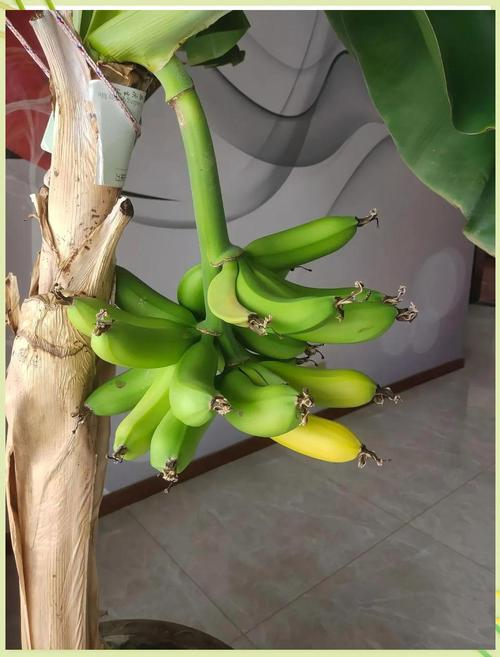
"nango north," starts with the selection of species. “we first tried to plant different varieties of banana trees, and found that the cylindrium 9 showed remarkable adaptability in the soil of the north, with the expected strength, yield and taste, and even with the unique growth environment of the north, a softer taste than the southern banana.” zhu guangdong agricultural academy of sciences, school of fruit trees, no. 9 is the type of fresh-eat bananas produced by gold fingers (aaab) and sh-3142 (aa) for father-to-father hybrids, which are highly resistant to diseases such as banana atrophy and banana beam tops, and are more wind-resistant and cold-resistant。
Almost half of the banana trees in this tropical shed have formed “banana towers”, while the other half of the small trees are breeding exploration by cooperatives。
“the banana seedlings that we have planted here come mainly from the previous batch of bananas, which are generally selected at heights of about 1. 5 metres, with well-developed roots and unexpanded seedlings, which grow fast because of their rich roots, grow first roots and leave leaves, and produce relatively early yields.” zhang hui, the technical director of the shed, explained, “in addition to this, we have also tried to cultivate a stem seedling, which is based on high rates of activity, uniformity of growth results, small and wind-resistant plants”
The cooperative's extensive experience in banana cultivation has led to the successful settlement of a growing number of “northern” banana trees as “native platinum”。
Facility farming to help
In the exploration of banana cultivation, it is easy to learn to speak with light, but sometimes leaves that appear under a layer of stacked leaves speak in secret of the hardships of the “north of the nango”. Bananas are warm and humid, heat resistant and demanding soil alkalinity and ventilation. In order to cope with the adaptation challenges of the north's climate and soil, cooperatives have made an excellent breakthrough based on facilities based on agricultural technology. The temperature control system, the smart networking water fertilizer, the full automatic spray system, and the po-film technology applications have jointly created the tropical climate of the shed, allowing banana trees to spend four seasons in the north。
“in order to take advantage of the natural advantages of high temperature differentials in the north, facilities farming technologies address the core challenge of climate suitability.” zhang hui, while checking bananas, said that “cooperatives use double-capped structures to match two layers of cotton inside and outside, and regulate them in hot summers through ventilation systems to cope with high temperatures above 30°c, while winter heating facilities are installed to ensure constant temperatures above 10°c”. It is understood that this “winter and summer cool” thermo-control programme has stabilized banana acre production in the shed at 3,000 - 4,000 pounds, and has allowed tropical crops to take root in the yellow-earth plateau。
Moreover, bananas, as “indigenous people” in the tropics and subtropicals, have natural high requirements for moisture, neither silt nor drought. As a result, the sheds were equipped with a spray system, which was specifically poured every three days to ensure that 60-70 per cent humidity was maintained in their environment. At the same time, smart water fertilizers in the shed provide bananas with high potassium fertilizer through precision and regular fertilization, with high efficiency and quality that guarantee their nutritional supply throughout the reproductive period。
The facility agriculture builds the environmental and nutritional foundations for banana growth, while the scientific management of its growth properties by technicians allows bananas to develop a continuous healthy cycle in the shed。
“when the banana tree is ripe one year and the fruit matures, we will cut off the trunk and make it grow again.” zhang hui talks about the management of banana cultivation as follows: “banana trees are, in fact, large herbs, and when the fruit matures, they will naturally die, cutting off the trees in time, ensuring that they do not overconsumption of nutrients in the soil and providing more space for other trees to grow.”
In the practice of the “norther south gorge”, the path to high-quality development of modern agriculture has become clearer: it provides an efficient means of production for modern agriculture, which is injected by technicians with a “smart inner core”, a combination that drives agricultural production beyond natural endowments, enriches rural and urban food supplies and gives people a healthier and fresher taste。
There's something going on in tourist farming
A few moments of children's jitters have broken journalists' minds in tropical landscapes. Looking at it, a couple of kids came down to the shed with their parents。
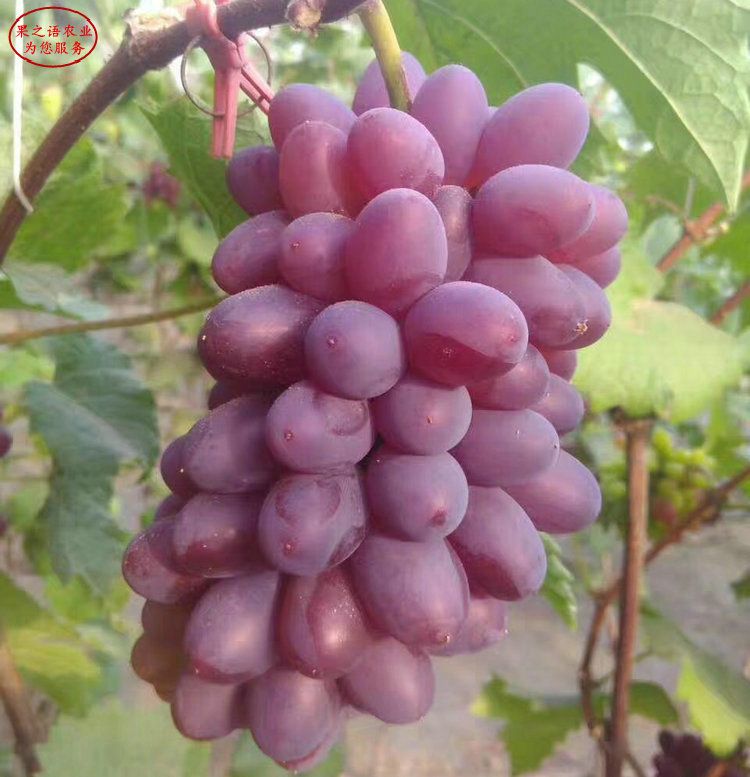
"is this our usual banana? Turns out to be on such a tall tree!” the little girl with the ponytail raised her toes, curiously reaching out to the wide-touched leaves. The young boys next to them are attracted to the raisins falling from the vines, holding their mother's hand and asking when they will change color. Parents shoot around with their handlers, with their children jumping in their faces and with their branches of tropical fruits, and sometimes they laugh at naive questions like "why grapes grow on shelves" and laughs in the shed。
“consisting on the location advantage of the tourist highways, cooperatives have launched harvesting projects and, in addition to banana trees, we have grown tropical fruits such as mangoes and clove fruit, which, although not yet fully fledged, are still enjoying a unique tropical fruit landscape. In addition, we have introduced new grape varieties of queen nina, allowing tourists to view and taste fresh and rare fruit varieties.” it is also fair to say that tourists can claim banana trees in advance, take part in the planting chain, such as fertilizing or watering, or entrust the co-operatives to take them personally when the fruits mature and experience the pleasure of farming from cultivation to harvest. This immersion experience model not only enriches the recreational functions of facilities agriculture, but also allows the results of agricultural science and technology to enter the public view in a graphic way。
From the first dozen bananas tested to the creation of nearly 100 “polymers” today, from a single production of fruit and vegetables to a modern agricultural complex that collects, views and experiences, the transformation of the photo-agriculture professional cooperatives is a vivid microcosm of the new quality of agricultural productivity that the city of quizun has developed, with facilities at its disposal. This agricultural practice of the “north south gorge” not only recast the traditional perception of the “north south orange” but also demonstrates the potential of technology to empower traditional agriculture. (texts/graphs, journalist takashi)