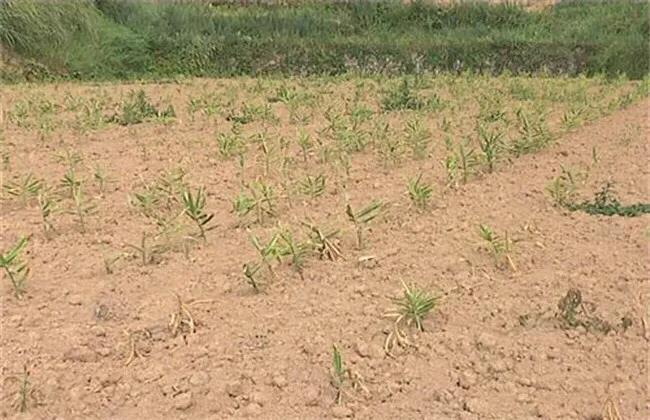
As the temperature rises, the protected ginger that has been planted has grown out of the ground, some of which are already above their backs, and so on. Yesterday i was asked to see what happened to his chon. Entered into his ginger garb, first of all, a stingy smell, a spicy eye, and his green blades were curly, pale and down, the more severe the vent. A few gingers were pulled out and found to be scarce and short, stunted and preliminarily determined to be gas or fat. I asked him if he smoked the floor. He's sure. That confirms my judgment. That's bad. This is due to the use of some commonly used fumigants, which are not completely ventilated, and to the application of a large number of undecompressed and thorough organic fertilizers。
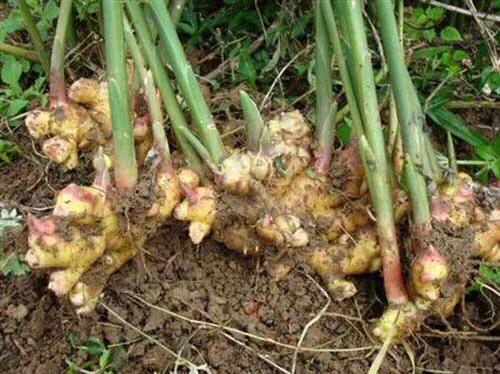
One, a few reasons for the gas
Because of the closed and semi-closed condition of ginger in the shed, there is a relatively low exchange of gas with the outside world, which is detrimental to the growing ginger and, if not managed, has a harmful effect. The main reasons are:
1. Carbon dioxide deficiency
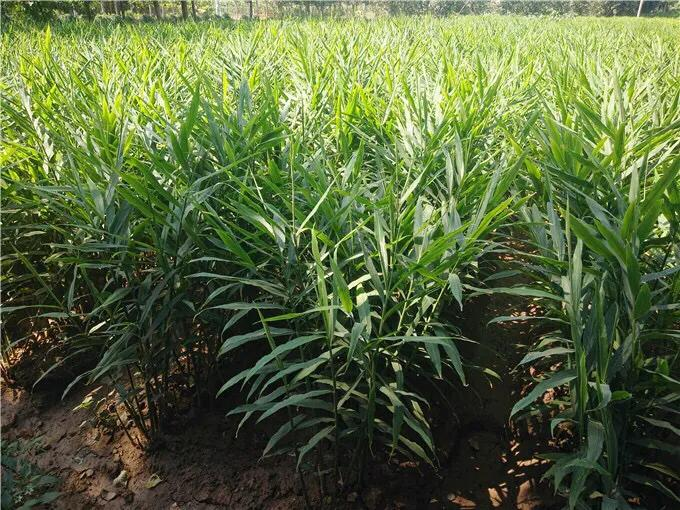
During their growth, plants absorb large amounts of co2 for photocosynthesis and, because of the closed environment, the shortage of co2 in the sheds has long led to a decrease in photocosynthesis, a lack of development of the ginger, in the form of thin leaves, light green and small, which in turn leads to a decrease in the resistance of the ginger-planted strain and is prone to disease。
Hazard of fertilizer gas
Owing to the closed nature of the sheds, it is difficult to release harmful gases. Hazardous gases in the sheds include mainly ammonia and nitrite gases, which are mainly the result of one-time application of large amounts of organic fertilizers, ammonium nitrogen fertilizer or urea, especially on the soil surface, and are more likely to cause toxic gas emissions。
3. Release of toxic gas from shanty film
The main types of pvc and pvc membrane that we now use are those on which the rest of the membrane is basically filled with certain substances and process improvements, such as pvc long-lived membranes, drip-free membranes, anti-age membranes, resin membranes, etc. But most of us in the ginger-breeding filament selections are for low-priced pvc or pvc, or even for undefined selections of inappropriate pvc。
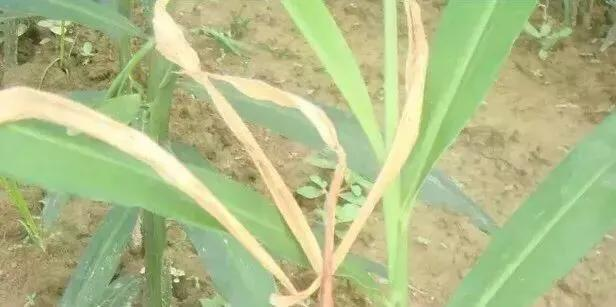
These films release large amounts of chlorine gas and ethylene, which not only harm the human body, but also invade the ginger-planted strain, damage cell tissues and green leaves, causing a decrease in light co-operation and affecting the normal growth of ginger。
4. Residues of pharmaceutical gases
As a result of years of abrasive ginger, various forms of endemic diseases, such as root nematodes and ginger plague, are prevalent in the soil and, in order to clean the soil, chlorinated bitters and fumigants, such as cotton plums, are used for disinfection. These soil disinfectants, while eliminating soil pests, also kill soil-friendly insects, so when used, they have to increase organic fertilizers in order to increase the number of soil-friendly bacteria and improve the soil environment。
Most importantly, when soil fumigants are used, care must be taken to excrete the pharmacological gas residue, otherwise it is highly likely to cause the aura and burn roots of ginger and affect its normal growth。
That's why our friend kangon's ginger got sick. After he had smoked the ground, the acre was filled with pig dung from a six-carriage truck, which, together with the hugeness of the ginger sprouts, the rush to sow, the incomplete emission of pharmaceutical gases and the incomplete decomposition of the manure, which eventually caused gas damage。
In the sheds, a lot of gas is caused by the cultivation of ginger, vegetables, etc., and some of their friends, who think they're sick, use drugs, which are counterproductive and tend to get worse and worse than expected. In the case of gas-related hazards, it is mainly addressed in the following areas。
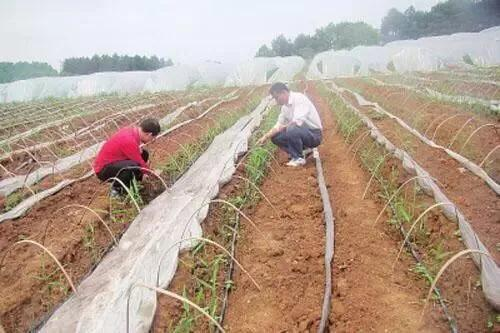
Ii. Measures to address harm
1, enhance ventilation in the shed
Without prejudice to the temperature required for the normal growth of ginger, maximum ventilation is required to supplement the carbon dioxide deficiency in the shed and to discharge toxic and hazardous gases. When the temperature is high at noon, the shed may be unsealed。
Two, use the fertilizer
This situation can be improved effectively through increased application of organic fertilizers in the sheds as a result of years of application of fertilizers, combined with less soluble rainfall and heavy soil salinity. However, organic fats such as manure and soil fertilizer must be thoroughly decomposed and must not be applied to raw manure。
The second is to be careful not to pursue nitrogen fertilizer. Nitrogen fats and undecompured organic fats produce large amounts of nitrite gas during their decomposition, while nitrite gas is heavier, which accumulates in a ginger ditch, causing ginger leaves near the ground to be burned as if they had been boiled with open water, whiteened between the veins and bleached to death。
3. Select to use qualified film, not to be greedy and cheap in order to purchase poorly qualified film。
Three, after fumigation
That's what i'm talking about. That's why i took it out of the solution。
There are a lot of ginger fields now using fumigation to clean the soil. Because of the high risk of drugs such as chloropicrin, most of them are run by merchants, there will be early and late scheduling, and if you want to fumigate the soil, it would be preferable to make an early reservation early enough to allow for the release of gas from the diaphragm。
The fumigated soil, such as chlorinated bitters, must be sealed with impermeable thin membranes, so that the pesticide is fully permeable to the soil floor, so that it can be infested and the film removed before seeding. Excretion is a top priority, and whether or not it is complete will have a direct impact on the normal growth of ginger, especially those cultivated in protected areas。
The fumigated soil is divided into two disembowels. The day before, the film was removed from both sides of the plot, leaving a hole in the air, and the day after that, the film was removed in its entirety, but the person must stand up to the wind and unmask the film in order to prevent bodily harm. It smells so bad, it's hot, it hurts the body. It is forbidden to sow ginger for 15 days after it has been decrepit, and it is necessary to go over the ground and dry it for more than a few days, then to beat the grenade or to dry it for a few days. A few days before the planting, a few earths were taken from the plots and seeds of easily seeded vegetables or other crops, such as radish seeds, cabbage seeds, etc., were poured over the water cover and tested in the sun to test the gestation. If more than 90 per cent of the seeds were fertilized, the roots were normal and the roots were growing, and no roots were seen to appear。
As for the use of small arch sheds to plant ginger, if you're in the early air, you're not in the air, you're going to plant it and then you're going to have to punch a few more vents at the top of the shed, and you're going to blow up the toxic gas. Two arches in the sheds, with care to expose the diaphragms and release the toxic gases and then release the gas vents in the shed for exchange. Every morning, they stood outside the shed, exposed it, checked it for smell and did not enter it blindly in case of accidents。
In response to this friend's question, my proposal is to remove the two bilges as soon as possible, the lower wind, the lower wind, the lower wind, the diaphragm, the higher ventilation, and the simultaneous application of root agents, the application of phenol internal resin on the side of the leaf, and the activation of sodium nitronol, etc., to stimulate the recovery of the injured strain as soon as possible。
In conclusion, i would like to remind you in particular of the need to pay attention to the need to strengthen management, especially of the fumigated plots, and to the need to be ventilated and not to allow the fumigation of toxic gases. Any smoked ginger field, whether it is the field or protected area, must be exposed for more than 15 days。