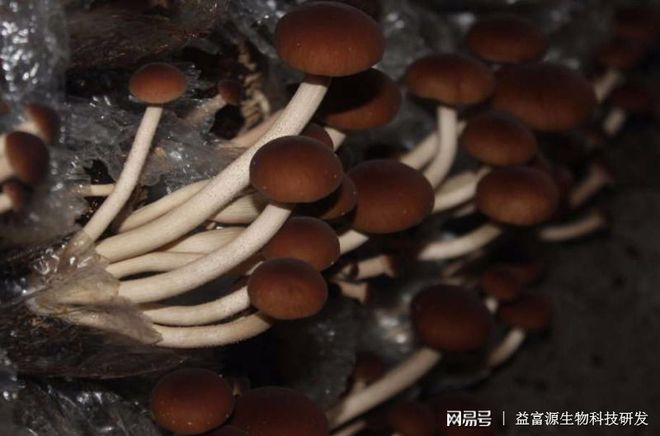
I. Selection of good strains: the main source of good strains of tea and mushrooms in various parts of the country is the saming city fungi institute of fujian province, which has thick strains, few bushy entities, darker colours, tanish cover, high temperature resistance and high yield, with a slightly different taste of mushrooms; and jiangxi guangchang, with a small strain of bacteria, many bushy entities, slightly light colours, red brown cover, slightly lower production, but soft meat, and a good taste of mushrooms. It is recommended that mushroom farmers introduce mother-plant expansion directly from formal units。
Ii. Scientific formulations: excessive nitrogen content, high pollution rates and late mushroom production of tea mushrooms; low nitrogen content and low production. Two formulations are recommended: 36 per cent wood crumb, 36 per cent cotton seed shell, 20 per cent gill, 5 per cent maize powder, 1 per cent teaseed cake, 1 per cent calcium light carbonate, 1 per cent sugar, and ph 7-7. 5; or 87 per cent cotton seed shell, 10 per cent wheat lumber, 2 per cent lime, 1 per cent sugar, 56 per cent ~ 60 per cent water and 7 per cent ph ~ 7. 5。
Iii. Epidemic control: when a bag is packed, a clean cotton sheet is used to clean the surface of the bag, so that it can be consumed in a pot. High pressure sterilization requires 3 hours at 115 kg pressure and 100°c after 100°c to maintain 10-12 hours。
Iv. Vaccination: the first choice is to have a good quality, an age-appropriate strain of no more than 80 days old, and the residual temperature of the mushroom drum at the time of vaccination should not exceed 36°c, otherwise the fungus will be burned to death, resulting in a lack of fungi. After temperatures below 30 °c, the mushroom canisters are placed in an inoculation box, where they are put together with disinfectant powder for 15 to 20 minutes after having been sterilized by 75 per cent of the alcohol (generally by various devices two times in the form of an alcoholic cotton) and when the inoculation is carried out close to the alcohol lamp flame, the bag is dipped down, most of the fungus is placed on the culture base surface, and a bottle is produced to contain 20 to 25 bags。
V. Cultivation: the fungus bags shall be placed on the mushroom racks of the culture room at the speed of vaccination (the first three days of the culture should be pre-efficating, otherwise the fungs and pests should be easily infested; the bag should be put in place, piled up, spread over 20 days, floor-to-floor should generally be appropriate) and the room should remain at around 23°c. Regular spraying of 500 times the wealth of the fungus fungus eco-belt should remain at around 65 per cent relative air moisture. Indoor light should not be too strong, and should be cultivated in the dark so as not to have a fungus on one side, mushrooms on the other, ventilated in the morning and at the end of the day, in order to be careful of the rodents so as not to be infected with other fungus, causing serious damage. The fungus grows for about 30 days, can be unplugged, enter a small amount of air, and the fungus of the fungus, 500 times the fungus, can be sprayed and grow faster. The usual temperature is appropriate for 60 days or so, and a bag of mushrooms is available。