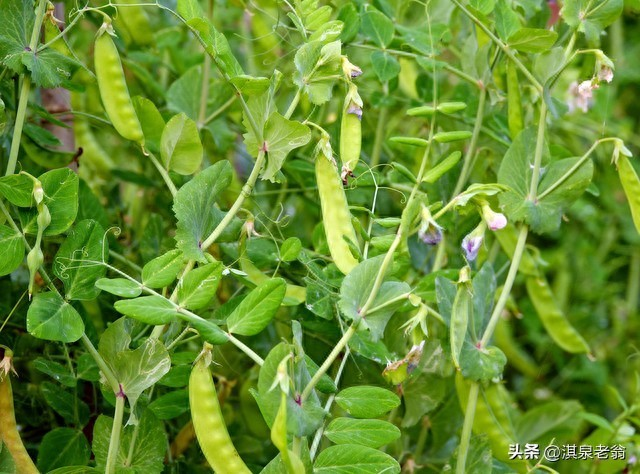
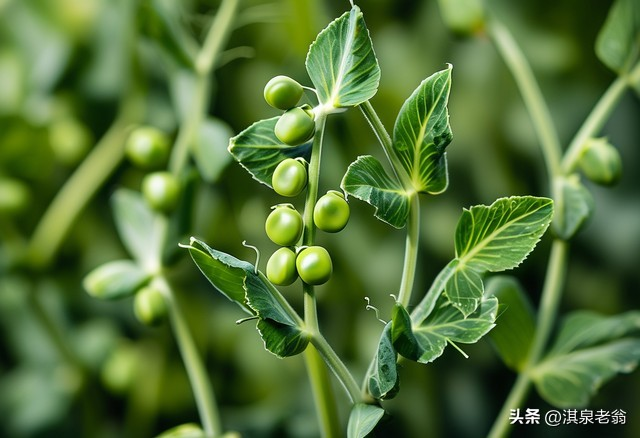
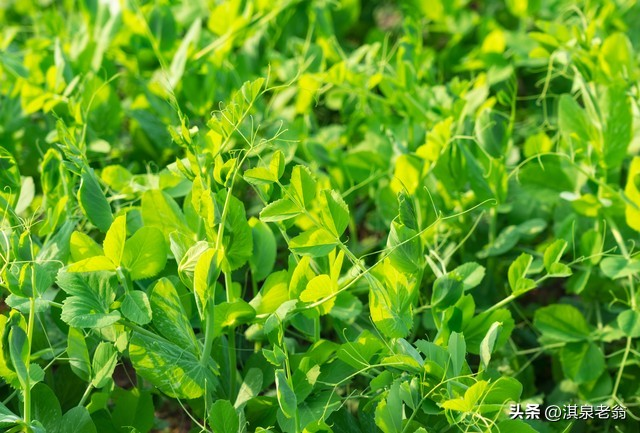
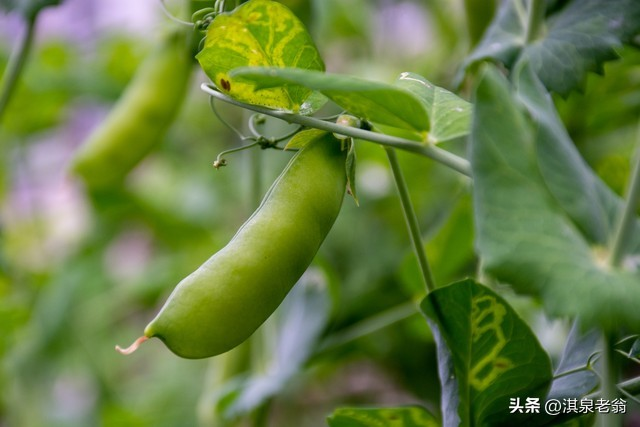
Peas, the world's most important edible pulse crop, with its food, vegetables, feed and fertilizer for multiple uses, are cultivated over a long history and are ecologically adaptable, and occupy an important place in global agricultural production and human diet. This document provides a comprehensive knowledge system for the peas industry, which is designed to map their origins, distribution, growth characteristics, variety types, product values and planting techniques。
I. Origin of peas
Peas are one of the ancient growing crops, with their origin centres concentrated in the eastern mediterranean, western asia and ethiopia, and wild peas stocks are widely spread along the small asian, caucasian and iranian highlands. Archaeological discoveries show that the first people of new crescent land have begun to domesticate peas long before 7,000 b. C. - 6,000 b. C。
The history of peas growing through the silk road and sea trade routes to europe, africa, asia and the americas can be traced back to handy, from the west to china, where they have been selected for thousands of years to form local and improved varieties appropriate to our different climates and soils and become traditional crops widely grown in the north and south of the country。
Ii. Distribution of peas
(i) world distribution
Peas are grown in global temperate, subtropical and tropical high-altitude areas, mainly in china, india, canada, russia, australia and france, with asia accounting for the highest area of cultivation and production in the world and at the heart of the world's peas production and consumption。
(ii) china distribution
My country's pea cultivation has a mixed north-south and south-westerly pattern, with its main production areas concentrated in yunnan, sichuan, gansu, inner mongolia, hebei, jiangsu and hubei provinces. The north is dominated by spring and winter peas. The south is dominated by autumn and winter peas, and the field is combined with facilities, combining fresh food with dry seed production。
Iii. The growth properties of peas
Temperature adaptation: peas are semi-cold-resistant crops, cool and wet climates, heat and heat insatiable, seeds germinate at 4-8°c, seedlings are resistant at 4-5°c low temperature, long-lived at 12-20°c, and more than 25°c growth is poor and flowers are falling。
2. Light demand: with long-day-lighted crops, most varieties need sufficient light to complete the luminous separation of flowers, less light-lit and less productive, and short-day-light varieties in the south are suitable for autumn and winter cultivation。
3. Water demand: dampness, drought, water stress, more drought-resistant seedlings, most water requirements during flowering seasons, soil drought can lead to dried berries, and the accumulation of water can cause root causes of decomposition。
Soil requirements: land requirements are not stringent, appropriate for sterility, good drainage, neutral to micro-alkali soil (ph 6. 0 ~ 7. 5) and are more resistant to infertileness and taboos, associated with aggravating pests and diseases and reducing the nitrogen-fixing capacity of root tumors。
5. Nitrogen fixation characteristics: roots can form root tumors, fix nitrogen in air, are good crop rotations, and reduce nitrogen fertilizer application。
Iv. Types of peas
Peas are divided into the following categories by use, seed properties, growth habits:
1. By type of seed
- peas for food (dry peas): seed grains are hard, starch content is high, dry seeds are harvested when they mature and used to process flour, fans, bean pie, fodder, etc。
- peas (fresh peas): fresh seed grains, high sugar fractions, gravy picks, green bean grains, sweet tastes and nutrients。
2. By-penetrate characteristics min
- hard bean beans: a large, non-eatable fibre of shellfish, mainly for seed grains, is the main type of food and fresh grains。
- soft beans (dutch beans): husks are soft, with little fibre, and can be eaten together for good quality fresh vegetables。
- sweet peas: both soft and large, brittle, sweet and fresh。
3. By growth habits min
- chicken breeds: growing plants up to a height of 1-2 metres, which require planting, with high yields and large nuts, mostly of fresh food and vegetables。
- semi-cranium species: 50-80 cm high, free of scaffolding or scaffolding, adaptable and easy to grow。
- short-sized species: 30 to 50 cm tall, vertical, non-stretching, prematured, highly productive, suitable for large-scale field cultivation。
V. Product value of peas
(i) value of consumption
Peas are rich in high-quality proteins, diet fibres, vitamins, minerals and a variety of amino acids, fresh peas have sweet mouths, which can be cooked, soup cooked and vegetables prepared. Dry peas can be processed into pea flour, pea noodles, cool powder, cannery, frozen foods, which are important ingredients for vegetarian and groceries diets, which can be digested and absorbed for use by all groups of the population。
(ii) economic value
The pea industry chain is complete, with fresh herbs, fresh grains, dried seeds and processed products available for sale. Dutch beans and sweet peas are high-end vegetables and export earnings. Peas protein and peadow starch are good raw materials for food processing, health care, feed industries. Market demand continues to grow and planting efficiency is stable。
(iii) ecological values
The pea root tumor is highly nitrogen-fixing, with 5-10 kg of nitrogen per acre, increases soil fertility and reduces fertilizer application. It is a good crop rotation, intercropping and condoming of crops such as maize, wheat and vegetables; it also produces green fattening and green feed, combining cultivation and ecological cycling。
(iv) value of feed
The high protein content of peas straw, oscillations and processed by-products is a good-quality feed for livestock, which is good taste and nutritionally comprehensive and enhances farming efficiency。
Vi. Peas cultivation techniques
(i) land selection
The choice of flat, well-drained, unconnected plots is best served by the cutting of grass-crop crops; 20-30 centimetres of deep-drive, dredged and flat, combined with the application of foot-based fertilizer to the whole area, with the application of 20-3000 kg of manure per acre, and 30-40 kg of compound fertilizer, to be combined with soil-based fertilizer。
(ii) sowing in due course
- spring broadcasting area (north): soil unfrozen and seeding in march-april
- autumn/winter (south): seeding in october-november, avoiding cold and high temperatures。
The seeding is done on a strip-and-cave basis, with dwarf varieties ranging from 25 to 30 centimetres, strains from 5 to 8 centimetres, chicken varieties ranging from 50 to 60 centimetres, strains ranging from 10 to 15 centimetres, and in depths of 3-5 centimetres, with a crop yield of 8 to 15 kilograms per acre。
(iii) field management
1. Inter-sapling seedlings: timely seedlings after seeding, removal of weak, ill seedlings, preservation of healthy seedlings, and ensuring ventilation in the fields。
2. Weeding in chinese: 2-3 plantings during the sapling season, decomposition of soil, removal of weeds and avoidance of weed competition for water。
3. Roasted chickens: the chickens are mounted when they are 20-30 cm high, the chickens are mounted, they are prevented from falling and their yields and quality are enhanced。
4. Fertilizer management: less water and control over long periods of seedlings; maintenance of soil wetness during flowering seasons, timely water irrigation in the event of drought, and protected water collection; first flowering period, one run each, 5-8 kg urea per acre, 10 kg potassium fattening, or spraying noodle fertilizers, contributing to the saturation of berries。
(iv) pest management
In accordance with the principle of prevention and integrated treatment, the main diseases are rota, powder, brown spots, which can be prevented by rotation, rational planting and pharmacological mixing, and the main pests are aphids, soybean worms, leaf flies, the use of physical booby traps, biological control and the substitution of low-toxic pesticides to reduce pesticide residues。
(v) timely collection
- peas: 10 to 15 days after flowering, picks of berries and seeds when they are not full
- peas: 15-20 days after flowering, when seed is full and colour is green
- dry peas: a one-time harvest when the plant is yellow, the sorghum is dry and the seed grain becomes hard。