Before 1950, when the sea was insulated from the grapes, people could not imagine how this ill-earned land had anything to do with sweet grapes, and “the area under cultivation” once became the name of the sea。
According to information from the agricultural sector, in 1950 a farm family named ma transplanted its first active grape in the uhai. At the beginning of the 1960s, young men like ayuqing and shigeki, who had dedicated themselves to the cause of the gobi farming industry in the great desert, came to the city of sea bay, where they had been built, running around the region's large and small sand dunes, trenches, and immersed in the “spleen” of the soil, day after day, year after year, and finally planted small greens in the desert。
The grape industry's one-and-a-half percent off
Long daylight days, high day and night temperatures, long frostless periods, low annual precipitation, high evaporation, low relative humidity throughout the year, and excellent weather conditions for the cultivation of grapes in the sea, have been demonstrated at the beginning of the city。
In 1976, the city of uhai was waiting for the occasion. At the beginning of the year, the deputy secretary of the city council, yang lisheng, on behalf of the uhai city council, presented to the people of the city a large area of slogans for the cultivation of grapes, and purchased high-quality trees from toruzan, where 60 acres of non-nuclear white vineyards were built in the garden of the former uda mining authority。
In august 1985, the city people's congress's standing committee director, historic lead team, travelled from gansuland state and dong shun to xinjiang and toruzang. In november of that year, our city took a decision on a number of issues concerning the accelerated development of the grape production industry to establish a production base for grape commodities. At the same time, our city has established a grape commodity production base command, which, through experiments and research carried out by specialized technicians on the form of grape planting, orthopaedic techniques, winterization and management of fatty water, has resulted in the identification of fast-growing techniques for the production of grapes that are suitable for normalization in the u-sea region and other dry desert areas in the north-west, which constitute a major leap towards industrial development in the cathedral。
In 1990, the city built more than 8,000 acres of grapes, mainly with the eye of the dragon, with no nuclear whites, roses, horse milk, garden whites, etc。
However, the question of how to sell grapes when they come out becomes critical。
In the early 1990s, owing, on the one hand, to the effects of a weak climate in the domestic and foreign markets for grapes and wines, together with the collapse of the wine factories planned at that time, the lack of conservation, storage and facilities, the delay in the development of the transport and marketing markets, the once-defunct flow of grapes produced in our city, the low efficiency of the grape industry, and the severe cutting of grape trees, which resulted in a sharp decline in the area under cultivation and eventually to less than 3,000 acres。
The turnover occurred in 1996. In the same year, the national conference on the production of fruits of the ministry of agriculture presented the “nine five” development plan and the programme for 2010, which explicitly “reform the structure of fruit tree production and varieties on the basis of stabilizing the size of the original orchards”。
The raisins of the u-sea
In 1997, our city began to introduce new varieties of excellence in the country and abroad, and in 2000, the national committee of the communist party of china (cpu-uhai) formally included the grape industry in its “fifteenth” national economic plan. From then on, my city's grape industry came out of its misery and gave it its full potential。
Policy support to be strong
After the new century, our city's grape industry was gradually recognized by the autonomous communities, and the u-sea grape industry, as a feature, enjoyed the support of the autonomous communities. At the same time, the municipalities have formulated and introduced preferential policies to accelerate the development of grape cultivation
Since 2002, our city has been subsidizing the production of compliant grapes for 10 consecutive years, increasing from 200 yuan/acre in 2002 and 300 yuan/acre in 2005 to 300 yuan/acre in 2009 for three years; a one-time subsidy of 3,000 yuan/acre for grape seedlings; a one-time subsidy of 20,000 yuan/acre for the construction of additional greenhouses of more than 50 acres in order to encourage the development of the facilities; and a one-time subsidy of 3,000 yuan/acre for the construction of more than 30 acres. At the same time, there is strong support for related industries such as processing, marketing, storage and branding。
The implementation of affirmative policies has mobilized a large number of farmers and businesses to grow, and our city's grapes have quickly entered the fast-track path of development. They now form the “ten bases” and “ten farmers of the enterprise” model of development. The chain of production, processing, storage and circulation of grapes is constantly expanding. Industry is becoming more dynamic and risk-resistant, and economic efficiency continues to rise。
In the past year, the municipal council and the municipal government again issued a directive on accelerated development of the grapes industry, which provides a maximum subsidy of 6,000 yuan per acre for the construction of more than 200 hectares (200 acres) of new plantations in concentrated series. In addition, we have introduced a policy of special interest rates for the grape industry, a policy of preferential treatment for fresh-eating grape stores and a policy of subsidized prices for wine and wine purchases. At the municipal level, we have set aside 3 million yuan a year to support the development of grapes and wines, as well as the construction of gardens and cauliflowers on a modest scale, as well as a special guarantee fund for grapes, with full support for the development of the grape industry。
The grapes don't fall short of expectations
Since the end of the 1980s, the grapes produced in our city began to gain prominence and recognition in national and even international competitions and exhibitions。
In 1988, the u-hai grapes were selected for the national high-quality agricultural produce exhibition in kyoto and received the recognition and approval of experts and peers
In 1990, u-sea grapes were designated as a donation product of the asian games
In 1991, the ministry of national agriculture organized a “physical agricultural marketing orders conference” in zhengzhou, where the u-hai grapes received the honour of having been named after the qing ding dynasty, the toyako river, the shaanxi qin crown apple, etc.
In 1994, the non-nuclear purple grapes were awarded “quality fresh grapes” at the first national seminar on grapes
In 1995, the non-nuclear white grapes were awarded the golden prize at the second china agricultural fair
In 2008, the wu hai grapes obtained the first national certificate for the identification of geographical indications of agricultural products issued by the ministry of agriculture; the wu hai grape base was rated by the chinese association for the circulation of fruits and the chinese agricultural society grapes branch as a “national high-quality grape production base” and the non-nuclear white and red earth as a “chinese fruit”。
In 2009, red earth grapes were awarded a gold prize in the 15th national grapes academic seminar and the second chinese grape festival (dung shun), and moritani was awarded a silver prize for nuclear-free, flame-free and white-free。
In 2010, three species of flame-free, red earth, moldovan, won a gold, silver and three high-quality prizes at the third chinese (international) grape festival, and a gold prize was awarded to the western mouth wine at the seventh inner mongolia international agricultural fair。
I'm sorry
In 2012, the western spoken wine received a gold medal at the second china international forestry industry fair in yiu city; the hanson trademark of hansen liquor group ltd. Was identified through the china clandestine trademark of the national directorate of commerce and industry。
In 2013, at the 17th international wine quality competition (berliner wein trophy), held in berlin, germany, a gold prize was awarded for the selection of red red wine for desert castle 2010 by the inner mongolia hansen limited。
The grape chain holds 300 million yen
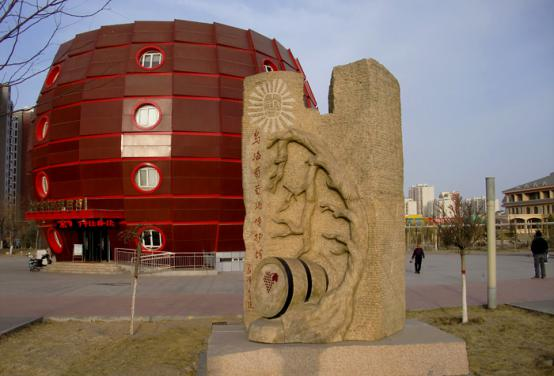
In addition to the original products and the wine industry, the industry has also led to the development of tourism-related cultural industries such as vineyards, wine houses, wine streets and wine museums。
At present, there are more than 30 enterprises in the city involved in the cultivation, processing, storage and circulation of grapes, including three wine processing enterprises, with a design production capacity of more than 20,000 tons, and more than 10 conservation and circulation enterprises, with a capacity of more than 100,000 cubic metres, with an annual production value of 300 million yuan for the entire chain of the grape industry and a labour force of more than 10,000. The hanson wine industry in the seaborne bay region, the new times, the jinsha bay company, the guangzhou park company, the cloudy company, the hainan sunshine field company, the dry source company, the gioni company in the uda region, and more than eight thousand acres of grapes demonstration gardens, grape viewing gardens, and grape ecology gardens have gradually developed; the city has built more than 30 predominantly grape-based agricultural recreational tourism parks, hosting more than 200,000 visitors every year and generating $190 million in annual revenue; and a group of dragon-head enterprises, such as jiachi fruits limited and hansen wine industries, are also growing and are contributing significantly to the process of the conversion of the grape industry in my city. This industrialization project has become a new growth point for the agricultural economy throughout the city and has had a positive impact on increasing agricultural efficiency and increasing the incomes of the inhabitants of agricultural areas. In addition, we have a successful start in the area of recreational agriculture, which is focused on grapes, and now have two national and two autonomous regional recreational agricultural and rural tourist centres。
We are confident that, thanks to the efforts of all parties, the grape industry in the city of uhai will be healthy, sustainable and flourishing, and that by 2020 the ambitious target of 100,000 acres of grape cultivation and 13 wine houses will have been met。
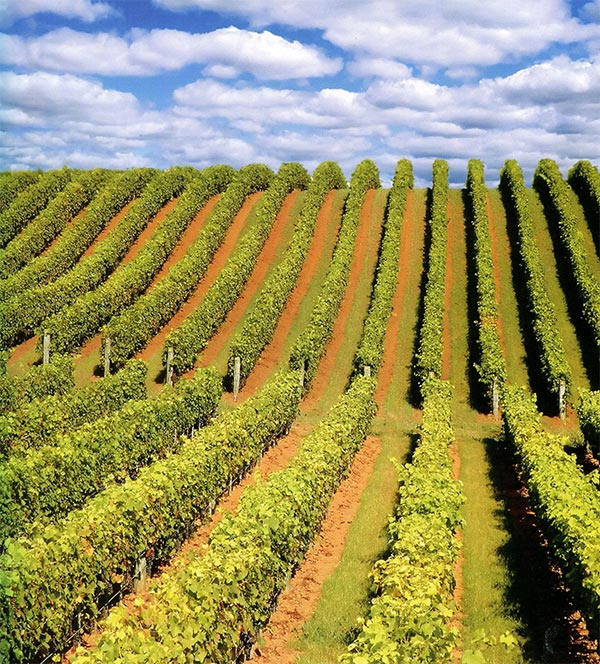
At the same latitude as bordeaux, france, the ukranium is a temperate continental climate, with high temperatures and long daylights, high temperatures and high levels of efficiency, a period of 156 to 165 days, abundant water and soil heating resources, suitable for vegetable fruit production, especially for grape cultivation, and a high-quality production base for grapes comparable to that in xinjiang。
The uhai, which owns nearly 30,000 acres of grapes, is the largest production base for grape commodities in the autonomous region of inner mongolia. It was rated by the chinese association for the circulation of fruits and the chinese agricultural institute as a “national high-quality grape production base”. In 2008, uhai grapes were identified by the ministry of agriculture as the first national agricultural product geographical markers and recommended as safe and high-quality grapes for the beijing olympic games. Varieties such as the “non-nuclear white” cultured by uhai were rated as “china's famous fruit” and honoured with the gold prize of the second china agricultural fair and the high-quality award of the eleventh national grapes academic seminar. Hanson's wine came out of the country and received seven prizes in france, germany and the united kingdom, respectively, and received china's famous brand name; gioni's wine house received a quality award in the second leadership (china) wine quality contest; and dry source agricultural development ltd.'s grape products received national organic green food certification。
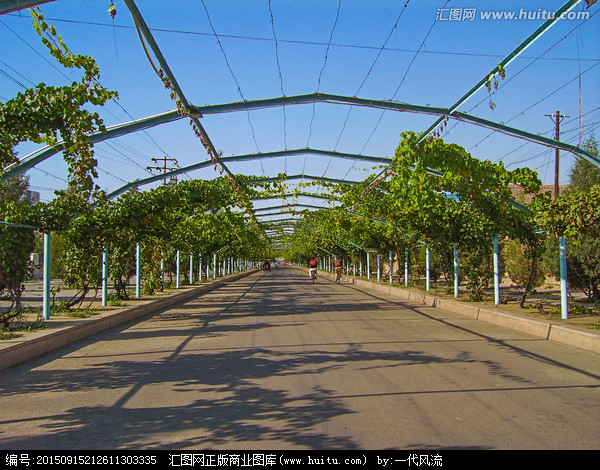
The u-sea grape industry has developed a model of “face + base” and “enterprise + farmer” and the recreational agriculture sector, which is the subject of grapes, has begun to flourish. There are two national and two autonomous community-level tourist attractions for leisure farming and rural pastoral areas. The vine street and the wine museum have become urban landscapes, attracting a large number of citizens and tourists to visit the industry。