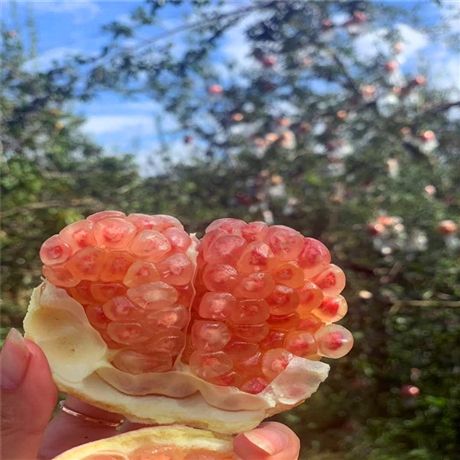
What about the pomegranate? What do pomegranate cutters need? Farmers who grow pomegranates often ask such questions. In order to help farmers better master the techniques involved in pomegranate cutting, the following information is provided for you:
What about the pomegranate
1 teen cut
Year 1 allows it to grow naturally. Between february and march of the second year, one or three strong branches were left in each tree for the main purpose of training, and the rest were removed. Care will be taken at any time to remove the principals from the buds and sprouts from the ground chief. In august-september of the third year, the tree was deformed, and the main stem was cut out of its small branch, which was growing below 1 metre above the ground, with four to six strong branches on each backbone, making the tree crown round, with tree heights ranging from 1. 6 to 2. 0 metres。
2. Leaning
Easier branches (precipitated branches), lower branches, small branches, pests, dead branches, so that they are properly distributed evenly, and the tree crown is well ventilated. When pomegranates are given flowers, they are properly trimmed to reduce nutrient consumption。
Three, trimmed with long branches
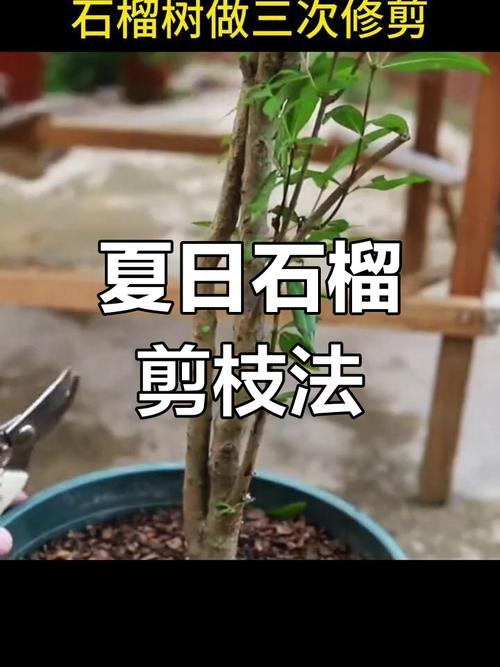
And all long branches from the lord's lord and the lord's lord's lord shall be cut off early. In the middle of the canopy, two to three long branches can be used if the canopy expands. Those who disturb the tree's shape are cut off from the base and radiant with a tree crown to promote the results. The crowd said, “the pomegranate is empty and the tree is sharp”, meaning that the branches of the tree are not dense enough to be good。
Four, trim the side branches
During the period july-august, no branches should be left in space 45 cm above the ground, and if they occur, they should be cut early to facilitate the growth of the upper branch, which should not be done too early or too late to allow for a fresh start in the course of the year, which does not meet the goal of the cut, and the trees will be vulnerable to freezing later in the day。
Pomegranate trimming
Cultivate trees
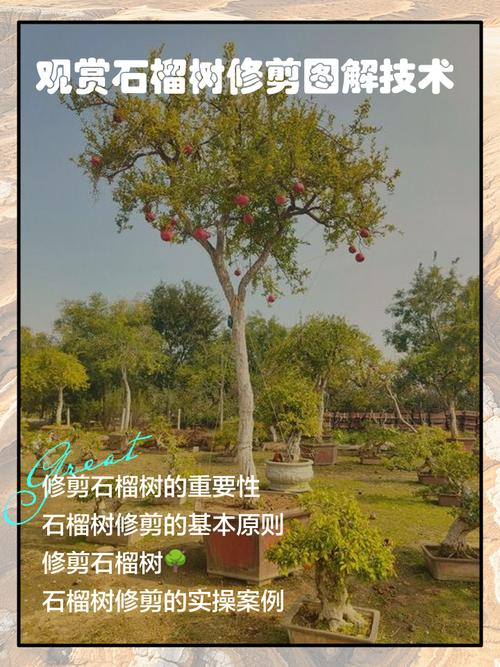
In the event that the main operation is not visible, the main plant should be open with an umbrella to prevent the hazards of animals and animals and to reduce the area of the land and the beauty of the environment, and the main plant should be kept above 1. 2 metres. Field cultivation should be based mainly on flat-head branches to facilitate management and early production。
Cut properly late
Pomegranate branches are loosely organized and cold-resistant, and winter cutting should be extended until late february in order to reduce the cold。
Winter and summer cut
Winter shears often lead to excessive tree development, which is detrimental to the formation of buds, with correspondingly low female and sit-in rates. It is therefore necessary to regulate the direction of the tree during its growth in conjunction with the sprouts, twigs, grafts, and so forth。
Cut right
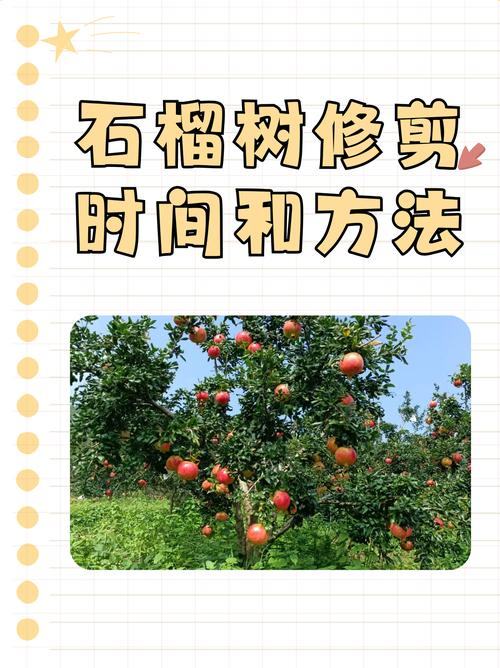
Pomegranates are sensitive to shearing, are less resistant to shearing, and the winter cut-off conferences produce spring booms, and the increase in nutrient branches affects their sit-in rate; large summer cut-offs in turn result in weak trees. As a result, winter shears are increased appropriately for weak trees and summer shears are increased appropriately for twilight trees。
Short cut
The pomegranates are trimmed mainly with branches and slow discharges, and the old and dead branches, the thin and thin branches, the long branches of the proxies, the smoothing of the tilts and the insect branches, and the shortness of the few prolonged branches. Too many short-cuts can easily lead to excessive growth of trees, to the detriment of flowers and to the production of single trees。
Pomegranates need to be trimmed every year and every four quarters of the year in order to ensure that they achieve the goals of early fruit, high yield, steady production and quality, and to increase the economic efficiency of the growers. It was important to have proper knowledge of pomegranate cutting techniques and to be aware of matters。
The pomegranate is usually trimmed during the winter, with the main branch chosen, the plume and the steep branch removed in time, the plume within the canopy, the dead branches, and the small branches produced, so that the canopy can spread evenly. After the end of the period, it was only necessary to remove the twigs, the dead twigs, the sick twigs and the ageing twigs。