What if they're missing? A lot of people would say, "then grow a tooth." however, it usually takes three to six months to plant the teeth in order to have all the upper crowns on them, and this long gap in the front teeth has a serious impact on the pasta. To this end, professor koshi, director of oral medicine of the second college, led a clinical effort to develop a new technology — the “main-wall technique” — for the rehabilitation of cultivation in the former tooth aesthetic region, which, combined with the “immediate planting” technique, not only leaves the patient with no “prime teeth” time, but also allows for the preservation of natural tooth slots and improves the stability of the plant, while greatly enhancing the aesthetic effects of cultivation in the upper tooth aesthetic zone。
42-year-old man missing four front teeth
Three hours to plant
"i have to go to work. I can't see anyone without my teeth." in recent days, mr. Liu, aged 42, who had been attending the second hospital oral clinic of the medical doctor, had been suffering from the loss of his pre-literate china for more than a decade and had left a gap in his teeth。
Following a specialist examination, the attending physician, dr. Woo myung-hyun, found that mr. Liu had many teeth and some of the roots of his teeth were treated and that he had a crown under his teeth. The x-rays show that the dark shadows of the roots are visible, and 22 of them are cystic and can only be grown in teeth. Mr. Liu stated, however, that he could not accept a routine extension of the planting operation and a delay in repairing it, as it might result in several months of missing front teeth. In response, according to the patient's situation and needs, the doctor offered an immediate planting and immediate rehabilitation programme, which he heard was ready to plant, without lack of dental time, and he was pleased to receive。
The design of the steering board of the full digital planting restoration programme was completed and the nobel active plant was selected as the final programme implant, following data collection from the previous cbct and 3 sharp oral scans. However, because of the thinness of the front teeth, the absence of the front teeth has led to faster absorption of the tooth trough bones, which is often insufficient after absorption, making it more difficult to grow, and the retreating of the back lip tissues, which may have a significant aesthetic effect after restoration. The front tooth zone is the most important aesthetic area in dental repair, requiring not only restoration of dental function but also preservation of facial beauty. In response, dr. Woo used the technology of retention of roots in the immediate planting process. It is an emerging self-organisation technique that preserves around 1 mm of the broken roots on the left of the left, without damage to the plume of the side of the lips, with a view to maintaining the normal shape of the teeth on the side of the mouth and the bone of the teeth。
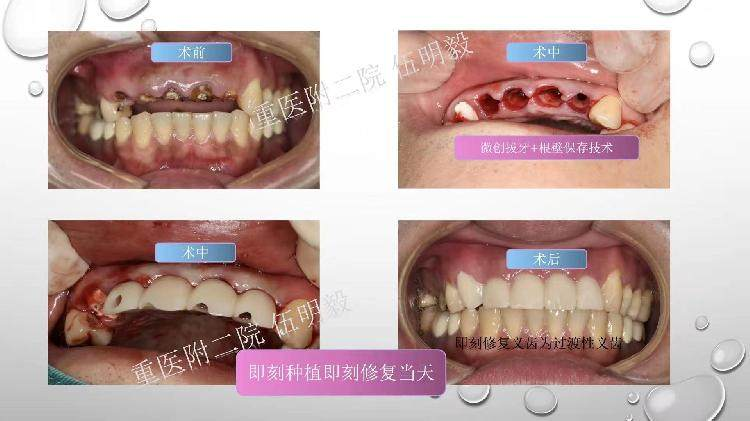
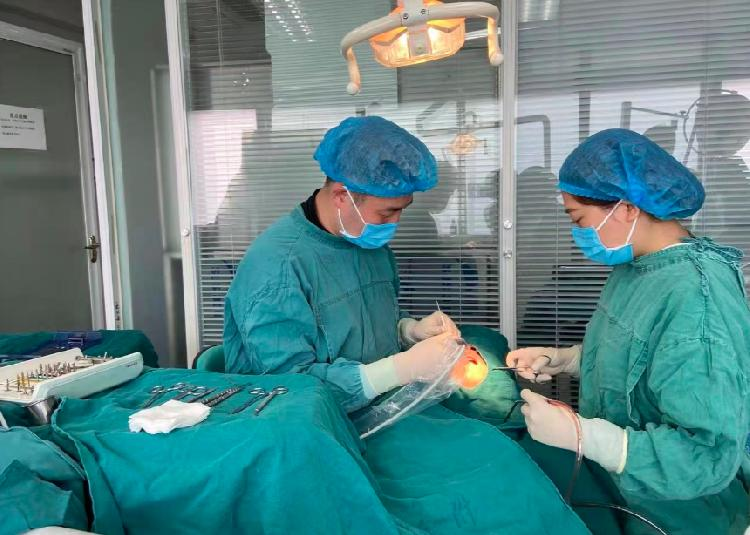
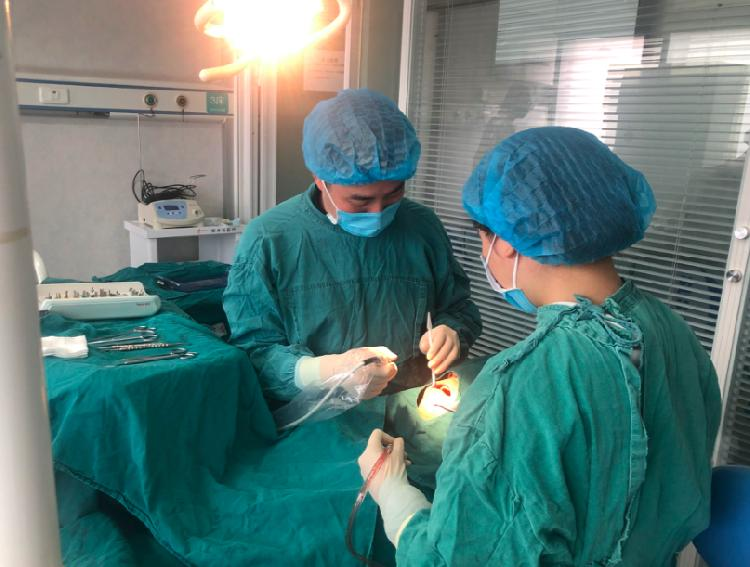
The whole operation was carried out under the authority of the department, and dr. Woo used a microdynamic bone system and micro-dentures to perform the most important preservation of the walls and the minor removal of the broken roots. Following precise and nuanced micro-initiation, dr. Woo, assisted by a digital grower steering board, implanted the plant with precision and placed a temporary base and pre-planted resin denture. The whole of the four front-tooth planting surgery and repair process took about three hours. Compared with the traditional process of restoration of pre-denture bone cultivation, patients are very pleased that the pre-operative digitization programme is well prepared, that it has effectively reduced the length of surgery and treatment, that it has not resulted in a wide range of dentures, and that the response to post-operative swelling pain has been considerably reduced, and that, thanks to advanced surgical programmes, the restoration of the pre-frontal tooth area has improved its aesthetic effects。
Immediate restoration of front-tooth areas
Faced with two challenges: bone size and aesthetics
Cultivation, because of its good function and aesthetic effects, has been described as the third tooth of the human race, making it the first option for repairing many people with missing teeth. However, according to dr. Woo, the planting of prostheses is like planting trees, which require soil to take root to survive, and the cultivation of prostheses requires a sufficient amount of tussling to form a good bone bond, thus providing strong support for the upper teeth to function well. Thus, in general, the absence of teeth usually requires the recovery of the tooth, i. E. The development of a bone in the tooth tank, which usually takes three to six months, and the implantation of artificial teeth usually takes three to six months before the upper crown is fitted。
Is it going to take me a long time to get a tooth crown? Immediate planting and immediate rehabilitation technologies can now address this challenge. Dr. Woo described the instant planting as an opportunity to plant the plant in a tooth-pit after the extraction. The immediate restoration is the temporary crowns that can be repaired on the day after the planting operation. However, the restoration was temporary in nature, for the sake of beauty, and therefore applied primarily to the front tooth zone. If supported by multiple growers, they can be used for functional loads (exercising gnawing functions), mainly for toothless (dentures) or toothless patients. For patients, instant planting not only reduces one surgical trauma but also saves time. If it's repaired immediately after planting, then the patient can almost achieve zero tooth deficiency! The aesthetics of immediate restoration are of great importance for the front tooth zone, and the instant load is also important for functional recovery for toothless patients。
“but there are conditions for immediate cultivation: no severe inflammation in the teeth, good conditions in the extraction of the tooth, and the ability to withstand surgery, etc. In the front-tooth zone, however, there are more challenges, the biggest of which is the aesthetic problem of the red and white zone.” according to dr. Woo, “red” is the arc of a soft-toothed tissue and “white” is the form of a toothbrush and a toothbrush. Due to the thinness of the front-tooth bone and the faster absorption of the back-tooth chute bone, the height and width of the front-tooth was insufficient and the back lip tissue retreated significantly. Therefore, the aesthetic effects of front-tooth cultivation can only be assured if there is sufficient bone mass, as well as a denture and lip side soft tissue。
Precision 1mm root wall
To improve the stability of front-tooth cultivation
How, then, can the two major challenges of bone size and aesthetics of front teeth cultivation be addressed? The “standing the roots” team, spearheaded by the director of oral medicine of the second college, will not only improve the survival and stability of front-tooth cultivation, but also solve its aesthetic problems perfectly。
It is known that the preservation of the walls was first proposed by german doctor hürzeler in 2010 and that in 2014 siormpas conducted a 24-60 month retrospective study of 46 patients using the technology, achieving 100 per cent survival. On this basis, the team led by director gao has also conducted research and matured its use in clinical practice. In the interview, dr. Woo myung yi explained that the technique of preservation of the roots is simply to preserve a millimeter wall on the patient's front lip, preserve a natural tooth spot, address the deficiency of the lip-side bone, do not have to flip over, reduce the absorption of the lip-side bone, preserve the original shape of the lip-side soft tissue, improve the growth body's stability when implanted in the plant, and significantly improve the success rate of the ex-dentural aesthetic restoration, and achieve good aesthetic performance and long-term functionality in the front-tooth region。
According to dr. Woo, with the application of the preservation of the roots technique, both the osteoporosis and the soft tissue level are rated higher and the aesthetically more effective than the normal instant planting. However, this technology requires greater accuracy in the doctor's experience and surgery. “in the technology of preservation of the roots, we need only one millimeter of the wall, not more than and not less, or it will be lost thousands of miles.” according to dr. Woo, the bone mass is dynamic and in order to keep the walls more precise, it requires not only a full picture of the patient's cheekbones and teeth, but also of the soft tissue of the lips, followed by customized individualized planting programmes。
Dr. Woo stated that, in order to improve the effectiveness of cultivation in the front tooth zone, each patient's condition varies, and in the light of the patient's condition, a combination of techniques, such as gbr (directive bone regeneration) and titanium network, will be used to help repair the fractures, ensure a bone space and provide a good planting environment for the preservation of the roots and planting, thereby ensuring maximum stability, survival and beauty of the front tooth cultivation。
It is known that the preservation of the walls has matured in the oral department of the second hospital, which has solved the problem of “faces” for a large number of pre-literate persons, has improved the aesthetic rating for cultivation in the front-tooth zone and has significantly reduced patient time for clinical dental deficiency and patient access。
A guide to clinics
1. Appointments are registered:
A registered appointment can be made with the official microclinic public number of the 2nd college, and the chief physician, go chi (outpatient time: monday, tuesday, 3 days, friday morning, chushu district) will be the attending physician, wu myung yi (outpatient time: monday, friday)。
Specific operational steps:
A. Pre-operative assessment of the patient's overall condition, routine oral examination。
B. Photographing of the face of the oral cavity ct to understand the size of the cheek and the root of the teeth and to measure the thickness of the teeth required。
C. Patients watch simulation animation and agree to the implementation of the programme。
D. Embracing, micro-discretion of excess tooth root to form the required root wall and photographing of the mouth face ct for confirmation。
E. Appropriate model planting plant implants, post-rehabilitation。