Across the village of aybashi, a thousand acres of large fields, the white clouds of the first flowering twilight swayed with the wind, the head of the professional cooperative, ye changchun, was standing in the field, directing the agricultural machine to sow all the lime powder。
It is known locally as the “red flowers”, “which are treasures that can `cure' soil acidification and be green fat”. Over 1,000 acres of euphemisms have been treated for three years. “for the past, soil acidification panels were so high that many of the rice is empty, and now not only do rice seed rates increase by more than 100 pounds per season, but fertilizer is scarce and of high quality. In the last two years, i've grown a lot of rice, and i've sold 40 to 50 more for every 100 pounds." he told journalists that a series of technical measures over the years had not only cured the “disease” of arable land acidification, but that the quality of rice had improved and could be sold at higher prices。
The yip changchun experience is a microcosm of the management of acidized cropland in jiangxi province. As the country's first priority districts for the management of acidized arable land, in recent years the canyon and quixle cities have been planning ahead of schedule for integrated management of acidized arable land, adapted to local conditions, and integrated technical measures such as soil fertilisation for acidification, planting of winter green fertilizers and silting for land have not only resulted in an effective improvement in the quality of arable land, but have also achieved an increase in food production and a 20-30 per cent reduction in fertilizer, which has had the combined effect of the conservation of arable land and the improvement of food production capacity。
“technology” of arable acidic land “skin, sticky, plate”
Yip changchun, over 50 years of age, is a well-known grower of food near the town. In 2018, yip changchun led the establishment of a professional cooperative for long forest cultivation, which displaced more than 1,500 acres to grow crops such as rice, oil and vegetables, but the harvest was not ideal for two years。
"the rice has many empty shells, no seeds, no food." leafing spring is desperate, "the more fertilizer is applied, the worse the earth is growing!" to that end, he went to the local rural sector several times to consult him, and eventually, according to the experts concerned, it was acidized arable land。
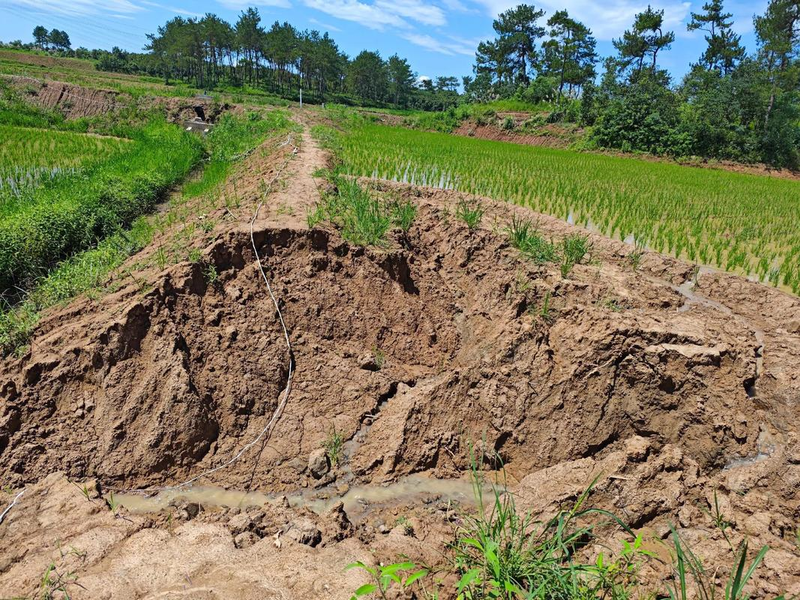
He was too aware of the dangers of arable acidification as an “old-fashioned form of farming. “it's hard to plant grass in acidized arable land.” leaf changchun said that crops planted in acidized land were “one year, two years yellow, three years in a stove” and that local farmers even referred to the acidification of arable land as “the end of the soil”。
At a time when the euphemism of the euphoria has not yet changed, good news has come to us: in 2020, the canyon district was included in the 25 pilot districts for the management of acidized arable land in jiangxi province, including the village of ibashi, which includes the plume of the plume, and was fully integrated into the model area for the management of acidized arable land. In 2023, the canyon district was again identified by the ministry of agriculture and rural affairs as a national priority for the management of acidized arable land。
Isolation before spring planting, organic fattening before double-season rice plugs and planting red grass as green fat before late rice harvests ... At each of the key agricultural time nodes, technicians from the rural sector of agriculture come to the ground to help yip long spring. Then ip yip surprised to find that the land is better every year than every year, and that rice seed rates are high, "it's over 1,200 pounds of rice in both years!" what's more exciting is that the application of organic and green fertilizers has been reduced by 80-90 pounds per acre of fertilizer compared to the past。
It is located in the interior of the area, where there are 345. 9 million acres of arable land, and the canyon district is well known as “the village of the fish and rice”. In recent years, however, this fertile land has faced serious challenges in acidizing arable land。
Presentation by the head of the agricultural and rural directorate of gorge county, on average 4. 51 arable land quality, soil ph, 2022
To this end, the canyon district has seized the opportunity to be included in the province-wide pilot districts for the management of acidized arable land and in the first priority districts for the management of acidized arable land throughout the country, using waterside towns and the town of loda as a model area for the management of acidized arable land, strengthening links and cooperation with institutions of higher learning, building on the extension service model of “expert + agricultural technicians + demonstration base + demonstration master + radiation drivers” and promoting the use of integrated techniques such as soil improvement, geo-fertilizers, limestone material regulation, etc. At the same time, the process of acidification of arable land is being mitigated in a variety of ways and in all its dimensions, using technical models such as “stretching back to the field + organic + green + soil fertilization with soil formulation”。
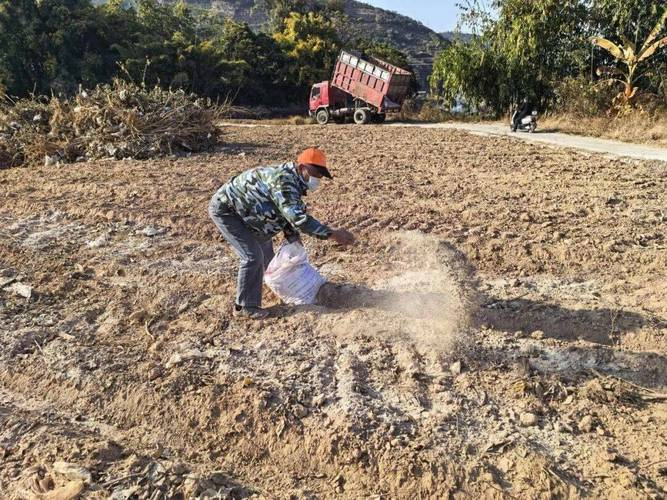
At present, canyon county promotes "winter green + fertilizer loss of 20% + lime + organic + moist" through a clustered series the technical model for the remediation of the fields and the completion of the management of more than 80,000 acres of acidized arable land have resulted in significant improvements in soil acidification, increased soil fertility and increased food productivity。
For three consecutive years of acidized arable land management, the average ph value of the acidized arable land in the project area has increased by 0. 5 units, the problems of soil infertileness, sheeting and fertilization have been effectively mitigated, the average acre food capacity has increased by more than 10 per cent and the quality level of the arable land has increased by 0. 5 levels. The average acre production in the project area amounted to 510. 3 kg, an increase of 33. 9 kg over previous years and an increase of 8. 1%; the level of arable land quality rose from 4. 75 in 2019 to 4. 47 in 2023。
• food security
If food production rises in “quantity” from small to large, then “mass” leaps from heavy metal to safe and healthy food. In recent years, this “mass” change has been felt by yao, a family of yao, who growed odoa yao, in the town of rhoda, gui creek。
Yao wongbo remembers clearly that around 2018, he was able to sell over 1,000 acres of rice that he had grown and that he had been repeatedly measured with heavy metal cadmium. As a result, he approached the local agricultural and rural sector and was told by experts that it had to do with the deposition of soil, water and chemical elements, and that it was to be addressed from the ground floor。
Subsequently, yao wave, under the direction of the relevant departments, managed the acidized cropland, spreading lime, applying phosphorus fertilizer, increasing organic fertilizer and planting purple clouds and green fertilizers. In addition to this, soil moisture management before rice is removed, leaf fertilizers are sprayed and heavy metal activity is reduced in order to address the problem of heavy metal excesses。
Kung fu doesn't have a heart. Years of effort have finally yielded results. "now i grow rice in a safe and healthy state, and there is no more heavy metal excesses. Acidification has helped our farmers!" yao-hongbo was happy to say。
Like yao wave, food heavy metals have been overrated, and in the past it was not uncommon in quei creek. The city is located in the main rice-producing area of the sinyang river river in the yuyang lake basin and is the main rice-producing area of the barn. The 740,000 acres of arable land throughout the city face serious problems of arable soil acidification, with soil ph below 5. 5 per cent of the total land area of 65,88 per cent of arable land, severely constraining the quality of arable land and food productivity in the city of quixle, and increasing risks of food security due to heavy metal levels in some areas。
In recent years, the city of quixle has been conducting a series of integrated management of 80,000 acres of acidized arable land in areas such as the highly acidized town of ro river, the town of riang, and the high standard farm area of the town of jiguang, as well as in water fields where heavy metal elements of rice cadmium are overstretched, focusing on the demonstration of acidic and bio-integrated technology models, and actively relying on new agricultural operators to enhance radiation lead, exploring three locally appropriate models of acidized arable arable land management techniques, such as “nose fertility reduction of 30 per cent + leaf fattening + raw lime + organic fattening” and “alkaline soil management agent + organic fertilizer + slushing back the field” and “green + silting back the field”。
In response to a presentation by the head of the rural sector of the rural sector of quixle city on the improvement of soil organic matter in the project area from 25. 05mg/kg to 27. 20mg/kg, soil ph from 5. 01 in 2022 to 5. 47 in 2024, the level of cropland management was increased by 0. 2 per cent; the increase in rice by 7. 399 million kg and the increase in economic benefits of $1. 904 million throughout the year; and the improvement of farmers'scientific field use in the project area through the extension of the application of a technology for the management of acidized arable land, the promotion of the use of green fertilizers and straw resources, a reduction of 159. 45 million tons of municipal fertilizer application compared to the previous year。
As a piece of acidized land becomes a high-yielding field, the land of fish and rice is ready for a new year of “richness”。