A lot of rookies ask, can we still plant spinach in the fall? Of course, it's okay. For now, we do need to seize a wave of time. When the weather cools, the spinach you grow waits for the next wave。
Plantation time
In general, fall spinach is the crop that was planted from early august to mid-september and harvested from october to november. So now you can grow a fall spinach。
Varieties selection
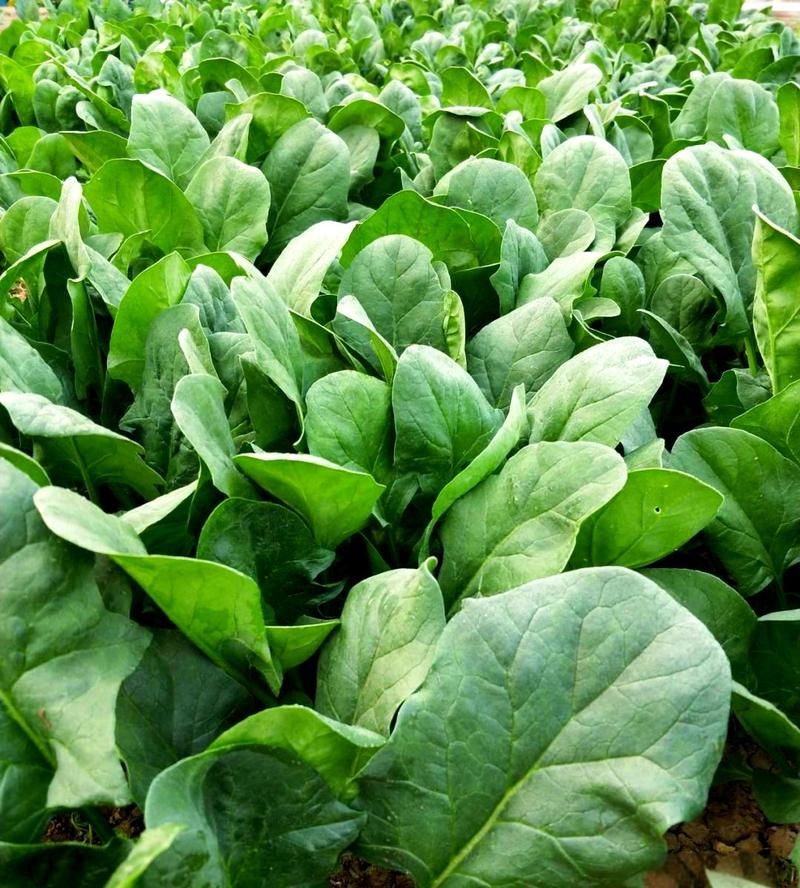
After the planting of autumn spinach, temperatures were higher in the first period and gradually decreased in the latter period. Photos of light are adequate and suitable for spinach growth. Sunlights are gradually reduced, usually without twitching, and the choice of varieties is not very strict. However, early autumn spinachs should choose early mature varieties that are more heat-resistant and disease-resistant, less accessible and fast growing。
Fertilizing the whole place
Vegetable farmers are advised to opt for sunlight, laxity and fertile soil that are good for water protection, good for drainage and irrigation, neutral to acid soil. After harvesting the front crops, they reach 20-25 centimetres deep, remove their roots and bake them completely. At the time of the earth as a whole, per acre, decomposed organic fattening of 4,000-5,000 kg, calcium perphosphate of 25-30 kg, lime of 100 kg and flat altimeters of 1. 2-1. 5 metres wide can be applied。
Seeding

Spinach is generally broadcast live and broadcast. New seeds have hibernation periods, preferably with old seeds of 10-12 kg per acre. Dry seeds can be sowed, but early autumns are difficult to sow due to high temperatures. In general, seeds should be placed in bags and immersed in water at night. The following morning, seeds should be removed, laid in the shade of the house and covered with wet sacks. Every morning and night, the water should be watered to keep the seeds wet. Seeds can grow in about 7-9 days and then sow; they can also be treated in refrigerators or freezers at temperatures of about 4 °c 24 hours, 20 ~ 25 minutes, or 3-5 days before seeding。
Field management
First, at 10-17 a. M., at high temperatures and strong light, care should be taken to cover the sunnets and to cover the net or membranes before showers or heavy rains, to prevent brushing and to reduce humidity. Take off the net after the rain and film it. Then water. Shrimp periods are characterized by high temperatures and rainy seasons, and soil moisture is low. We should always drink water, a little water and cold water, one at a time. As the seedlings grow, we should reduce the number of watering times. In order to keep the soil wet, flooding should be avoided and attention should be paid to the drainage of the rain. In order to prevent the physical dehydration of spinach, resulting in leaf or death, water should be poured early and late。
When trees have four to five leaves, they enter a rich long-term life, requiring large quantities of water, which should be poured in a timely manner, depending on soil moisture. The water was usually poured 3-4 times before the harvest. Fertilisation is also the most important aspect, with early application, light application, hard work and, when the soil surface is dry, lightness and thickness. It is not suitable for use in showers, heavy rains or hot, wet weather. In the precipice of high-temperature drying, 0. 3 per cent of urea water is injected after the leaf grows. At a later stage, as plants grow and temperatures decrease, the concentration of fertilizers should gradually increase. However, fertilization should stop 15 days before harvest, with quick effect fertilizers being applied 2-3 times at peak growth periods, 10-15 kg urea per acre or 20-25 kg ammonium sulphate。
Getting in time

In autumn, spinach is usually sowed 35 to 40 days after sowing. The trees are 10 cm tall and, with 8-9 leaves, can be uprooted in batches and then added to the market。
On the whole, we can still plant the autumn spinach now. Farmers who want to be listed in this wave of spinach can grow quickly。