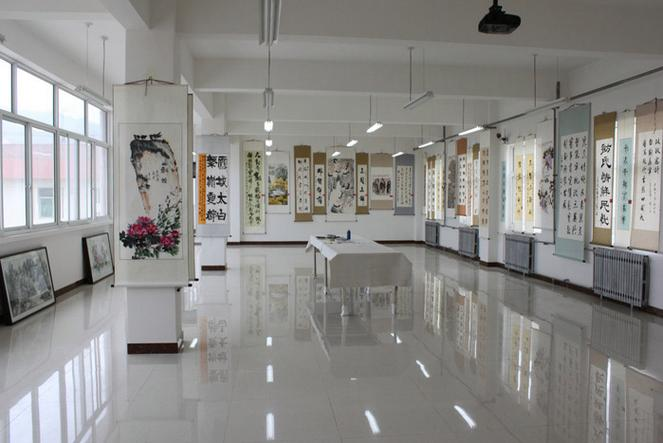
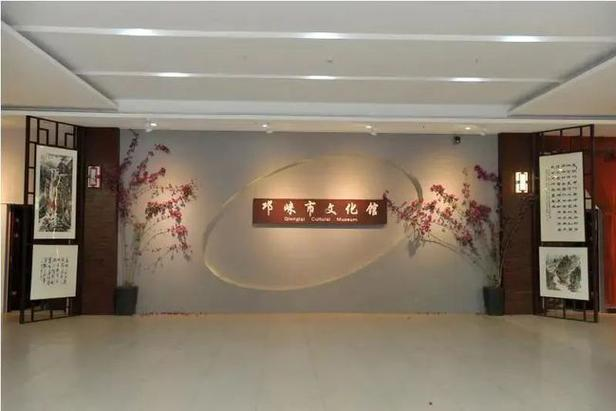
The following is a comprehensive summary of the cultural centres in general: cultural centres have a variety of functions, and their functions tend to be integrated in the context of the steady improvement of people's material and cultural life. This paper draws a synthesis of cultural institutions from the cultural activities of the current community and analyses the reasons for the integration of their functions, with a view to studying future trends in cultural institutions. Keywords: museums of culture; mass cultural activities; comprehensive; catalogue: j123 documentation number: article no. A: 1674-3520 (2014)-08-00-01 culture hall is a government institution established to promote education and organize cultural activities for the general public, generally at the county and municipal levels. In the new era of cultural development, the cultural halls have become more diverse in their functions and have begun to attract the public with their comprehensive services. Such reforms have been effective in improving the cultural and artistic quality of the population, and are of great practical significance for the country's patriotic education and scientific and cultural literacy. (i) education: as an important institution for the promotion of the culture of the country, cultural halls are an essential and essential part of the creation of socialist spiritual civilization, the material and spiritual foundation of social development and the creation of spiritual civilization as well as the creation of material civilization. The spiritual culture that characterizes cultural halls has an important impact on the development of society, which is its most basic social function. (ii) physical entertainment: the arts and sports activities organized in cultural halls are the most attractive for the general public. The past forms of entertainment were mainly cultural halls, where the public was passively involved in cultural activities and, following the reform, cultural halls were opened with the general public and various forms of entertainment were provided for the choice of the public. This suggests that the recreational function of cultural halls has shifted from relying on information and education to meeting the needs of a wide range of cultural life, and cultural halls have focused on developing their recreational function. (iii) artistic and artistic creation: the main function of literary and artistic creation is to promote regional culture and to present the state of economic development in the region, which is a major function of the cultural complex. Arts are created in many forms, such as scripts, music, dances, fine arts, etc., which are made available to public art groups in cultural libraries, through events that are presented to the people and which can effectively enhance their artistic aesthetics. In addition, literary and cultural creators discuss creative experiences and feelings with cultural and artistic fans in the public, raising the level of art both for themselves and for the public. (iv) organization of activities: the organization of activities is not only a small cultural event organized by itself, but also a large cultural and artistic event organized jointly with the government or enterprises, and includes training activities of an operational nature. The cultural halls act as the main actors in organizing events, and are able to leapfrog the cultural life of the masses through healthy and rich mass cultural activities, not only cultural festivals and music festivals, but also other types of artistic and artistic activities and self-employed cultural and recreational activities. (v) cultural guidance: cultural support is the training and teaching of cultural centres aimed at the cultural or artistic level of the population. Educational guidance includes organizational management counselling to develop managerial competencies, artistic counselling to equip the population with artistic knowledge or skills, advocacy counselling to improve organizational capacity and cultural and recreational counselling to develop the motivation of popular participation. At present, the culture halls are dominated by art tutorials, which are also divided into paid and unpaid tutorials, which are not significant because of their profitability, shortage of professional staff and lack of expertise. (vi) protection of cultural objects: cultural institutions also take into account the protection of cultural heritage. Cultural heritage has witnessed historical developments and is a valuable and important cultural resource, and cultural libraries have the task of collecting, collating and researching intangible cultural heritage, and cultural cultural objects. Apart from that, there are many other functions in the culture hall, all of which can be used in a selective manner, depending on the local cultural environment. In the case of the painting exhibition at the changting county cultural hall, for example, in the run-up to the exhibition, the culture hall will communicate to the public the spirit of the government's promotion of cultural and artistic learning, encourage people to learn artistic creativity and become more involved in art appreciation. The preparation for the exhibition also includes displaying the creation of works, collections of drawings, artistic guidance of drawings, etc. In order to celebrate the day, the culture hall can organize dance training and attract more people for the exhibition. In one such event, the culture library combines a variety of functions, such as education, cultural and artistic creation, organization of activities, cultural guidance, etc., to coordinate the better implementation of the activities. Ii. The need for a current current culture (i) response to the culture needs of society and people: the move towards integrated services in cultural halls is a necessary consequence of socio-economic cultural development and the increased cultural needs of the people. The museum of culture is an important department of social life and a window for cultural promotion. Our nation is making great efforts to build spiritual civilization, and the cultural activities that people can participate in are much richer and involve entertainment or the transfer of knowledge, both popular and pottery. As the centre for the cultural activities of the masses of the people, it is essential that, in line with the trend towards the spiritual and cultural development of the people, the cultural activities of the masses continue to be comprehensive, and that the arts be studied, culture and culture be improved and cultural and cultural activities become part of the daily life of the people. Cultural institutions, which are governmental units, should make full use of government resources to provide a rich and varied venue for cultural activities. (ii) the development needs of the culture hall itself: whether it is for its own development or for its own comprehensive cultural activities. Culture encompasses a wide variety of subjects, and the culture hall itself is an all-encompassing artistic paradise, which, in addition to cultural activities, includes the promotion of diverse social functions such as education, artistic creation and recreational activities. Culture itself is entrusted with many functions, except for the low level of cultural development in the past and the low cultural needs of the population. Today, the economic, political, cultural and other spheres are closely linked, and cultural life is becoming popular among the general public, and in this new era of cultural development, the complex features of the culture halls are presented. It is influenced by both the passivity of socio-cultural demands and the initiative of its own transformational development, with a dual dynamic of cultural complex development. (iii) the requirements of objective development patterns: the comprehensiveness of cultural halls or their conformity with their objective development rules. In the context of growing productivity and changing productive relationships, the social division of labour has become more detailed and the classification of disciplines has increased. At the same time, the culture halls are faced with such fine-tuning, and their integration becomes more apparent. The marxist philosophy believes that everything is changing and that the construction of our cultural halls is constantly changing in economic and cultural development, and that culture is constantly updating their content and social values. At present, the development of cultural institutions has been included in the overall plan for the construction of the national economy. In most regions of the country, cultural institutions have been incorporated into the construction of spiritual civilizations, which, in the context of economic and cultural development, will create more integrated cultural spaces. 3. As mentioned above, the construction of cultural halls is a requirement for the spiritual life of the people, for their own development and for the development of the times. The role of cultural halls is not only to satisfy the spiritual and cultural needs of the people, but also to increase their value or to bring about social well-being; the growing cultural qualities of the people are more conducive to building a socialist and harmonious society. The commitment to the construction and development of cultural halls has far-reaching implications for the country's cultural development。references: chiang min-jee
The huaihai institute of technology (social science edition), 2011, (08) lian soo jing
Playwright, 2013, (06) lu's radiant... Talk about the role of cultural halls in the development of popular culture in the new context... Great dance stage, 2010, (11)