In recent days, the team of chief doctors of the liver transplant centre of sun fu sun memorial hospital at nakayama university, liu, has innovatively integrated two core technologies, namely, “auxiliary in situ liver transplant” and “structive hepatomy of joint liver separation and hysterectomy” (hereinafter referred to as alpps), bringing new machines to a receptor by transplanting a healthy small body of healthy liver that would inevitably need to be removed during surgery。
According to the published literature, this was the second successful and first innovative surgery in the province。
Small size for liver
Patient yin (alias) came to sun fu memorial hospital at nakayama university for treatment because of a benign liver tumour, which spreads between the left and the veins of the liver and affects the flow of the veins of the liver, and the team decided that it was necessary to complete and safely remove the stoves by expanding the outer lobe of the liver - this means that part of the healthy liver will inevitably have to be removed during the surgery。
But can these healthy liver tissues, which were cut off as “disappeared”, be the hope of another terminal liver patient, mr. Chen? The team of dr. Liu has come up with a bold idea that the integration of small sizes can also make a difference。
“traditional liver transplants, in particular deviant liver transplants and intimate liver transplants, require liver matching with the recipient's body weight. If the transplanted liver is too small to meet the recipient's metabolic needs, it can lead to incomplete liver function and even liver failure, known as `gravity syndrome', like our familiar `small marathon'.” liu chau described the joint “auxiliary in situ liver transplant” and “alpps” as effective solutions for the “small mara car”。
After full communication with donors and receptors and after discussions with the hospital ethics committee, dr. Liu led the liver transplant team to make this idea a reality。
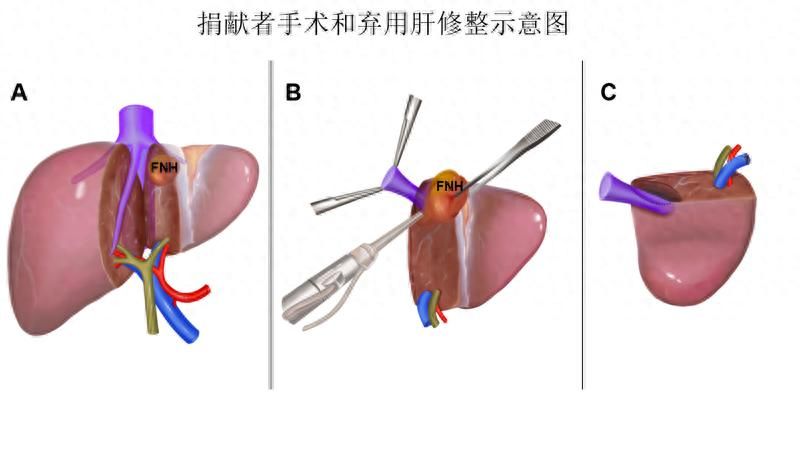
The team first removed parts of the liver containing tumours from the infirmary, using precision liver and choreography techniques. “this in itself is a very difficult operation.” according to dr. Liu, the procedure was smooth, the haemorrhage was contained at around 20 ml. After the operation, the infirm recovered from the tumor。
The team removed tumours from the liver of xiaoin outside the patient's body and fixed the remaining liver leaves (disposed liver), using this small volume to abandon the liver, performed an auxiliary in situ liver transplant for mr. Chen。
Let the transplanted liver work and grow up
The rationale for this innovative surgery stems from the strong regenerative capacity of the liver。
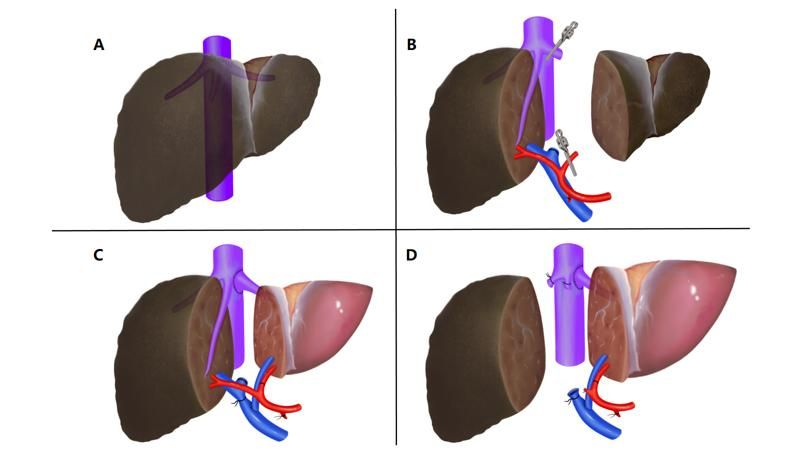
During the first operation, the team implanted the pony, while retaining part of the pony's function: the team excised the victim's left half of the liver and abandoned the repaired small size to the original liver. At the same time, the right half of the liver of the preserver continues to work to gain valuable “time to adapt and grow” for the “new ponies”。
Subsequently, the “pony” was stimulated by blood flow management: the key step in the operation was the ligature of the right half of the victim's liver. By regulating blood flow, all blood rich in nutritional and regenerative signals is channelled to newly implanted small sizes, which strongly stimulate rapid growth. The team ensured the stabilization of the door vein pressure in a safe range through precision real-time pressure measurements in the surgery, which ensured an incentive to increase growth and avoided excessive pressure leading to liver damage。
Small sizes, leaving their liver to work in mr. Chen's body, are regularly monitored for liver size by the ct 3d mass imaging technique, which proves that the growth rate of the “pony” is encouraging: from 307 cm-3 of 0. 5 days after the operation, it has grown rapidly to 614 cm-3 days after the operation and has the capacity to support the whole body。
The team seized the opportunity and performed the second stage of surgery for the supplier, removing the remaining right half of the victim's liver (the liver) and achieving functional replacement for the whole liver. After the operation, mr. Chen returned to good health and was discharged。
Mr. Chen said that for two years after the discovery of the disease in august 2024, he had sought medical treatment in many places, “i was very lucky to meet the team of dr. Liu, and i am very grateful to the donors. My surgery is a case in point, but there are many patients like me who are facing a lack of liver, so it is tantamount to opening new paths to other patients and building new hope.”
After rehabilitation, mr. Chen thanked the team for sending the flag。
After he got out of the hospital, he sent a message to liu. "did the left liver cut last to save another person?" liu chau replied: "yes, very successful! Thank you for saving others!"
New technologies will effectively expand liver use and sources
From “discard liver” to “life-saving liver”, the new technology has achieved three breakthroughs: systematic validation of the value of transplantation for disposal of the liver; integration of the idea of complementary in situ liver transplants with alpps, with a phased model to induce transplant regenerative livers to break the constraints on liver size; and full-scale precision surgical management of pre-care three-dimensional planning, mid-surgical monitoring, post-operative functional evaluation, which guarantees the safety of two unsure patients。
He mentioned that he was most encouraged by the fact that the use of a small volume based on innovative technologies for the treatment of adult patients would be increased. The safety of donors and receptors will be enhanced, especially in the case of intimacy liver transplants. He explained that, in the traditional deviant liver transplant model, the whole liver was usually divided between one adult and one child, making it difficult to treat two adult patients at the same time. Supportive in situ liver transplants are combined with two technologies, alpps, which also provides opportunities for small tracts of liver to treat adults. A small, healthy, post-transplant liver is not chronically inoperable, depending on its strong regenerative capacity, and the size of the transplanted liver is gradually increasing to match the receptor body. The extension of this technology is expected to bring more hope to terminal liver patients。