This 1 million-dollar house in your hand, can you change it for an xin card in six years or turn it into a brick in your hand? Not to mention the fact that someone was waiting for a “comprehensive rebound” last year, which resulted in a six-month roll, with few asking questions。
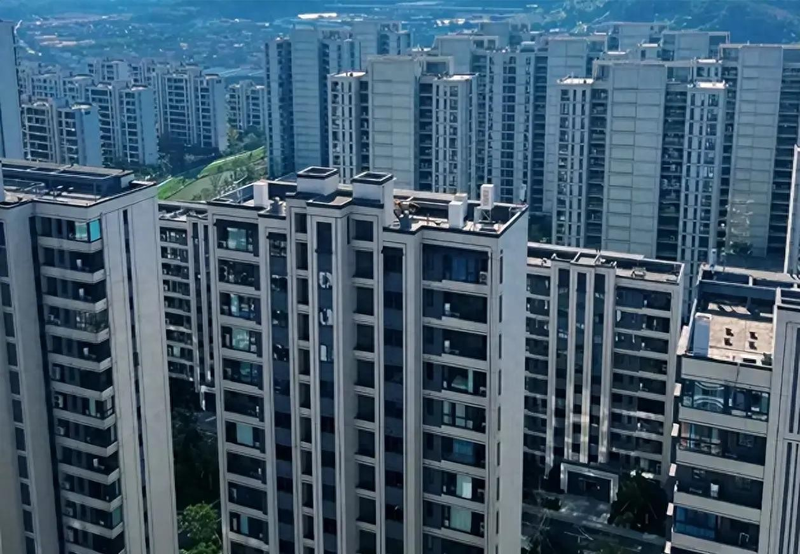
The current market is a long way from the age of “showing off and making a living”. The 2026 signal is there: houses are unsettled, water is no longer available, increases are tight, stocks are slowly digested, good houses are kept and bad projects are squeezed into bubbles. The government is also buying stock houses to secure them, selling them, reforming the provident fund and securing the white list. Those words sound cold and fall into the market, which means that there is no hope of a general rise, nor the illusion of a collapse。
The price of the house now depends more on the urban outlook than on the household model. Whoever leaves a young man behind, whoever has a decent industry, has a low stock, and the house has a base. In turn, the population continued to run, factories were shut down, stockpiles were stacked and prices fell and nobody took over. My colleague, drinking coffee, said that after three years of construction of a new house in his home county town, the developers threw rice at their openings, but the parking lot was down in the sky, and the deal ended in a six-sum shot, and the buyer picked up the car。
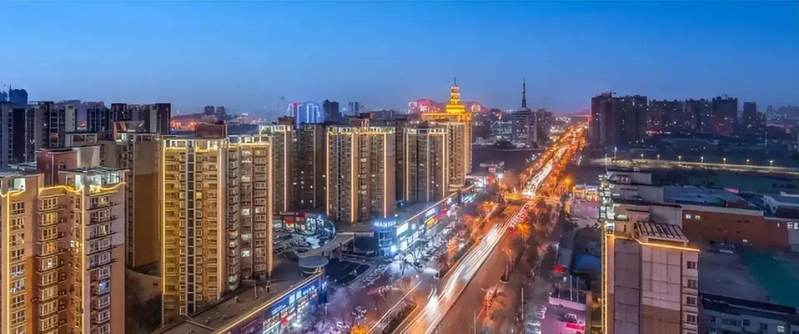
If the results of the next five years are to be classified, there are almost three paths。
Core assets, first-line main urban areas and hard-line central blocks, such as schools, hospitals, subways and businesses, all within 2 km. In beijing, shanghai, shenzhen's inner city, hangzhou, chengdu, nanjing, wuhan's hot zone, people are still crowded, industries are escalating and land supplies are tightened. They have also been adjusted over the past few years, but they have fallen slightly and returned warmth. After a slow recognition of the policy and market floors, such houses are supported by scarcity, rising by between 2 per cent and 4 per cent per year, rising by between 10 and 20 per cent over five years. In other words, one million becomes 1. 1 million, 1. 2 million, which is a very good mobility, and it takes a lot of money to hang out, which usually does not last forever. My cousin taught in hangzhou, and a few days ago he sent me tweets saying that the second-hand room near the school was rising a little bit, that young teachers were sharing rents with each other to improve the demand。
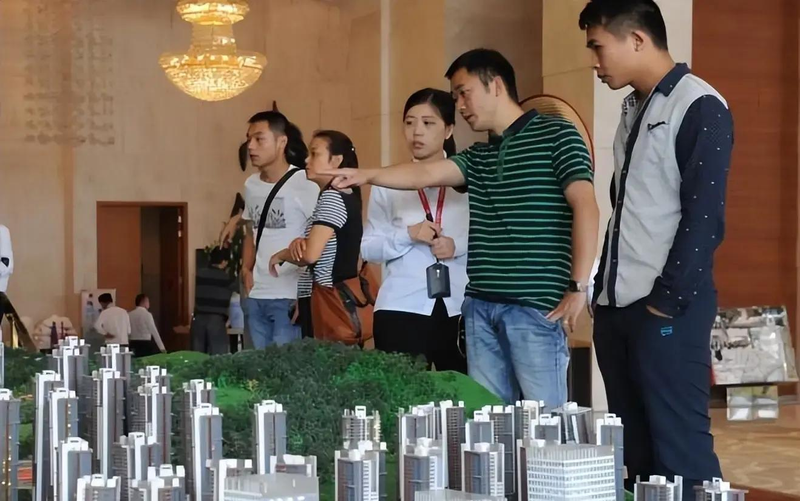
Ordinary plates, non-core zones in most provincial capitals, and weak-wielding lines, such as the jenan outer circle, the fatty suburbs, the outer suburbs of changsha, as well as industrial outlets such as xuzhou, wenzhou, and nantong, are not the worst. The population is generally stable, the industry has its foundations but is not prominent, the stock is slowly de-diggling and the policy is at the bottom. Interest rates are low, the pool is good, prices are not going to fall, but income is not expected to hold up. A million could be 970,000, or a million and a half. Such houses are self-sustaining and can provide a controlled monthly supply, with rents covering a portion of the repayment, but only in the expectation of investment returns, and may be disappointed。
The most stressful ones are the 3rd and 4th lines, the counties, the resource-depleted cities, and a number of inland and north-eastern municipalities. There was no demand for shelter, infrastructure and subsidies, young people went to the coast to work, there was insufficient additional purchasing power, and the stock digestion cycle was running for three or four years. Every year hundreds of thousands of people move out of the country, and the more houses are hung up, the more the buyers are picky. An annual drop of 2 to 5 per cent is common, with 15 to 30 per cent falling in five years, and 1 million to 700,000, 850,000 to a different position, with no one looking at it. There are people in the circle of friends who show signs of a small district in the county that fell from 10,000 to 7,000, or “no market for money” and the owner's mouth is sore。
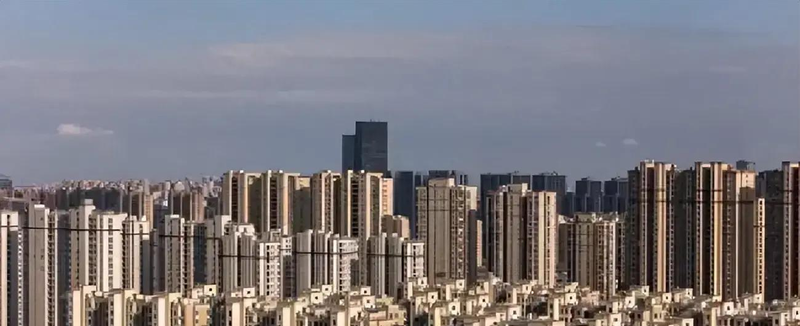
The land supply is also changing, and in the future more plots will be left to secure housing, livelihood projects, and the supply of good areas is becoming more scarce and difficult to figure out in marginal and new areas. “the strong are strong and the weak are weak” is not a lie, but the next reality to be used to。
Many are concerned about whether the whole line will fall overnight and probably not from policy attitudes. In the event of a systemic setback in the city, financial, local financial and residential assets are expected to be in trouble and no one dares to let go. Low interest rates, the reform of the provident fund, the bail delivery of white-listed projects and the storage of stock sources are all bottom-up instruments. But remember, to the bottom, not to push back the house price to 2015. Once upon a time, the "buy and appreciate" thing, stay in memory。
It's the kind of house you belong to. Is the city still sucking people? Are there decent jobs around? The subway, the school, the hospital? Is the stock heavy? What about the quality and mobility of the house itself? How many trips did you run before buying it? I recently visited my friends in nanjing, also with a budget of about 1 million, and he ended up biting his teeth and choosing the old neighborhood in the east of town for the simple reason that: “it's better to be ready to sell than to buy a new plate in the suburbs.”
Over the next five years, the key words are not general, nor general, but rather divisive. Core assets are likely to become more expensive, ordinary assets are chronically pervasive and non-core assets are becoming more difficult to deliver. Buying houses is no longer a gambling policy, but more about urban fundamentals and mobility. You have to live on your own, find a place where you can grow up and transport, at least in five years. You need to invest, not be attracted cheaply, avoid out-migration, high-stock pits, rather than buy less than lock it in a brick that can't sell。
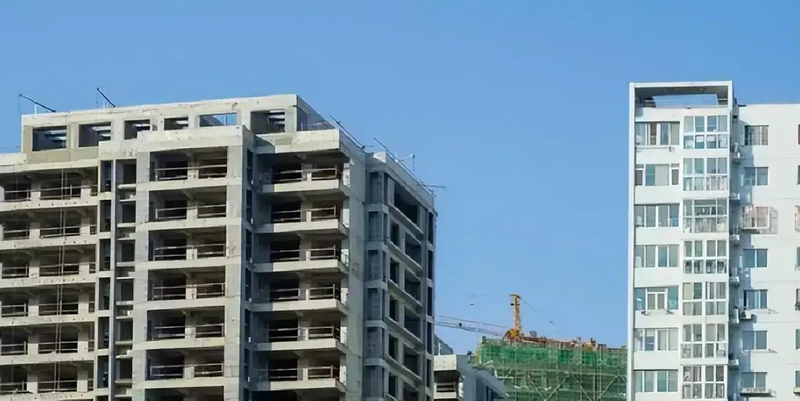
They say the house is the biggest asset of most chinese, and now this card, is it going to hold on to it, or is it going to change while it's moving? If you're holding a house in the county, you'll have to wait until the kids get married. The comment area can say the truth。