Every time we go back home, we see an old man with a child, who stares at the way to the village and looks forward to it. They're waiting for mom and dad, but most of the time, they're waiting for nothing but trouble。
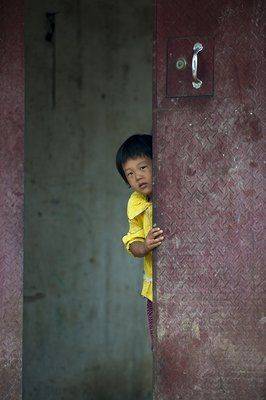
Many parents felt that i was responsible for making money and giving children a better material life. But the reality is solid: money can be made up, there's not enough company for childhood and it's hard to heal。
I have consulted the latest report on the mental health of children, published by the institute of psychology of the chinese academy of sciences and the institute of psychology at various higher educational institutions from 2025 to 2026, and, combined with the true case of a first-line psychologist, have described the psychological impact of the chronic lack of parental support on children in the most tangible and appropriate terms. There is no exaggeration, no anxiety, nothing but what really happened, and it is to be hoped that every parent who works outside will see it through。
Look at a set of authoritative data:
For children left behind by both parents, the incidence of depression is close to 28. 5 per cent, the rate of anxiety is as high as 54. 6 per cent and the incidence of social disorders is 32 per cent, and children with chronic lack of emotional communication are at risk of emotional abnormalities, five times the rate of communicating with their parents every day。
These figures are not cold statistics. They are psychological stress that countless children bear in silence. A lot of kids look like they're good at things. They don't cry, but they're already in deep shit。
I. A complete breakdown in security and children living in fear of being abandoned
The age of 0-12 is a golden period for children to feel safe, and their parents are their psychological support。
It's a long time away, and the kids would instinctively think: mom and dad don't want me。
Once this idea takes root, it will accompany the child for many years. They become timid, sensitive, paranoid, afraid to sleep alone at night, often having nightmares and panicking when little happens. He was afraid to speak voluntarily in school, to go out with his classmates, and felt inferior。
A follow-up study conducted by shandong teacher training university in 2025 revealed that** children who lack parental support from an early age are more difficult to establish intimacy in adulthood than normal family children. ** they can't believe other people, they're afraid to give their heart and get hurt, and they're more prone to contradictions and gaps in love and marriage。
Many parents say that i often call children and make videos. But beyond the screen, far less than a real hug. When the child suffers, he cannot fall into the arms of his mother; when he encounters difficulties, no father stands in front of him. In the long run, the sense of security will be completely lost。
Ii. Low self-esteem and loneliness take root, and the child slowly shuts himself down
Children who have been separated from their parents for a long period of time have the most common psychological state of inferiority + loneliness。
When other classmates leave school with their parents, are ill and cared for by their parents, and are accompanied by parents on holidays, they can only live with their ancestors. They'd be unconscious to deny themselves and feel they weren't good enough to be loved。
The report of the institute of psychological studies of the chinese academy of sciences states that more than 60 per cent of the children left behind have varying degrees of inferiority and that nearly 40 per cent do not want to open their hearts to others。
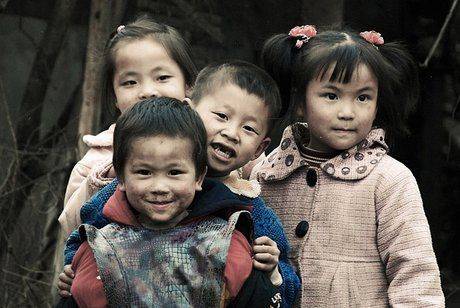
They are accustomed to hiding their emotions in their hearts, not communicating with others and slowly becoming isolated and indifferent. It is difficult to understand the child's inner world, much less to channel emotions. The long-standing backlog of negative sentiment and lack of access to exports can lead to psychological problems。
In order to cover up their inferiority, some children deliberately pretend to be strong, rebel, and to disguise themselves with their elders and confrontational rules. But there's a fragile, loveless heart hidden beneath this hard shell。
Iii. Extremely inadequate emotional management, irritability, irritation, depression
Parents are children's first emotional mentors. When children cry and are angry, the peace and guidance of their parents help them to manage their emotions. The chronic lack of parental guidance can result in a serious lack of capacity for emotional management。
The latest data from the psychological study of children show that the probability of an aggressive, angry and aggressive behaviour is 29 per cent higher than that of an ordinary child for long periods of time, and that there is a persistent depression of low mood and reduced interest, 2. 7 times higher than that of an ordinary child。
They don't know how to express their emotions correctly, and they can only cry or remain silent. When something goes wrong, it's easy to get angry and even hit. Many children at an early age are plagued by problems of insomnia, panic and breast boredom, which are the physical effects of chronic depression。
Even more painfully, many children don't turn to them for help. They don't think it's gonna help. Mom and dad aren't around. Nobody can help themselves. This sense of helplessness can push children step by step into the abyss of emotion。
Iv. Effective business and equipment
The absence of family education is the main cause of behavioural bias among children。
The ancestor has developed many forms of parenting, either over-inflicted or simple, which makes it difficult to give children the right perspective. There is a chronic lack of parental discipline and guidance, and children can easily develop bad habits。
Authoritative research has confirmed that children who remain behind are significantly more at risk of behaviour such as truancy, addiction to mobile phones, lies, early love, etc. They lack the right value guides, are vulnerable to adverse information and are exploited by others with ulterior motives。
Many children are obsessed with mobile games and video shorts, not because of greed, but because the real world is too lonely to find comfort in the virtual world. Through the network, they escape the pressure and isolation of reality, and for too long they become obsessed with it。
There are also children who deliberately behaved in an attempt to cause concern. There is only one thought in their minds: even if they are criticized, they are better than nobody。
V. Inadequate cognitive and learning abilities that affect lifelong development
The presence of parents is not only psychological but also affects the cognitive development of the child。
The child development tracking report, published at the end of 2025, showed that children with chronic lack of parental support scored an average of 0. 72 points in cognitive tests, 0. 33 points in learning persistence, and that the incidence of low concentration and learning difficulties was much higher than that of regular family children。
Parental encouragement, guidance and supervision are important support for children on their way to school. Without the company of the parents, the difficulty of learning for the child is not explained, and progress is not rewarded, which leads to a loss of motivation to learn and an aversion to learning。
Many children are not smart, but lack family support. At the age most in need of guidance, they have to find out on their own, walk many turns and miss the best chance for growth。
Seeing it here, there may be a lot of parents out there who get upset and feel guilty. Who doesn't want to be with the kids? But life pressure is at hand, and without working outside, there is no basic security for the child。
I understand each parent's frustration, but we have to understand the fact that money can be made slowly and that children grow up only once. Once a child is missed, it will never come back; if a psychological injury occurs, it will take many years to repair。
In 2026, psychological care for children left behind was promoted, and schools, communities and public-interest organizations were working to help children. But outside care is never a substitute for parental support. The love and company of parents are the most irreplaceable nutrients in the child's upbringing。
It's written at the end: "accompaniment can come in time from any distance."
A prolonged absence from the child is not an irreparable fault. What is truly terrible is the total absence and neglect。
If you have to separate from the child, do these things: talk to the child on a regular basis, not just for grades, but listen to him; go home as much as possible, even for a short period of time, to make the child feel loved; encourage, be more sure, make less accusations and less complaints and build self-confidence for the child; communicate with the children's ancestors, look at the emotional changes of the child and find the problems in time。
Children never want expensive toys, branded clothes, but people understand, people hurt, people with company。
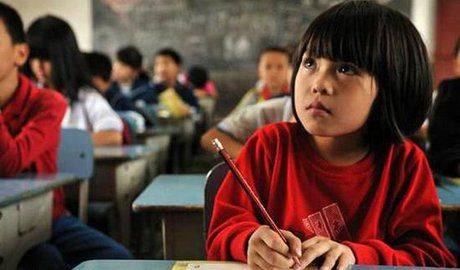
Every child deserves to be treated with kindness; every parent is working hard to live. We can't be perfect, but we can be there. Don't let the children grow up waiting, and don't let their company be the worst regret of their childhood。
The psychological background of childhood determines the well-being of children throughout their lives. May every working parent find a balance in life and company; may every child grow up healthy and happy in love and warmth。
How do you think parents work outside to balance work with children? What are the minor moves that can maximize the psychological deficit resulting from separation? Welcome to the comment area and share your thoughts。