With the rise of the old for the new wave, changes in second-hand car retention rates are closely related to the interests of the wider consumer. In recent days, the may 2025 report of the chinese association for the circulation of cars (hereinafter referred to as " the report " ) shows that in may, the overall preservation rate in the three-year-old used car market rebounded, with small vehicles and large and medium-sized suvs increasing significantly。
It's a small drop in traffic
Since the beginning of the year, major cars have continued to work, pushing the already fierce car price battle to a new height. By the end of may, a number of mainstream cars had introduced car-wide subsidies to attract consumer attention through greater car-purchase preferences. Some of these companies, in order to maintain their market share, resort to below-cost marketing strategies that raise industry concerns。
In fact, declining new car prices, while stimulating consumers ' desire to buy cars, also drive the sensitive nerves of the used car market. It is well known that the establishment of a system of second-hand car prices has benefited from the steady growth of the car market over the years, based on such factors as market holdings, consumer prestige and brand influence, which are also the basis for the price of second-hand cars。
However, continuing fluctuations in the prices of new vehicles have forced the market prices of used vehicles to adjust at the same frequency. As a result of this factor, the supply of used vehicles declined in may. The data show that in may the domestic supply of used vehicles was 77. 32 million, a small decline in the ring comparison, the first since february。
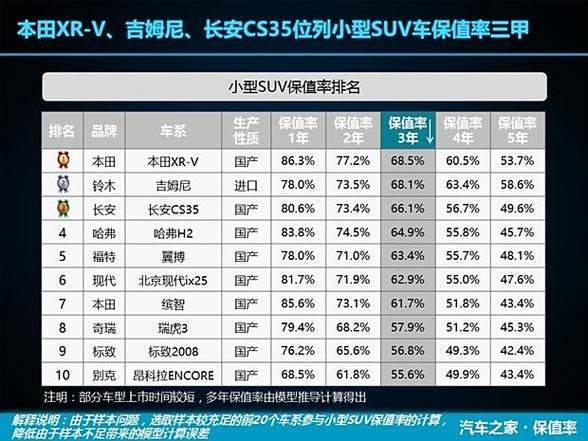
In an interview with the chinese consumers news, the dataman li ming, a strategic partner of the chinese association for car circulation, beijing equivalent information technology ltd., stated that the current growth in the supply of used-cars had been weak, prompting the industry to reorient its growth expectations. The duration of the second-hand car situation, driven by replacement subsidies, is difficult to predict, the overlap of may and june between new car price wars continues, and large and sustained price reductions may inhibit the market for second-hand car consumption. “in terms of products, when the new model is put on the market, the old model does not quickly flow into the used car market, which continues to dominate the trade.” he said。
To further stabilize the market, on 6 may, the ministry of commerce, the directorate-general for market supervision and others jointly issued the opinion on further optimizing the regulation of the motor vehicle environment (hereinafter referred to as " the opinion " ), which provides guidance to heavy-duty trucks on compliance with standard emission requirements, enhanced management of motor vehicle emissions and inspection maintenance, advancement of source management of motor vehicle emissions, enhanced data sharing and synergy, and upgrading of numerically intellectual regulatory capabilities。
In addition to the emphasis on discipline, the opinion proposes long-term governance through leniency, differential testing of trucks and upgrading of mentalization levels, as well as new approaches such as the establishment of mechanisms for the supervision and withdrawal of inspection bodies. The chinese association of automobile circulation stated that, in addition to considering environmental objectives, the opinions aim to address the falsification of motor vehicles, promote fair competition and have a positive impact on the long-term development of the used-car market。
The big and medium cars are up ahead
The steady preservation rate of the used car market has been an important basis for the healthy development of the used car market. So, how's the preservation rate for used cars in may going
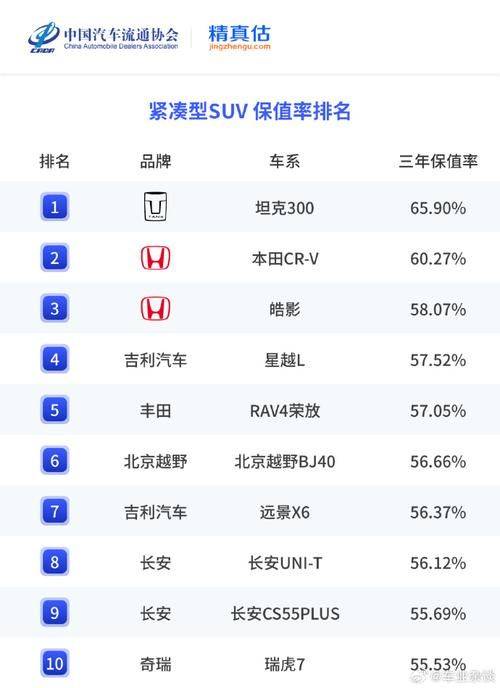
According to the report, in may, mpv, the medium-sized suv and the medium-sized suv continued to be in the top three of the retention rates, 59. 1 per cent, 56. 5 per cent and 56. 2 per cent, respectively, with the largest increase in the medium-sized suv ratio. In contrast, the retention rate for medium-sized and small suvs declined slightly, with small suvs having the lowest rate of preservation in all subdivisions, only 48. 9 per cent。
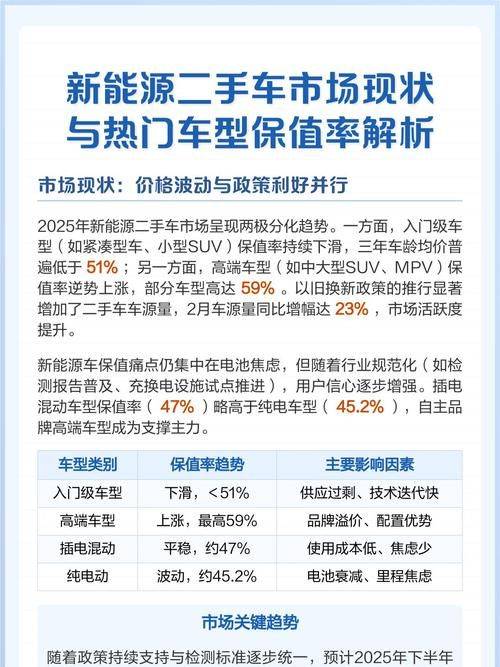
Lee ming explained that the recovery in overall market prices had helped to mitigate the industry and that there was little loss in the market for used cars. Low-end and high-end markets offer greater price elasticity in terms of car sizes, while middle-level firms find it difficult to make price adjustments at their own initiative because of competition for car sizes。
The survey found that the retention rate of traditional luxury car brands has gradually returned to rationality. In may, rover, bmw and audi used vehicles were up at more than 51 per cent, approaching the porsche, which ranked first. At the same time, brands such as cadillac and volvo have contributed to an increase in the preservation rate of the relevant car-types under the flag, further closing the gap with first-line luxury brands, based on the quality and quality of their products。
In addition, the overall retention rate of joint-venture brands that are dominated by autonomous brands has not changed significantly. The data show that, with the exception of toyota and honda, which are led by a 57. 6 per cent retention list, the other brands have a smaller retention rate of less than 1 per cent. Of these, the retention rates for the brands of iron dragon, skoda, stadium and mitsubishi were below 50 per cent。
It is worth noting that in may, the retention rate of autonomous brands was generally stable and modest, and the head brand edge remained strong, with the top three competing in line with april. However, the biadi monthly preservation rate, with a market share of 43. 3 per cent, was the highest. In li's view, biadi's preservation rate is inversely related to market occupancy, not because of factors such as product quality or brand influence, but because it is directly related to the overall price reduction of the new end。
On 23 may, biadi officially re-introduced a time-bound “one-sip” or time-limited subsidy campaign involving 22 smart-driving models of the dynasty net and the ocean net, with a maximum subsidy of 53,000 yuan。
In fact, this is not the first time this year that biadi has been engaged in a time-bound “one price” promotion. In march this year, the biadi minister announced a “sip price” on the introduction of the entry model for the seanet and part of the dynasty dynasty, a reduction of $10,000 to $898 million in the start-up price for the qin ldmi and $16,000 to $119. 8 million in the start-up price for the song ldm-i. Journalists noted that its reduced cost model had gradually expanded from a non-wise driving model to an intellectual driving model。
The new energy used car market is small
At present, the market penetration rate for new energy vehicles is around 50 per cent in our motor vehicle market, but the market for new energy used vehicles is operating at a low level。
According to the report, in may, the preservation rates for the interpolated and pure electric vehicles were 46. 1 per cent and 44. 2 per cent, respectively, of which the pure electric vehicle preservation rate was 0. 4 per cent. The reaction of the used car market to price volatility has been relatively slow as new car prices have escalated。
According to the chinese association for car circulation, while the price of new energy vehicles currently appears to be stable, the market for new energy used vehicles is still relatively small, and the replacement of 4s stores is the main disposal channel for used vehicles. At the same time, the distribution of new energy used vehicles is far from reaching the desired level of accessibility and efficiency, with the supply of older vehicles nearing phase-out and limited space available for consumer markets。
In order to improve the low rate of preservation of new energy vehicles, the ministry of transport and communications issued the model transport standardization case (2024), which clearly identified new energy vehicles as entry points, promoted the development of local standards and facilitated the construction of highway charging infrastructure on “fast lanes” to provide a good basis for the development of the market for used new energy vehicles。