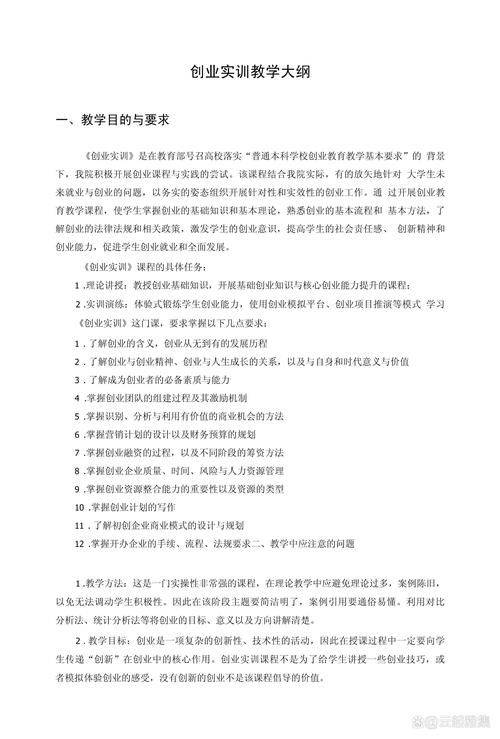
The compulsory courses of the zb56201 [class number of courses] [students]2 [preliminary course] jurisprudence, civil law [practical hours]32 [application] intellectual property i, teaching purposes, mission course is a compulsory course in the field of intellectual property, through which students are taught basic knowledge and basic theory of creation, use of creative thinking and creative techniques, create a sense of innovation, enhance the ability to create and innovate, thereby bringing quality education and innovation education to the operational and educational level in practice, thereby improving the overall quality of innovation. The basic requirements of curriculum teaching, through the learning of the curriculum, require students to be skilled in the analysis and use of the following basic theories: (1) to understand the concept of innovation, the philosophy of innovation potential and the ways and means of developing innovation potential, and to understand the elements of innovation success; (2) to understand the qualities and methods of development of innovative talent; (3) to master the characteristics and manifestations of innovative thinking, and to train in innovative thinking; (5) to master commonly used innovative methods; (6) to be able to use their own innovative thinking not only in theory but also in practice,7 and to use innovative methods to address flexiblely and creatively the problems encountered in working life learning. Iii. Teaching content and time allocation (i) chapter i, introduction to innovation, 8-hours main content: an overview of innovation; the potential of innovation and its development; the essential elements of innovation; the teaching requirements of the process of innovation: understanding the concept of innovation, the rationale for it and the ways and means of developing it, and understanding the elements of its success. Other teaching components: through examples, case analysis methods, in conjunction with classroom discussions. (ii) chapter ii is devoted to the development of innovation; the formation of knowledge structures for innovation; the development of innovative capacities; the teaching of psychological barriers to innovation; the understanding of the quality and development of innovative talent; and the characteristics and manifestations of innovative thinking. Other teaching components: through examples, case analysis methods, in conjunction with classroom discussions. (iii) chapter iii on innovative thinking and its eight-hour training focus: innovative thinking; effective approaches to innovative thinking; elements, forms and motivations of innovative thinking; teaching requirements for innovative thinking: training in innovative thinking; mastery of commonly used innovative methods; and other teaching links: integration of classroom discussions through examples, case studies, etc. (iv) chapter iv. The main elements of the 8-hour innovation innovation architecture: a combination innovation approach; a reverse thinking innovation approach; a list of analytical innovations; a review of the question-and-answer innovation approach; an intellectual incentive innovation approach; and a market-oriented innovation teaching requirement: students are required not only to master the basic system of innovation in theory, but also to be able to use their own innovative thinking in practice to use innovative approaches to solve the problems encountered in working life with flexibility and creativity. Other teaching components: through examples, case analysis methods, in conjunction with classroom discussions. Iv. Pedagogical, difficult and methodological focus: some concepts and principles of creative science; meaning and training of 10 creative thinking; meaning and training of 10 creative techniques. Difficulties: one, understanding of creative techniques; two, developing practical teaching methods of creative practices: teaching in the classroom of teachers, helping students learn about intellectual property rights through example, case analysis and classroom discussions. There are four main elements: first, teacher orientation, presentation of cases. Second, students think, analyze cases. The third is group exchanges to discuss cases. Fourth is the teachers'summary, which deepens the case. V. Methodology for the examination and the appraisal of achievement: course appraisal: composition of the overall results for the closed-volume examination: 30 per cent in normal time (including work, classroom discussions and other forms of evaluation) + 70 per cent at the end of the period. Vi. Teaching materials and bibliographies: li jianjun: introduction to innovations, chinese people's university press, 2009. Teaching materials and bibliographies: a strong body, general creative science, chinese university of mines press, june 2003. 2 yu wei, eds., the academy of innovative capacity development and application, aero-industry press, published in august 2004. 3 editor-in-chief, shao yunlong, creative science, hunan university press, june 2004. 4 editor-in-chief, liang liang, innovative thinking training, central compilers press, may 2001。