Peroxide detection and removal in tetrahydrofurans
Care must be taken to detect peroxide levels in the solution for persistent or obsolete tetrahydrofurans and ethers when used. If more than 0. 05% peroxide exists, the peroxide must be removed before distillation. If peroxide is 1% or more, the thf must be disposed of by incineration and can no longer be used。
Peroxide detection:
I. Qualitative testing
Method i. The formulation of 10% ki (passium iodide) aqueous solution, with a small amount of starch, adding 10 ml of tetrahydrofurans to oscillating, placing approximately 3-5min, and turning yellow, indicates that there is an oxidation, the more darker the peroxide, the less it is, the less it is used。
Method ii. Determination of colour variations in starch - potassium iodide test paper。
Method iii. A 5 ml tetrahydrofurans plus 1 ml 10% potassium iodized solution with a shake of 1min or, if oxidized, release of free iodized iodine, yellow brown or 4 drops of starch and blue water。
Method iv. Inclusion of 2-3 drops of sulphuric acid in clean and test tubes and 1 ml2% potassium iodide solution if the potassium iodide solution has been oxidized in air, the presence of the oxide is indicated by the presence of blue or purple, using sodium droplets of rare sulphate to disappear from yellow) and 1-2 droplets of starch solution, which are evenly integrated with tetrahydrofurans。
Quantitative testing:
6 ml acetate + 4 ml chlorine + 1 g potassium iodized to 50 ml tetrahydrofuran, placed in the dark for five minutes, determined to be non-chromatic with 0. 1 n-sulfate sodium sodium sulfate droplets, peroxide percentage: nxvx0. 7/g of which n, v is the equivalent concentration and volume of sodium sulfate (ml) and g is the weight of tetrahydrofuran (g)。
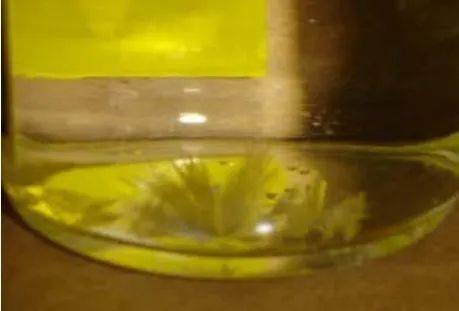
Peroxide formed in solution
Clearance of peroxides in tetrahydrofurans
1. The tetrahydrofurans peroxide may be removed by mixing sodium hydroxide with tetrahydrofurans, with 5 grams of tablet base per 100 gram of thf. If 73% of the sodium hydroxide solution is used, use 15 grams per 100 grams of thf. However, if peroxide content is greater than 0. 5%, sodium hydroxide should be added slowly to prevent violent reactions and temperature surges. The destruction of peroxides with sodium hydroxide has been successfully applied in practice. Laboratory use of small quantities of peroxide-free tetrahydrofurans can be obtained by adding chlorinated ketone, iron sulphate or other reduction agent, and subsequently distilled under hydrogenized lithium。
Peroxides are rapidly decomposed with alkali presence. The process is a elimination response, depending on the presence of hydrogen at the alpha-carbon atom。
2. Remove the new formulations of the oxides as iron-sulphate thin solutions (formulated by feso4 h2o60g, 100ml water and 6ml sulphate). 100 ml tetrahydrofurans and 10 ml new formulations of iron-sulphate solutions are washed several times in the funnel, until no peroxide. (at 20% tetrahydrofuran usage)。
Thf is removed from the oxidizer by the active aluminium oxide。
4. Inert and reduced with an appropriate 10% sodium sulphate。
5. Once the drums are opened, the storage period will be shortened, even if the nitrogen is refilled. Therefore, the thf left in the barrel should be used as soon as possible。
The inclusion of antioxidants in tetrahydrofurans, such as 2,612 tertbutyl, effectively inhibits the generation of peroxides. The mechanism of action is that such antioxygens can be combined with active cells to produce more stable compounds, thus ending chain reaction。
7. Peroxides are filled with rough surface packagings that accelerate their decomposition. If 38 per cent of hydrogen peroxide is heated to 60°c in polished platinumware, it will be decomposition under room temperature conditions in the platinumware, which has multiple bruises on its internal surface。
These are several methods of peroxide removal。
Several laboratory water-free solvent preparation methods
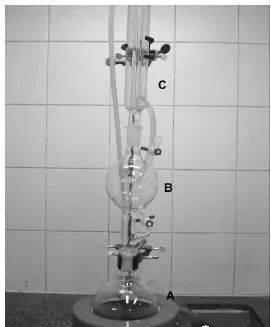
Laboratories for water-free solvents
1. Preparation of hydrobiphenyls, water-free tetrahydrofurans, water-free dioxins
Reagents required: sodium (except water), diphenylketone (indicator, which is blue when absolutely waterless)。
For use: a maximum of 10 g sodium is required for 1,000 ml solvents and approximately 5 g for diphenylketone。
Operation: devices that will be required (usually: 1,000 ml base cylinders, spherical condensers, straight condensers, tail takeovers, trig bottles, three-channel plugs), drying, cooling, ready for use. Add benzo, diphenylketone to the cylindrical cylinders, sodium blocks to remove the sodium surface from the cotton, and then cut the sodium into small pieces with scissors, adding to the sodium through a leak; then put in place a device to replace the air in the device with nitrogen, including via the receiving bottle, heating back to flow 2-3h, then turn back to the blue, slightly cooler (without flowing back) and change it to a distillation device, with a small amount of presorting, to collect the required portion. When the liquid left in the cylindrical flask is about 50 ml, stop heating and reprocessing: the left sodium ball in the cytrical flask, mixed with aqueous ethanol chamber temperature, to total decomposition. Fall into the waste water bottle。
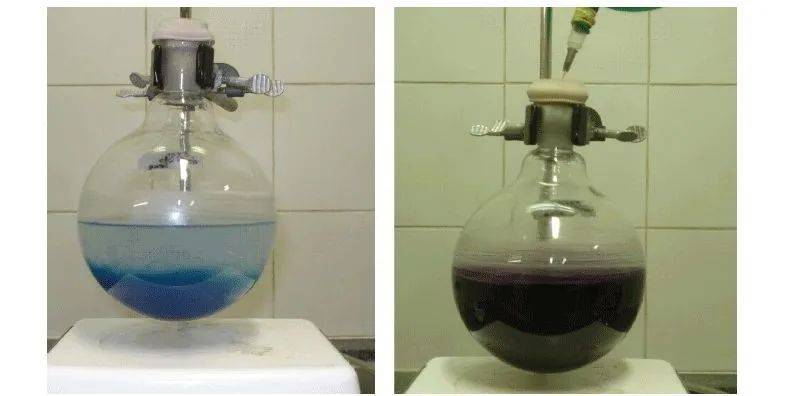
Note: the thf must not evaporate, it produces peroxides, it can explode!
2. Waterless dmf (n, n-dimethylamide):
Dmf drys with magnesium without water sulphate (25g/l) one day in advance; devices that will be required (usually: 1000 ml of cylinders, straight condensers, tail take-overs, triangulation bottles, triangulations, glass plugs, pumps), drying, cooling, to be used. Add a dry dmf to the bottom of the cylinder, and then set up a device to check the air cover with a nitrogen balloon. Then 60 °c-70 °c reduces the distillation by a small amount of pre-resort and collects the required portion。
3. Preparation of water-free dichloromethane:
1 calcium hydrogenide: dewatering;
Usage: 50g/l
Operation: reflow 3-4 hours after distillation, 4a molecule sift。
Post-treatment: csho2 left in the round bottom bottle, with aqueous ethanol chamber temperature mixing, to total decomposition. Fall into the waste water bottle。
2 no calcium hydrochloride, molecular screening;
Operation: room temperature mixes over the night, distilled and stored with molecular sift
4. Preparation of aqueous ethers:
Sodium: dry;
Usage: 7-8g/500ml
Operation: sodium is trimmed into a small block dryer 24 hours later, 500 ml reagent bottle with 19 # rubber plugs, plugged into balloons。
Note: rotation of ethers should not be too high to exceed 30°c; ethers placed too long cannot be heated because they contain peroxides and are easily explosive。
5. Aqueous methanol, ethanol preparation:
Less than 1% can be dried with 4a molecules;
Aqueous calcium sulfate reheating, distilling。