How did the builder's license go on education
The civil works builder's certificate is valid for two years and is reviewed every two years。
The construction certificate, the certificate of key position, is provincial and requires continuing education every two years, and every two years of attendance will be valid。
The builder's certificate is a two-year first instance, expired for two years and must be re-examined。
Any person who has attained the age of 18 years or has reached the age of 18 years may apply for training and examination。
(1) a post-secondary degree in construction
(ii) a degree in construction-related specialties with a degree in secondary education or more than a degree in non-construction-related professions, with more than one year of experience in management of construction-related works
(3) has a non-construction specialty or high school degree and has been involved in management of construction works for more than three years
(4) other persons with more than five years of experience in management related to construction works。
Training using unified teaching materials: construction (separate construction, municipal specialization); construction project management; basic knowledge of construction。
In addition, if there are students who want to test the builder's certificate, they are recommended for use and the library is complete。
What are the duties of the eight construction posts? Which certificate is easy
The eight construction staff members are the eight key technical positions in the construction construction enterprise, including the construction staff (measurers), the quality clerk, the safety officer, the standard clerk, the materials clerk, the mechanic, the labour worker (budget clerk) and the information clerk。
I. Responsibilities of posts
(i) construction staff
The construction engineer is a professional who works at the construction site for the construction of the building and municipal works, prepares for the start of the work, first to finalize the drawings, develop the site construction programme, propose technical measures, technical management of construction, and work on the schedule, cost, quality and security control of construction. The builder is a particularly hard job, and the wind is blowing, and people can't do it。
(ii) material staff
The construction materials clerk is responsible for, inter alia, the receipt and inspection of the quantity of materials entering the project site, the number of trips, the recording of the variety, responsibility for the quantity, the collection of the product certificates, the quality reports of the materials entering the site in charge of the project, and the maintenance of the materials, as well as the accounting of the remaining materials in the various sub-project projects by specifications and variety, and the timely reporting of the figures to the technical manager for the next material plan, which is said to be “fat”。
(iii) security officer
Building safety officers are professionals working on construction safety planning, inspection, supervision, etc., at construction and municipal works sites. It is also required to be familiar with the production environment and construction processes, fire protection against injury and poisoning, equipment maintenance management, etc., and to screen for dynamic hazards, and be obliged to warn against any irregularities in command, infractions and unsafe movements. There is also a need to promote safety awareness, conduct safety screenings and, in general, work as building safety officers, require care and care and a “no big deal” attitude。
(iv) quality clerk
Building quality clerks are professionals working on construction quality planning, process control, inspection, supervision, acceptance and so on at construction and municipal engineering sites. It is responsible for verifying quality assurance information on incoming materials, equipment and monitoring the validation of samples of incoming materials. Quality of work problems are met with timely responses from superiors if the primary responsibility for the quality of work is due to personal irresponsibility. Throughout the construction process, the responsibility of the construction quality clerk was significant, as it played an initial role。
(v) standard staff
Building standards clerks are professionals at construction sites in construction and municipal works, working in engineering standards implementation organizations, supervision, impact evaluation, etc。
1. Responsible for bottoming up the implementation of construction standards, tracking, validation of the implementation of construction process standards, correction of deviations in implementation standards and submission of significant issues to the enterprise standardization committee。
Participation in engineering quality, safety incident investigation, analysis of problems in standards implementation. To ensure the smooth running and completion of the project。
(vi) mechanics
Construction mechanics are professionals specializing in site mechanical equipment asset management, mechanical equipment use and overhaul management, mechanical equipment safety management, mechanical equipment state monitoring and technical management of fault diagnosis, cost statistics and accounting at construction and municipal engineering sites. These include the timely inspection, repair, cleaning, maintenance, management of spare parts in disassembly, hand-over and inspection, transport, insurance premiums, etc. After the machine has been used. When machines are used, they are also responsible for the registration of construction machinery. Every day dealing with machines, which are like family friends。
(vii) workers
Construction workers are professionals working on construction sites for construction and municipal works, labour management plans, qualification and training of workers, labour contracts and wage management, and labour dispute management. The labour force is like a “teacher” of the eight buildings, and everything is happening in the buildings。
(viii) clerks
The construction clerk is a professional working on the collection, collation, storage, archiving and handover of construction information at construction and municipal works sites. When it comes to workers as “teachers” of the eight buildings, it comes to the fact that the graphists are more like logistics of the eight buildings, which do not seem to be important。
Ii. Question of which certificate is easily tested
The requirements for clerical and safety officers are lower among the eight construction staff, so these two professions are the most easily available compared to other professions. With the growing construction of the country and the growing social demand for building clerks and wardens, they have become essential professionals in the engineering industry. The market demand for clerks and wardens will be enormous for now and for some time to come。
The construction clerk is a professional working on the collection, collation, storage, archiving and handover of construction information at construction and municipal works sites. A certain level of building expertise, archival expertise and the ability to operate computer building applications are required. Building resource persons need to have the following skills: 1 and graphic skills for building drawings. 2. To be familiar with the construction process, from start to completion. 3. Capacity to organize information manually. 4. Proficiency in archiving regulations. 5. Proficiency in documentation software. 6. Proficiency in procedures for covert receipt and inspection, segment acceptance and completion. 7. Proficiency in content and process of documentation。
Building safety officers are professionals working on construction safety planning, inspection, supervision, etc., at construction and municipal works sites. It is also required to be familiar with the production environment and construction processes, fire protection against injury and poisoning, equipment maintenance management, etc., and to screen for dynamic hazards, and be obliged to warn against any irregularities in command, infractions and unsafe movements. There is also a need to promote safety awareness and conduct safety screening. Building safety officers need to be aware of the following: (1) strengthening safety education and bottom-up, and increasing safety awareness among operators; (2) increasing inspection and inspection efforts to capture the focus (sub-project work for more dangerous subsectors); and (3) establishing a system of rewards and penalties and by-laws with the strong support of the company and the project manager。
I hope this answer will help you。
Is there any need to retain the builder's card and the secondary builder's certificate
I'm perspective engineering。
I do not think that this issue should be too troubling, but rather a few words。
I. Construction limitations
The builder's certificate is a basic job card and a certificate of qualification for work performed. Having such a document, i. E., indicating that you will later qualify for construction work, is an introductory document, such as an identity card。
It's also relatively simple to take the test, and it's not difficult to read books and pay money. In actual works, the construction enterprise in general does not attach importance to this document unless it is subject to special requirements such as rigorous inspection, regularization of ratings, etc. That is to say, the role played by engineering practice is not obvious, and in many construction enterprises it is essentially a non-existent document, with few or none。
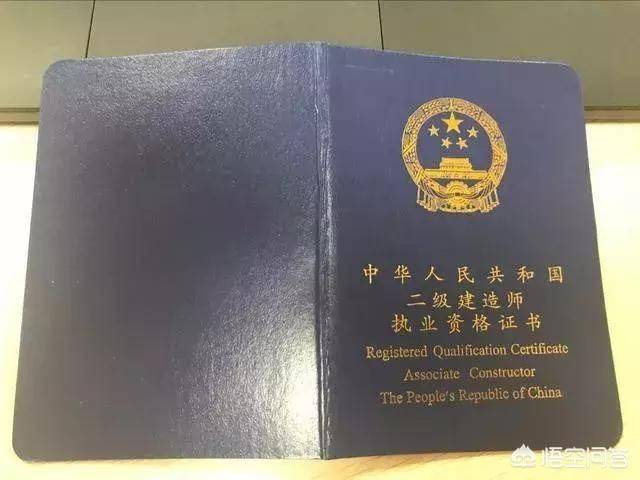
Ii. Level ii construction certificates
The secondary builder's certificate is a certificate of professional qualification. It is a form of professional documentation that the project manager must possess when the construction enterprise is engaged in small or medium-sized work within the limits set by the state. It is available to be a project manager and qualified for such projects。
The examination is more difficult than that of the construction staff, and requires a close examination of the books, a certain number of years of qualification and a certain degree of engineering practice. In terms of national policy requirements, the secondary certification is more demanding than that of the builder, and the certificate will be extended throughout the country and its authoritative interoperability will be further improved. In the view of the construction enterprise, its status will be further upgraded。
Iii. Relationship
In general, there is no direct and necessary link between the two. The test 2 did not require a pre-screening of the builder's certificate as a condition, and most of the holders of the secondary certificate did not have a builder's certificate. In practice, the two exist in almost two separate certificates, without interference, and the water is almost non-existent。
In your current state, the buildingman's id is still on. Is it true that there is no place for it to live
I am a perspective engineer, welcome to my attention and continue to talk to me about other civil issues。