I. Factual incentives
General psychological problems are usually caused by specific life events, such as work stress, interpersonal conflict, academic frustration, etc. These incentives are clear, identifiable and directly related to the real life of the individual. For example, there is anxiety about the failure of the examination or a low feeling of frustration due to family conflicts. The logical connection between the content and the cause of the problem is clear, and individuals are able to realize that their emotional or behavioural changes are related to events。
Ii. Short duration
The duration of such problems usually does not exceed one month or can be gradually alleviated within one to two months through self-regulation (e. G., talk, rest, adjustment of perception). For example, post-frustration grief is a general psychological problem if it is gradually reduced and rehabilitated within weeks. If symptoms persist or are aggravated, they may develop into more serious psychological problems。
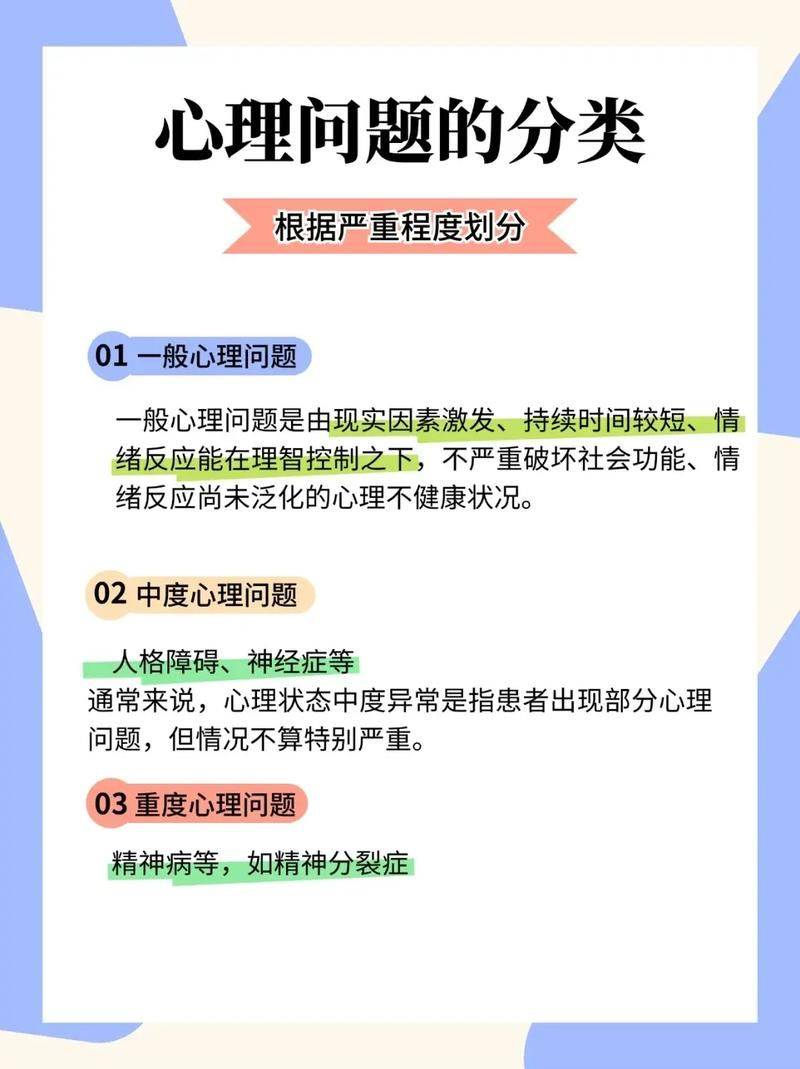
Iii. Emotional response within control
Individual emotional responses are not beyond the control of reason, and although negative emotions such as anxiety, depression, anger may emerge, they can be regulated by everyday means (e. G. Diversion, self-consolation) and do not involve extreme behaviour (e. G. Self-harm, assault). For example, it was responsible for its failure to fulfil its mandate on time and to seek the help of colleagues。
Iv. Social functioning is largely normal
Despite psychological distress, individual social functions such as learning, work, interpersonal interaction, etc. Are not significantly affected. For example, students ' attention has been reduced due to examination stress, but their performance has not fluctuated significantly; they are unable to sleep because of stress, but are still able to perform their basic tasks。
V. Investigation of the issues
Psychological problems are limited to situations directly related to the cause and do not spread to other unrelated areas. For example, social evading arising from a conflict with a colleague, but dealing with others remains normal; or fearing a particular mission as a result of a particular failure does not lose confidence in all similar tasks。
Vi. Increased willingness to seek help
Most individuals try to solve problems on their own initiative, for example by speaking to relatives, accessing information or seeking psychological counselling. This practice of recourse shows that individuals still retain the motivation and ability to solve problems, which is clearly different from the sense of “narrowlessness” or “no hope” common in serious psychological problems。
Distinction from other psychological problems
Distinction from normal psychological response: normal psychological response (e. G. Brief emotional fluctuations) is self-recoverable without intervention, whereas general psychological problems require individual initiative or simple support. 1. Distinction from serious psychological problems: severe psychological problems last longer (more than two months), greater response (e. G. Hallucinations, delusions) and significant impairment of social functioning. 2. Distinction from neuropsychological problems: the latter may be associated with body symptoms (e. G. Heart attack, headaches) or coercion, and the cause may be unclear. 3.
Response to recommendations
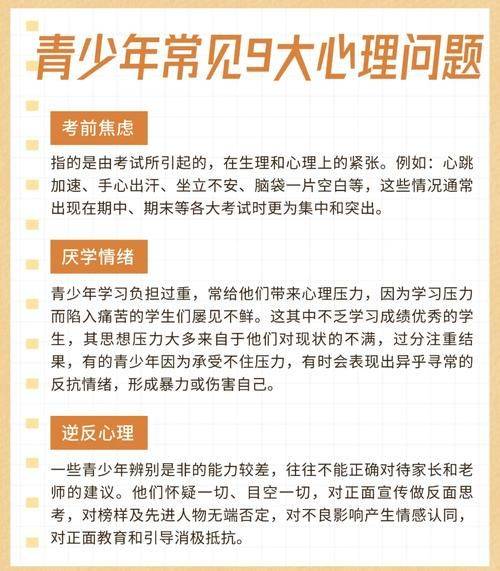
Early intervention is particularly important for general psychological problems. Mitigation can be achieved by:
Strengthening social support: communication with people of trust and reduction of psychological stress; i'm sorry.
Timely identification of the characteristics of general psychological problems and positive responses can be effective in preventing their deterioration and promoting mental health recovery。